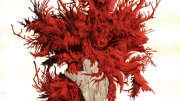


Attention, readers who live in Washington, D.C., or are traveling there this winter: you may want to check out the exhibit of modern French paintings that just opened at Dumbarton Oaks.
The paintings, shown together for the first time, come from the collection of Mildred and Robert Bliss, the benefactors of Dumbarton Oaks—a Harvard-owned research institute that funds fellowships in three fields: Byzantine studies, pre-Columbian studies, and garden and landscape studies. Besides the usual benefits of a fellowship—time away from teaching, and the presence of a community of scholars with similar interests—Dumbarton Oaks offers extensive museum holdings of pre-Columbian and Byzantine objects and a well-appointed library that covers all three fields. (For more information, see the Dumbarton Oaks website or “Home of the Humanities,” in the May-June 2008 issue of Harvard Magazine.)
The Blisses, who bought the Georgetown estate in 1920 and gave it to Harvard in 1940, felt strongly that the riches of Dumbarton Oaks should be accessible to the public. Although the library is off-limits to those without a specific scholarly purpose for using it, visitors can wander an exquisitely designed 10-acre garden rich with literary references; attend lectures by the fellows and monthly musical performances; and, of course, visit the museums, which reopened last spring after a major renovation.
Although the Blisses focused primarily on Byzantine and pre-Columbian art, they collected “a small, but choice ensemble” of modern French paintings (in the words of a news release announcing the opening)—including works by Degas, Renoir, Manet, Seurat, Cézanne, Matisse, and others (see a sampling above). According to the exhibit literature,
the Blisses often chose the unconventional or unexpected example from the artist’s oeuvre: a pre-pointillist Seurat or a Renoir landscape, for example. They also seem to have favored studies and unfinished works over more finished pantings, possibly because these offered an interesting insight into how the artists worked up their compositions.
The exhibit, tentatively scheduled to close February 28, is open to the public free of charge during regular museum hours: Tuesday through Sunday from 2 to 5 p.m.