
Main Menu · Search ·Current Issue ·Contact ·Archives ·Centennial ·Letters to the Editor ·FAQs
|
Getting some new duds for Commencement? A nice gown, perhaps? An emblazoned hood? A tasseled mortarboard? At the start of this season of good advice and self-congratulation, Harvardians might do well to remember that they did not invent initiation rites--although, of course, they have accomplished so much else.
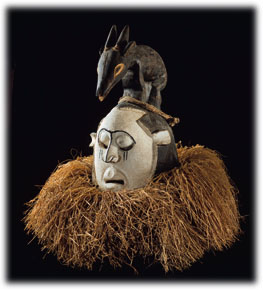
Hemba masks like the one shown here are used--or have been until recently--during the initiation ceremonies of young men of the Suku and Yaka tribes of Zaire. This example lives at the Peabody Museum of Archaeology and Ethnology. Eliot Elisofon gave it to the museum in 1969; he had been a research fellow in primitive art there, graduating to work for Life magazine as a photographer.
What role does the mask play in the maturation of men? Associate of the Peabody Nynke Dorhout explains: "Initiation rituals are started by village elders when there is a sufficient number of young boys. The novices are separated from maternal influences, are circumcised, and have to endure food deprivation and physical stress. This is followed by time--a few months to several years--at the 'bush school,' a secluded place in the forest where the young men have to establish their manly identity. They are instructed about using the right proverbs in pleading one's cause, the appropriate manner of relating to women, about sex, legends, storytelling, dancing, and composing songs."
The mask is worn, says Dorhout, "during important parts of the instruction and at the coming-out festivities. When the young men return to their village, they dance wearing the mask, showing their dancing skills and affirming their new status. They are now incorporated into their fathers' group."
The animal on top of the mask, here an antelope, "might refer to the legendary antelope, the trickster of the forest and savannah, or symbolize the dancer's speed and agility," says Dorhout. "Before use, the masks are treated with medicinal concoctions and provided with charms meant to heal and protect the young men in their new life."