Main Menu · Search ·Current Issue ·Contact ·Archives ·Centennial ·Letters to the Editor ·FAQs
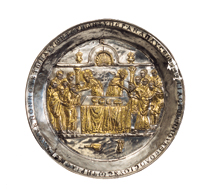
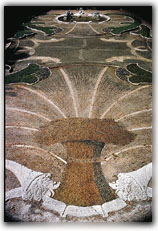
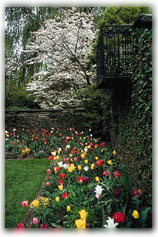
Agents of the major allied powers gathered at Dumbarton Oaks in the summer of 1944 to plan an international peacekeeping institution, the United Nations. Visitors today often come to look at the garden. It is one of the finest gardens in the country, an enduring work of art created over a 20-year period by the landscape architect Beatrix Farrand. Terraced gardens cleverly negotiate the awkwardly sloping site. Outdoor rooms of flowering trees, restrained under-plantings, rich stonework, and sculptured ornament cover 10 acres in earthly delight. "It is the chambered nautilus of gardens," wrote Eleanor M. McPeck, M.L.A. '74, former Dumbarton Oaks Garden Fellow, "suggesting at every turn deeper levels of meaning and experience." But come out of the garden and enter the house, a nineteenth-century, Federal-style mansion in the Georgetown section of Washington, D.C., the former residence of Mildred and Robert Woods Bliss '00. In 1940 they gave Dum-barton Oaks to Harvard to be a research center. It came furnished with a collection of Byzantine art that ranks among the most important in the world. Although the trove includes mosaic pavements from Antioch, it consists mainly of small, luxurious objects of imperial, ecclesiastical, or secular persuasion, dating from the fourth to the fifteenth centuries. In 1963 Philip Johnson '27, B.Arch. '43, designed a striking new wing for the house, to house Mr. Bliss's pre-Columbian sculpture, textiles, pottery, and gold ornaments. Mrs. Bliss gave the center her rare books relating to the history of gardens. All this amounts to a vast resource, and resident scholars are appointed each year to make serious use of it. The collections and gardens are open also to the public. If we could linger after hours on a spring afternoon, we might discover a Dumbarton Oaks fellow in the great, graceful, gratifying outdoor pool, all set about with white azaleas, leading the fairy-tale academic life. |