Main Menu · Search ·Current Issue ·Contact ·Archives ·Centennial ·Letters to the Editor ·FAQs
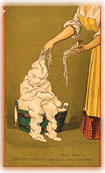
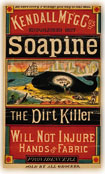
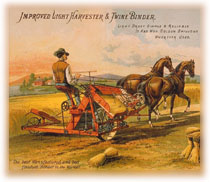
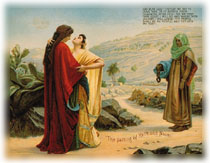
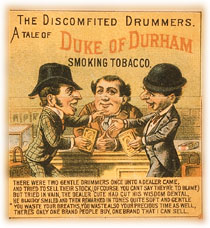
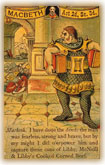
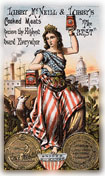
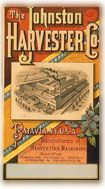
Consumerism: The LaunchMass marketing's baby stepsAs you left the general store in the 1870s, the clerk slipped a few trade cards into your package of purchases. Typically three by five inches, with a gaily printed face and a black-and-white pitch on the back, the cards advertised biscuits and sewing machines, threshers and canned corned beef. The trade card was the first direct mass-marketing medium. Before targeted campaigns in specialized magazines, before focus groups, even before advertising agencies, they gave the manufacturers of Hires Improved Root Beer, of Dobbins Electric Soap (left), of Lydia E. Pinkham's Vegetable Compound a way to reach potential buyers--anyone who happened by, much as a banner ad on an Internet website does today. By the last third of the nineteenth century, ordinary working Americans began to have a bit of money and leisure. They aspired to acquire the fruits of the Industrial Revolution and the flowers of an expanding economy. Trade cards ushered customers into the Eden of the consumer age. Ten thousand of these printed ephemera have come to rest in the Historical Collections Department of the Baker Library at Harvard Business School, among them those shown here. (An exhibition of trade catalogs, close relatives of the cards, will be on display at Baker through April and may be sampled on the Web at "https://www.library.hbs.edu/hc/trade".) A thousand cards, most of them from the 1870s-through-1890s heyday of the medium, are now being digitized for inclusion in the nascent Harvard Union Catalog of Visual Resources (see "Digital Union of Images Will Break Boundaries," May-June 1998, page 80) and will be accessible on-line in 2000. Hitherto a little-used resource, trade cards interest and instruct whether seen as industrial products themselves, the inexpensive issue of new printing technologies; as cultural artifacts; or as graphic delights, with their exuberant typography and cast of innocent children, strapping Uncle Sams, steady farm workers, assorted comic characters, and biblical figures (as in The Parting of Ruth and Naomi, left, a root beer promotion). Says Laura Linard, director of historical collections at Baker, "Their value as a reflection of American society and life at a time of enormous industrial and commercial growth ought not to be underestimated." |