George Pierce Baker had been teaching playwriting in English 47 when he had an epiphany: No critical comment from a professor could possibly be as instructive to an infant dramatist as the experience of staging a play and hearing, reading, rejoicing in, or suffering through what members of the audience thought of it. Thus in 1913 he established the 47 Workshop, an intrepid production company that put on plays written by his students in such makeshift performance space as he could scrounge at Radcliffe or Harvard. The experiment was revolutionary, and the result influential nationwide.
Tickets to performances were provided free to 400 members, who had to promise to be useful to the company, primarily by giving written, timely criticisms of what they saw. Slackers failing to deliver on this obligation got rebukes by letter demanding, Will you not coperate?
 |  |
| Baker, A.B. 1887, ready to tread the boards in this 1894 photograph and, right, as himself. Below: Audience member Marian Huckins illustrated her homework criticism of a 1918 play. All these are from the rich store of workshop records at the Harvard Theatre Collection. | |
| Images courtesy of the Harvard Thetre Collection | |
 | |
The workshop did encourage young theatrical practitioners, among them Eugene ONeill, who studied at Harvard for a year in 1914-15, and usefully discouraged would-be playwrights such as Thomas Wolfe, A.M. 22, whose talents lay elsewhere.
Baker begged for a small theater. But an apparently blank-minded administration didnt find the money. In 1924 a fire in Massachusetts Hall drove the company from its poor space there, and in exhaustion Baker went to New York on sabbatical. Soon came the dramas denouement. Yale, in possession of a $1-million gift from Edward S. Harkness to establish a department of dramatic art and build a theater, hired Baker away.
Fifty-five years later, Robert Brustein would leave the directorship of Yales School of Drama to cofound the American Repertory Theatre in Cambridge. But the action in 1924 caused a far greater sensation. Editorials in the Crimson sharply attacked the Corporation. The editors of this magazine declared themselves inconsolable. Alumni vented histrionically in its pages, one writing, Losing Professor Baker and the Yale game in the same week is a little too much to stand. There is something wrong at Cambridge.
 | 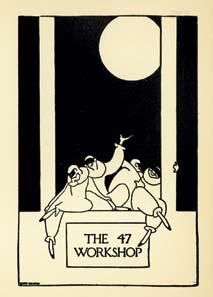 |
| The workshops playbill cover was the design of Gluyas Williams 11, as was the invitation to a farewell party for Baker when he left for Yale. Williams went on to a career as a cartoonist, whom Edward Sorel would call the Hogarth of the American middle class. | |