Jordan Casteel’s 2018 painting Twins (Subway) is a sidelong look at sisters bundled in winter hats and coats, blissfully asleep under the protective arm of a caregiver. It’s a domestic scene laid bare in public: a reflection of children’s trusting innocence amid a subterranean journey as potentially perilous as any fairy tale’s dark woods.
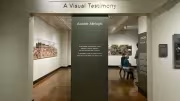
This glimpse into the formative years through which all adults, for better or worse, make their way, is one of many explored in the new, ambitious exhibit To Begin Again: Artists and Childhood, at the Institute of Contemporary Art/Boston (through February 26). Works by 40 artists—including Jean-Michel Basquiat, Paul Klee, Glenn Ligon, and Faith Ringgold—run the gamut. They “may depict children or involve them as collaborators, represent or mimic their ways of drawing or telling stories, highlight their unique cultures, or negotiate ideas of innocence and spontaneity associated with young people,” says ICA Mannion Family senior curator Ruth Erickson.
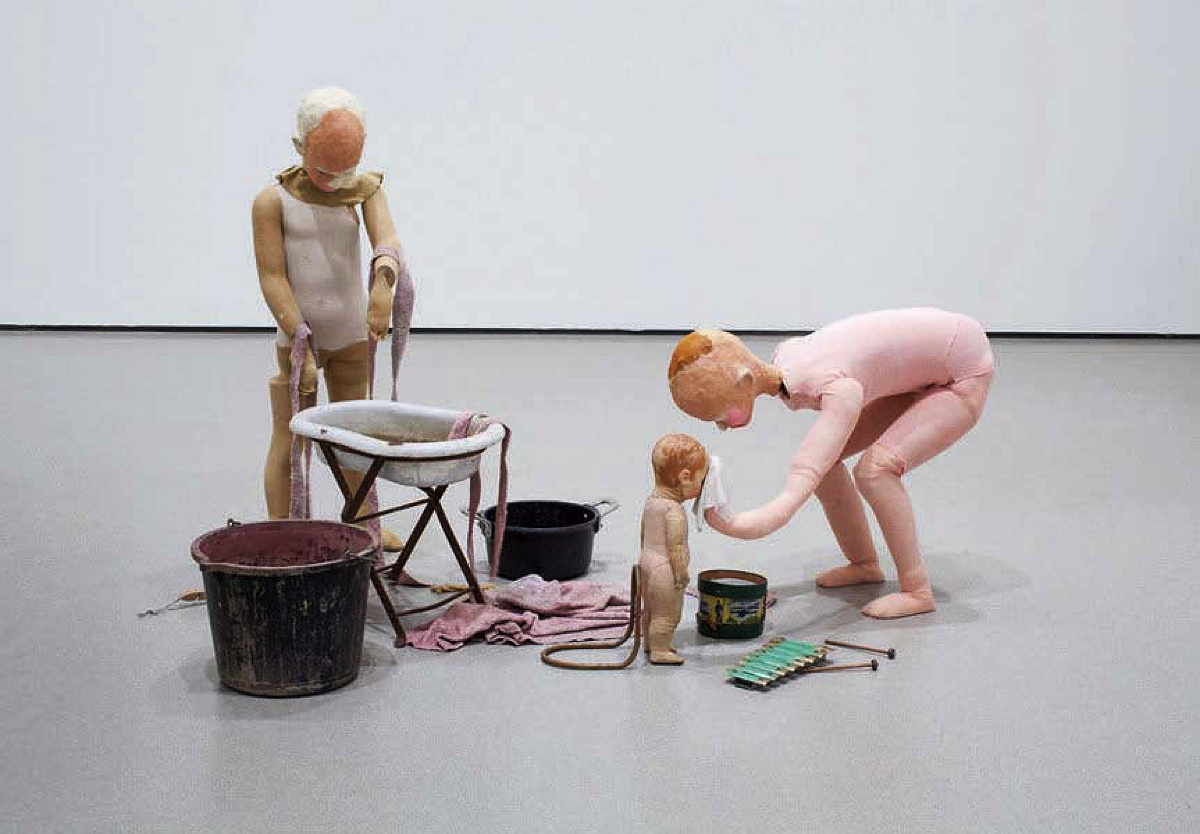
Untitled, 2012, by Cathy Wilkes
© The Museum of Modern Art/Licensed by SCALA/Art Resource, NY. © Cathy Wilkes
Inspiration often stems from children’s unadulterated experiences and reactions to the world. Untitled (2012), by Glasgow-based artist Cathy Wilkes, is a mixed-media sculpture of an intergenerational trio of outdoor bathers, with an adult gently tending to a child. The rural scene amid basins and laundry buckets evokes a previous era, offering beauty and intimacy in the simple daily act of caring and washing up. More sweeping is Brian Belott’s installation Dr. Kid President Jr. (2022), which takes a joyous look at the freedom and aesthetics of children’s art (selected from the renowned collection of psychologist Rhoda Kellogg) in relation to their own renderings. Conversely, Carmen Winant’s What it is like to be (2022) reflects on the reverberating, if unintended, impact of instructional books on the young.