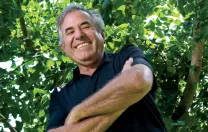
High on an upper bookshelf in Peter Del Tredici’s office sits a faded box of organic breakfast cereal called GinkgOs. In large letters, it proclaims: “For Sharp Thinking.” The millions who now take Ginkgo biloba products for better memory assume they are benefiting from ancient Chinese medical wisdom. Not at all, said Del Tredici: “It all began in a board room in Germany in the mid 1960s. The ancient ‘doctrine of signatures’ says that because a walnut looks like a brain, it must be good for the brain. By extension, if a Ginkgo lives ‘forever,’ it must be good for promoting long life.” The German firm Schwabe Pharmaceutical and a French subsidiary developed ginkgo-leaf extract into one of the blockbuster herbal medicines. Early in vitro research on the extract was promising—the substance appeared to promote blood flow. Said Del Tredici, “The rest is history. Ginkgo has become a hot commodity in the twenty-first century, a big cash cow” with annual sales topping $500 million.
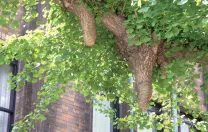
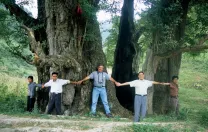
Del Tredici found himself involved in this world soon after his first China trip. In early 1990, he flew down to Sumter, South Carolina, to see for himself a 1,000-acre ginkgo plantation with 10 million waist-high trees established in 1982 by the French Schwabe subsidiary. “I met the Swiss agronomist,” recalled Del Tredici, “and asked him if the trees were producing basal chichi. He said not at all. The whole operation was mechanized. They stripped the leaves off these plants in the summer and then they ran a chipper over them. They sprouted out the following spring. I knew the trees must be stressed, and that’s when ginkgos start producing basal chichi. So I proposed we get some shovels and dig down and see. To their amazement, there were all these chichi producing vigorous young shoots.”
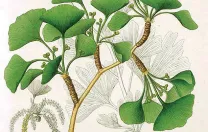
So began Del Tredici’s decade as a consultant working for the French subsidiary manipulating either the quantity or the quality of those ginkgo leaves. “How the plants affected people’s physiology,” he said, “that was not my world.” In 2003, Schwabe provided Ginkgo biloba for five-year controlled trials in the United States, to see if the leaf extract proved helpful for memory loss. The 2008 and 2009 studies, Del Tredici said, “showed no significanteffect by ginkgo-leaf extract in patients suffering from dementia or memory problems.”