The Diplomat, a Netflix political drama about a veteran U.S. diplomat, is “absolutely meant to be a love letter to the Foreign Service,” said actress Keri Russell.
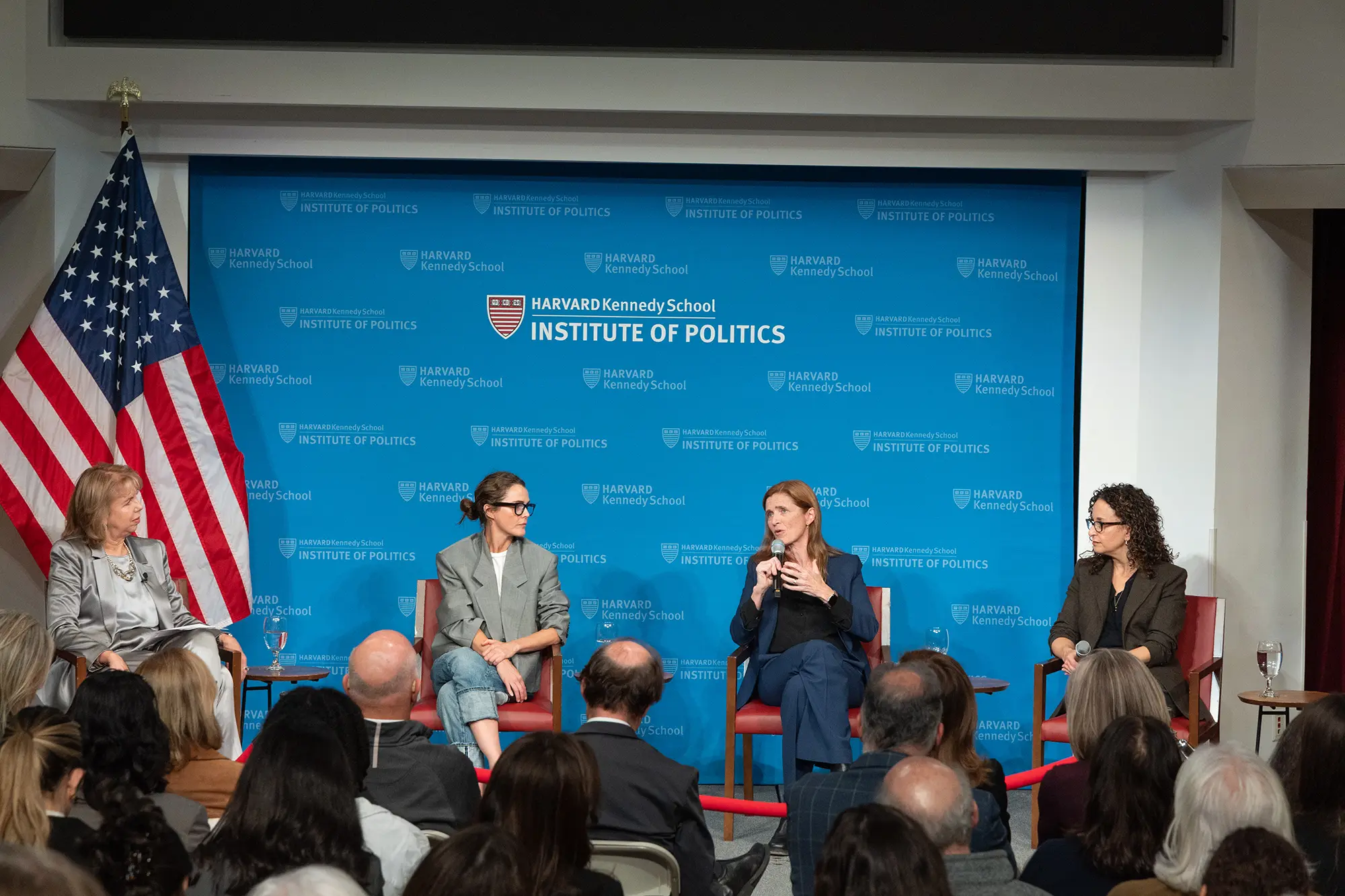
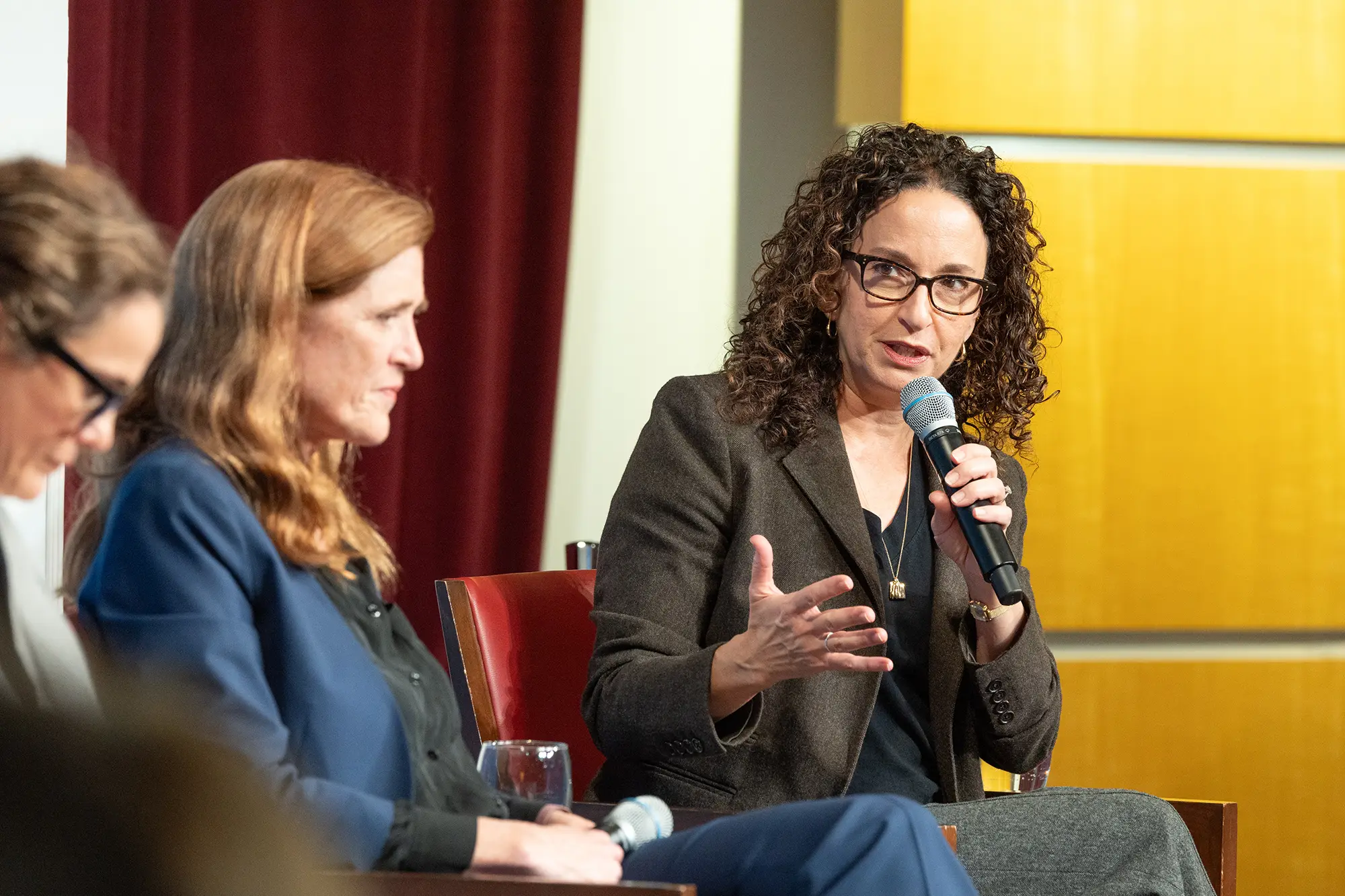
Speaking to a packed audience at Harvard’s Institute of Politics on Monday, Russell discussed how closely the high-stakes world of international diplomacy depicted in The Diplomat resembles the reality behind the scenes. She was joined by show creator Debora Cahn, former U.S. ambassador to the United Nations Samantha Power, and moderator Nancy Gibbs, the director of the Shorenstein Center for Media, Politics, and Public Policy at Harvard Kennedy School (HKS).
In the show, now in its fourth season, Russell plays Kate Wyler, a longtime U.S. foreign service officer who is unexpectedly tapped to serve as the ambassador to the U.K. in the midst of an emerging international crisis. At the same time, Wyler has to navigate her deteriorating marriage to a fellow career diplomat, Hal Wyler (played by Rufus Sewell).
“There are so many stories, movies, TV shows, about the presidency or about the vice president, but this is a show about everyone who makes everything happen, and how it affects their lives and the relationships they form,” Russell said. “It’s a peek behind the curtain of this world that you don’t get to see.”
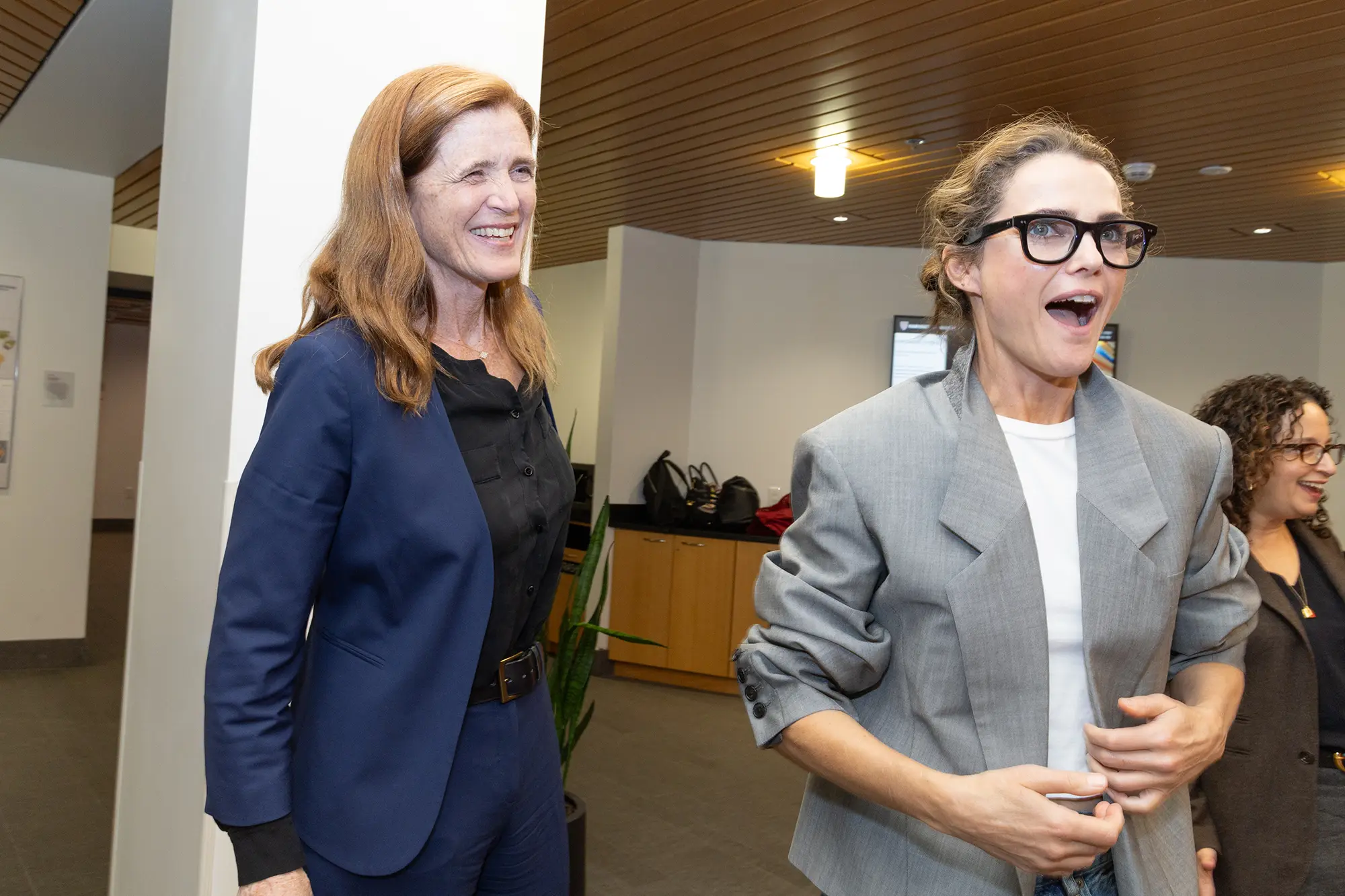
Power, the Lindh professor of the practice of global leadership and public policy at HKS, was one of the inspirations for the Kate Wyler character. In addition to her role as the U.N. ambassador in the Obama administration, she directed the U.S. Agency for International Development (USAID) from 2021 to 2025 under U.S. President Joe Biden.
“It is not infrequent that people come up to me and say, ‘Has anyone ever told you [that] you dress like Keri Russell in The Diplomat?’” Power laughed. Asked about other similarities with Kate Wyler, she noted her tendency to move quickly and forget about the person who may be walking beside her, along with “hair-brushing neglect.” (Wyler’s unkempt hair is subject to frequent jabs both on and off screen.)
Cahn confirmed the intentional similarities. “There are a lot of phrases—you know, ‘admire the problem’—lifted directly from you,” she said to Power. “We love…you following Obama into the bathroom. We talk about it a lot.”
Cahn was referring to a scene in Power’s memoir, in which she recounts running into U.S. President Barack Obama outside a restroom and lobbying about a policy position. Season four of The Diplomat, which premiered in October, includes a scene in which Wyler corners the president in the bathroom. It is emblematic, Cahn said, of the admirable qualities of many diplomats and public servants: “the commitment to never stopping the solving of a problem.”
Power said that what she loves about Wyler’s character is the way she remains independent-minded even as circumstances change rapidly around her. “[Her] moral compass is intact,” she said.
The show’s fourth season offers no shortage of moral conundrums: following an assassination attempt, U.S. President Grace Penn (played by Allison Janney) rolls out an increasingly aggressive foreign policy and dismisses anyone who questions her judgment.
Power praised the show for accurately depicting “the perils of habituation” that can play out in government work, in which the people involved in decision-making make slow and incremental compromises that might lead to highly undesirable—and terrible—outcomes.
She urged the assembled crowd—some of them HKS students who aspire to build careers in public service—to “embrace the premise of [The Diplomat], which is the importance of dissent within systems.”