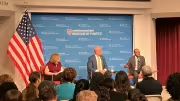
After “exhaustive analysis,” an implementation work group of the Task Force on University Libraries has recommended creation of a coordinated management structure for the entire University Library system. A new position, executive director of the University Library, will report to a board of directors chaired by Provost Steven E. Hyman and composed of Pforzheimer University Professor Robert Darnton, currently director of the Harvard University Library, other faculty members, and deans of Harvard schools (or their designates). This new administrative structure seeks to preserve local autonomy by serving scholarly interests within specialized areas of study such as business or medicine, while facilitating the “global strategic, administrative and business processes” of the library system as a whole. (In interviews with Harvard Magazine last year, Darnton, Hyman, and professor of philosophy and theology David C. Lamberth, who chairs the implementation work group, discussed the challenges of shepherding the libraries through the digital revolution.)
“We’re trying to pull together what has been an extremely decentralized system…under a unified management structure…which will exercise oversight and shape…the strategic priorities of the library University-wide,” says Lamberth. There are currently 73 separate libraries within the University system. This change in the structure of their governance will facilitate, for example, the coordination of acquisitions and technology services, including online portals that patrons use to find things in the University’s vast collections.
The representative structure of the board, Lamberth continues, will allow Harvard to retain “that tight connection to the academic program and priorities of the schools,” a “great strength” that has “distinguished our collection.” This will become even more important as “pedagogical support, development of courses, and teaching resources” are integrated into the services that academic libraries are expected to provide—part of a “growing trend,” Lamberth notes.
President Drew Faust is expected to nominate the library system’s first executive director within the next few weeks; the composition of the board will also likely be announced in that time frame. Please check back for further updates.