Headquarters

Artemas Ward, A.B. 1748, A.M. '51, lay ill in bed on April 19, 1775, as embattled farmers fired the shot heard round the world. But when a...

Artemas Ward, A.B. 1748, A.M. '51, lay ill in bed on April 19, 1775, as embattled farmers fired the shot heard round the world. But when a courier reached the Ward homestead in Shrewsbury, Massachusetts, to say the fighting had begun, Ward arose and rode to Cambridge, where, with only the authority given him by a provincial congress, he took charge of ragtag forces and led an armed rebellion against a superpower as the first commander in chief of the American Revolution. General George Washington, elected by the Continental Congress to lead the combined troops of the colonies, took over from General Ward on July 2, 1775.

Active in both colonial and state government, Ward was a chief justice of the Court of Common Pleas and speaker of the state house of representatives. He also served in the U.S. Congress, aligned with the Federalists. In late 1797, he "quit the theatre of action," as he wrote his daughter, and after two years of quiet retirement in Shrewsbury, he died in October 1800 at age 73.
Photographs by Jim Harrison

The homestead remained in the family until 1926, when another Artemas, A.B. 1899, gave it to Harvard. From April to November, it is open, free of charge, as a tourist attraction (for hours, call 508-842-8900). Phillips professor of early American history Laurel Thatcher Ulrich thinks that, along with the Ward papers in various depositories, the place in future could be "a truly exemplary site for the study of American culture," and she isn't alone in hoping that it will be.

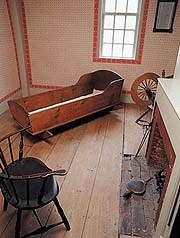
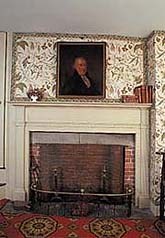
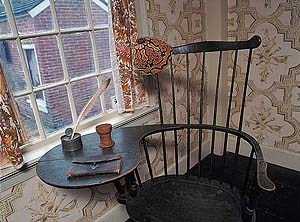
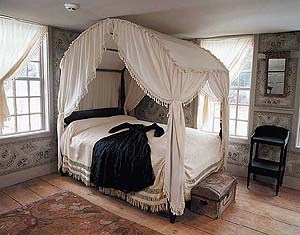
Many of the furnishings of the home are not of the general's era. But he could have slept in the Chippendale canopy bed shown above. There he is over the mantel, in a portrait attributed to Raphael Peale. Ward's yellow, one-horse shay, now very rare, is in the barn (a huge structure built in 1848 and a model of progressive agriculture). The adult-sized cradle at left was used by his invalid sister Martha, but elsewhere; Artemas and his brother Elisha were charged with her care in their father's will, but they farmed her out. The Windsor writing chair above might well have accommodated the general, "rather overstern in demeanor; somewhat slow in speech and with a biblical turn to his conversation; inflexible in his ideas," writes his biographer, Charles Martyn, "and fully convinced that the Massachusetts Bay Colony was the land most approved by Providence, and that those of Massachusetts were the Chosen People."        

Most popular

Phi Beta Kappa Speakers Call Out a ‘Deeply Troubling’ Moment

Former Harvard President Lawrence Bacow and poet Meghan O’Rourke urge graduates to focus on character and “radical attention.”

Meet Harvard’s 2026 Student Commencement Speakers

Two undergraduates and a Ph.D. candidate will address the graduating class on May 28.

AI Outperforms Doctors in Emergency Room Tasks, New Harvard Study Shows

Researchers say the technology could help physicians with triage, diagnosis.

Explore More From Current Issue

Bronze statues of three historical figures under a stylized tree in a softly lit space.

The Costly Choice Native Americans Faced

How the Revolution reshaped indigenous New England

Four stylized magnifying glasses arranged in a gradient background with abstract patterns.

AI Hunts For Stolen Harvard Coins

A museum curator and a computer scientist track down ancient coins taken in a legendary heist.

Historical scene depicting a parade with soldiers and a town square in the background.

When the Revolution Hit Cambridge, Harvard Moved to Concord

College students broke hearts and windows during their year in exile.