Tennis Rampant

The Harvard men's and women's tennis teams were both undefeated in the Ivy League this spring. The women (19-4, 7-0 Ivy) had the best winning...

The Harvard men's and women's tennis teams were both undefeated in the Ivy League this spring. The women (19-4, 7-0 Ivy) had the best winning percentage (.808) and most wins (21) in the history of the program. At season's end they were ranked number 14 in the nation, their highest ever, up from number 56 last year. They upended the two-time defending Ivy champions, Pennsylvania, 6-1 to clinch the Ivy title and hand Penn its first Ivy loss since the spring of 2000. The women then defeated Oklahoma State, 4-1, and upset Arizona, 4-3, in the NCAA tourney. Their season ended with a 4-0 loss to the defending national champions, Stanford.

The men (19-9, 7-0 Ivy) captured their twelfth Ivy title in the last 15 years. The showdown at the end of the Ivy season pitted the thirty-ninth-ranked Crimson against forty-second-ranked Brown. Harvard triumphed, 5-2, and then upset seventeenth-ranked Virginia Commonwealth, 4-3, in the first round of the NCAA tournament before falling to sixteenth-ranked Alabama, 4-0, the next day.        
Most popular

Harvard Professors Leaving for Private Sector Research

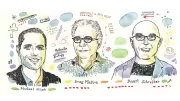
Three distinguished scientists on leaving academia to advance biomedical research

Keri Russell Calls ‘The Diplomat’ a Love Letter to Public Servants

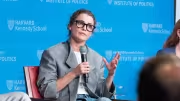
A Harvard Kennedy School event looks behind the scenes of the Netflix drama. 

To Promote Healthy Habits in Patients, Start with the Doctors

Why Harvard Medical School is training physicians to think more like coaches

Explore More From Current Issue

Illuminated hanging sculptures resembling organic forms, casting warm light in a dim space.

Artists Enzo Camacho and Ami Lien turn a colonial symbol from Cambodia inside out.

Collage of three photos of an athlete in a triathlon: one swimming, one cycling, one running, in sports attire.

The Harvard triathlete and coach says she helps normal people to “do extraordinary things.”

Bronze statue of a seated figure holding a book, with a campus setting in the background.

As humanities shrink across higher education, one department is flourishing. Is its success a fluke, or a roadmap?