Cutting-Edge Cancer Research Looks Beyond the Traditional Grant Funding System

Medical School professor George Demetri again leads cutting-edge cancer research, in an environment of timid funding for experimentation.

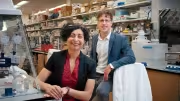
Associate professor of medicine George D. Demetri '78, of the Dana-Farber Cancer Institute, is overseeing high-risk, high-reward research being conducted by instructor in medicine Ewa T. Sicinska, according to the New York Times. In a June 28 front-page article, "Playing It Safe in Cancer Resarch: Grant Money Goes to Projects Unlikely to Break Much Ground," the newspaper's Gina Kolata documented the difficulty of securing federal funding for leading-edge research that promises breakthroughs. One example she cited was Sicinska's foundation-financed attempt to grow human cancers in mice, which would accelerate the development and testing of drugs as compared to current, more limited techniques.

Demetri's pioneering work in developing "smart" drug cancer therapies was narrated in detail by David G. Nathan '51, M.D. '55, in Harvard Magazine's January-February 2007 cover article, "Ken's Story," about a patient suffering from an abdominal cancer that was treated with Gleevec on an experimental basis. Nathan, president emeritus of Dana-Farber, has another article in the current issue of the magazine, "Lessons from an Unexpected Life," recounting his lifetime of caring for a patient with a chronic blood disorder. Both narratives detail the interaction of basic and clinical research, pharmaceutical-industry drug development, and the modern healthcare system in academic-medical settings.


 

Related topics

You might also like

When Government Funding Dropped, Harvard Found Partners

The University is expanding industry ties and investing its own funds to support research, but neither will replace lost federal dollars.

To Promote Healthy Habits in Patients, Start with the Doctors

Why Harvard Medical School is training physicians to think more like coaches

Harvard Couple Aim to Cure Prion Diseases

The stakes are high for this husband and wife: one of them will die if they don’t find a cure.

Most popular

How Philosophy at Harvard Saved Itself

As humanities shrink across higher education, one department is flourishing. Is its success a fluke, or a roadmap?

Harvard Weathers a Year of Turmoil

The federal government has launched unprecedented actions against the University. Here’s a guide.

Ask a Harvard Professor with Emily Broad Leib

Finding simple solutions to reduce food waste—with Emily Broad Leib, Clinical Professor of Law at Harvard Law School

Explore More From Current Issue

Illustration of a phone, book, hourglass, weights, and a hand reaching for a device on a blue background.

Your thoughts on how to regulate the platforms—and stop using them so much

A smiling man in a brown plaid suit stands outdoors with greenery in the background.

The professor and former Harvard College dean is the next president of Harvard Magazine’s Board of Directors

A woman jogs on a path beside a boy riding a bicycle, surrounded by trees.

Why Harvard Medical School is training physicians to think more like coaches