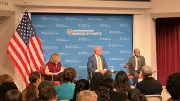
Harvard has begun downsizing its workforce. On May 11, Marilyn Hausammann, vice president for human resources, announced that 534 of 1,628 staff members eligible for an early-retirement incentive—33 percent—had accepted the offer. (The Faculty of Arts and Sciences alone offered early retirement to 521 staff members, of whom 30 percent accepted—a small fraction of its nearly 3,700-person staff.)
The retirements will lessen, but not eliminate, layoffs, given pressure to cut spending. As of October 2008, Harvard employed about 12,950 full-time-equivalent non-faculty staff members—coincidentally, nearly 500 more than were employed a year earlier, and almost as many as are retiring early. For the year ended June 30, 2008, compensation accounted for 48 percent of University expenses ($1.7 billion). Hausammann noted, “Although Harvard’s schools and departments are now analyzing the impact of the pending retirements on their budgets…for many schools further reductions in force will likely be necessary to meet budget targets….” FAS dean Michael D. Smith’s letter on the same date reiterated an earlier warning. Although the efficiencies outlined on the FAS website were “staffing neutral,” he wrote, “the financial challenge before us makes it increasingly likely that staff reductions will eventually be necessary.”
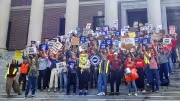
The Student Labor Action Movement (SLAM), which led the living-wage campaign for lower-paid University employees at the beginning of the decade, re-emerged around the slogan, “Greed is the new Crimson” (a play on Harvard’s environmental theme), and organized rallies against layoffs (see www.hcs.harvard.edu/slam). SLAM leaflets distributed before the May 19 faculty meeting suggested alternatives (graduated pay reductions of 5 percent to 15 percent and reduced pension contributions for employees earning more than $100,000 per year, reduced paid vacation time) and detailed cuts adopted by senior administrators at Brown, Stanford, and other universities.
Layoffs were widely expected to be announced beginning in late June, after the Commencement crowds dispersed. For updates, consult www.harvardmagazine.com.