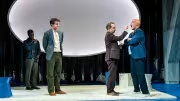
Ubu Sings Ubu, at A.R.T.'s Oberon stage in February, is a cleverly adapted, punk-art cabaret version of Alfred Jarry’s Ubu Roi. The 1896 play famously caused a riot in Paris on its opening (and closing) night, but Jarry provoked much more than a sensation. His satirical tale of Ma and Pa Ubu’s savage quest for the Polish throne, although stylized burlesque, rebuked bourgeois complacency and exposed the dictatorial force of infantile behavior. Jarry influenced surrealism, Dadaism, and the Theatre of the Absurd and, for many, his work still speaks to the more grotesque aspects of the world’s social and political landscape.
Ubu Sings Ubu, adapted using Google Translate and co-directed by Tony Torn (who also stars), first appeared off-Broadway, to acclaim, in 2014. It is a raw cauldron of id energy that teeters on the insane—mostly in a good way. Rarely do audiences see their own primitive impulses so fearlessly embodied as by Torn and Julie Atlas Muz, the performance artist who plays Ma Ubu (Jarry’s Lady Macbeth). Torn is half-naked in the opening scene, his white belly wobbling over his jeans; he howls an expletive, glugs a canned beer, cries, then pounds his own buffoonish head. “Ye are a very great rogue,” coos Ma Ubu (sporting a white bra and red tutu) before they laugh and resume their rapacious quest. The stagy sexuality and violence don’t feel gratuitous amid the apt, playful references to Shakespeare. The characters also dance and sing the punk-rock-cum-grunge music of Pere Ubu, the Cleveland cult band Torn has adored since high school. Its members then, and now, are among the countless artists happy to perpetuate Jarry’s (and now Torn’s) brazen experiments.