
“Why do some people get to make decisions about their lives, and other people don’t?” Susan Farbstein, J.D. ’04, clinical professor of law since 2008, first pondered the question after observing the stigma faced by patients visiting her father, a hematologist-oncologist who treated people with HIV and AIDS in the 1980s. Since then, she has continued to think about human dignity and autonomy—and how the law can promote them. After law school, Farbstein worked at the International Center for Transitional Justice (ICTJ) in South Africa on projects seeking “accountability, broadly conceived” for apartheid-era abuses. “It’s not just about criminal accountability; it’s not just about who is guilty,” she says. “It’s also about what the survivor wants”: an apology, structural change, or an opportunity to tell her story. This survivor-centered conception of accountability has helped Farbstein see the law’s impacts beyond legal rulings, shaping people’s understandings of themselves and the underlying events. At Harvard, she leads the International Human Rights Clinic: a group of six faculty and about 30 students who are partnering with a Ukrainian human rights organization to consider how to build a case against Russia for war crimes. Farbstein educates students on human rights law, and also how best to approach such heavy work—by building resilience and avoiding burnout. She does so by returning to favorite hobbies from her California childhood: swimming (“my happy, quiet place”) and hiking with her family. The beliefs she held then continue to motivate her. “At the most basic level, the idea of human rights is that they’re something you’re entitled to by virtue of being human,” she says: “that all people should be able to lead a dignified life, and all people should be able to make choices for themselves about the life that they will lead.”
Susan Farbstein on Human Rights Law
Human rights lawyer on law’s ability to promote justice—and shape public understanding

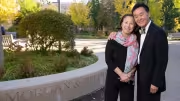
Susan Farbstein | Photograph by Jim harrison
You might also like

FAS Readies for Administrative Transition
Faculty leaders say layoffs will yield $20 million in annual savings.

They Might Be (Harvard) Giants
Two tales of University greats—and an encounter with a Tiger

Jason Furman: Capitalism Is Working. It Could Work Better.
On Open to Debate, the Harvard economist defended free market competition—with meaningful government involvement.
Most popular


Explore More From Current Issue

Take this quiz on six healthy habits that Harvard doctors recommend

The outgoing executive director and Harvard Business School graduate went from dancing The Nutcracker to growing a ballet company.

A new Harvard Kennedy School project aims to harness the power of feral fandom.