Fresh Works by Young Maine Artists

Works by young artists at the Portland Museum of Art

Painting of swimmers in blue tones

Divers Approaching Infinite Density (2023), James Parker Foley | © James Parker Foley. Image courtesy the artist

Maine-based art can sometimes exhibit tired tropes: lobster buoys piled on a wharf; sailboats dotting a sunny harbor; pine trees and craggy rocks along the ocean. There’s none of that, though, in As We Are. This show of works by 14 emerging Maine artists at the Portland Museum of Art (through April 27) offers paintings, photographs, and sculptures brimming with vitality that help re-envision Maine—the land, culture, and people—as a contemporary creative wellspring.
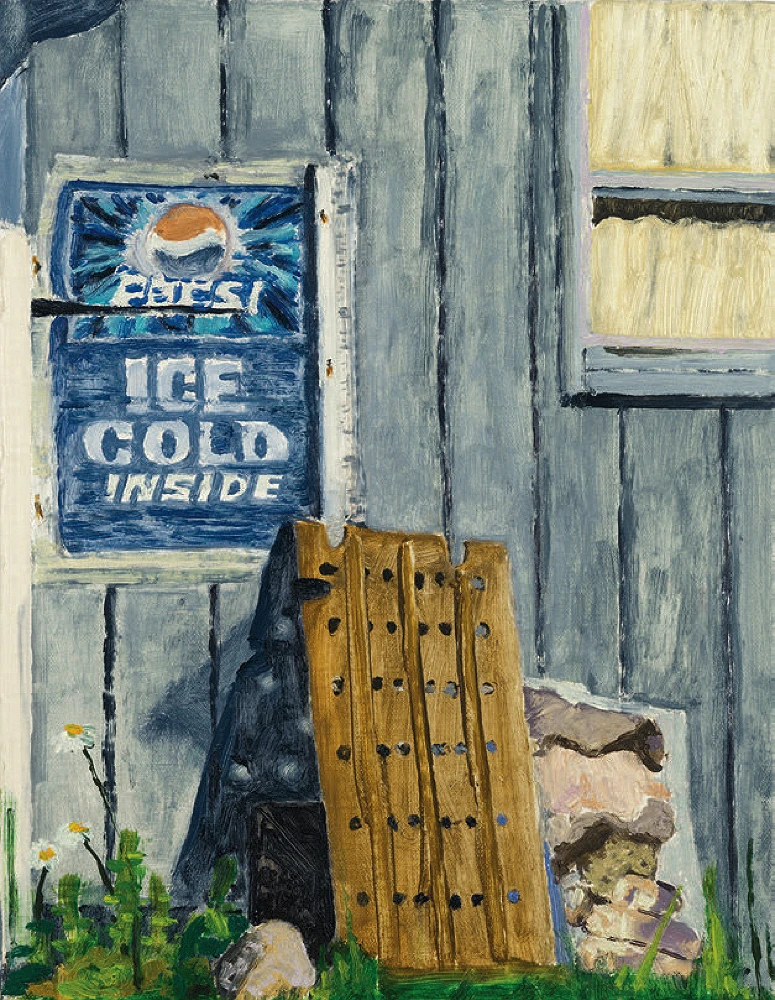
A painting of a weathered wooden building with a vintage Pepsi sign and a propped-up wooden board.
Bayview Market & Takeout (2024), Tessa Greene O’Brien  | © Tessa Greene O’Brien. Image courtesy Petegorsky/Gipe Photo
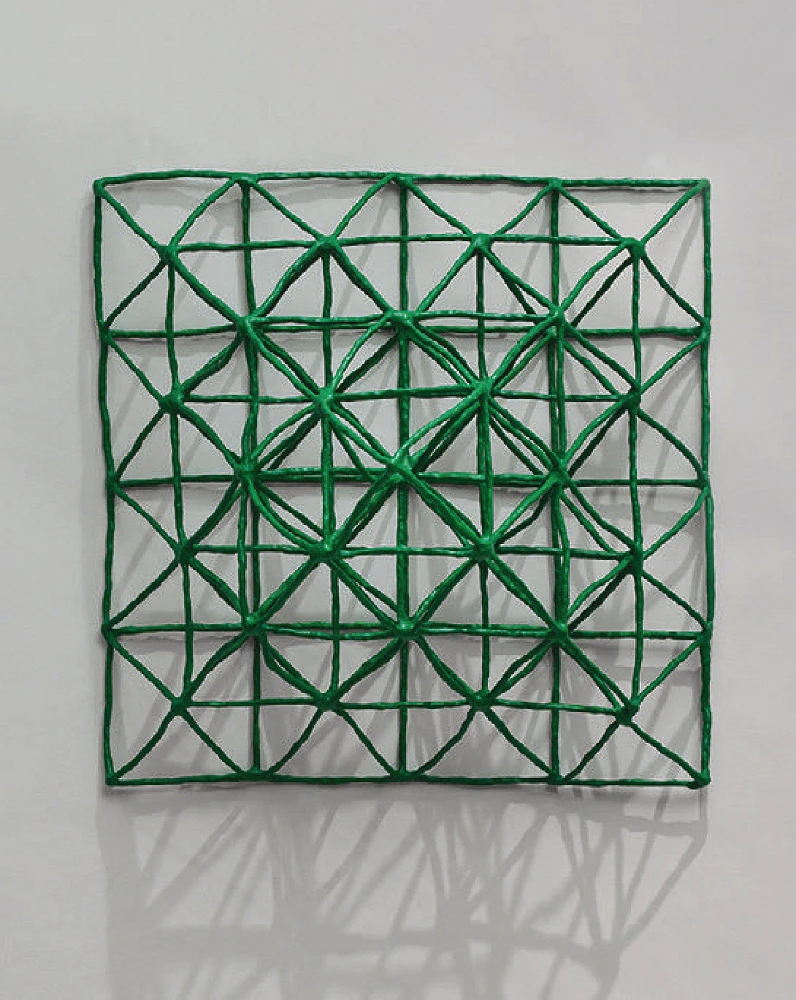
A geometric wall sculpture made of green string, forming an intricate grid pattern with shadows on a white background.
Can a Pile Be Sideways? (2024), Elana Adler | © Elana Adler. Image courtesy Petegorsky/Gipe Photo

Take Holden Willard’s radiant The Bathers (When We Were Kids). The large oil painting shows three young men (based on high school friends) ankle-deep in pristine waters near the base of Mount Katahdin. It speaks to freedom, innocence, and primacy of youth, amid natural beauty intensely rendered in surreal tones. In Maya Tihtiyas Attean’s black-and-white photograph Becoming a ghost of myself, a figure also wades, or more likely melts, into water, heading away from roped buoys and a metal bench that embody anchoring aspects of life on land. “Using nature as a catalyst,” Attean says of her art, creates “a world with narratives of the otherworldly within.” These young creators are rooted in American modernism, eager to reflect their culture today. “They bring abstraction to the idea of Maine and a sense of place, which is a little bit of the flipping of the narrative,” museum director of marketing and communications Marcie Parker Griswold says, forging “new meaning for where we are now.” 

 
Read more articles by Nell Porter-Brown

You might also like

The play Spare Parts is a contemporary fable about the quest to live forever.

Chloe Chapin trains her Broadway costume designer’s eye on the history of men’s fashion.

Harvard Art Museums restores a rare glimpse of an American master.

Most popular

Harvard’s Class of 2029 Reflects Shifts in Racial Makeup After Affirmative Action Ends

International students continue to enroll amid political uncertainty; mandatory SATs lead to a drop in applications.

The Harvard graduate’s roundtable talk show touches on hot button issues from religion to sex. 

In 1954, Gregory Corso moved into Eliot House. How he stayed there is a literary legend.

Explore More From Current Issue

A smiling elderly man in glasses sits comfortably in a striped armchair.

Plus, veteran higher education leader Thomas Ehrlich reflects on university curricula for his 70th reunion

A man in a suit speaks at a podium.

David Battat promotes alumni engagement.

University Hall with steps and the John Harvard statue, surrounded by trees and a grassy lawn.

Long-discussed reorganization includes layoffs and the end of the Dudley Community.