Bill Rauch ’84 has wanted to set Cats in a gay bar for 30 years. Sometime in the 1990s, the theater director says, a vision popped into his brain of Grizabella, the aging, forlorn Glamour Cat in Andrew Lloyd Webber’s musical, as an older gay man singing “Memory” in a seedy watering hole.
“I just thought it would be so melancholy, so revealing. In a queer context, the way in which that song romanticizes lost youth and beauty would be really powerful,” Rauch says. “I also thought, ‘I will never, ever get the rights to do that.’”
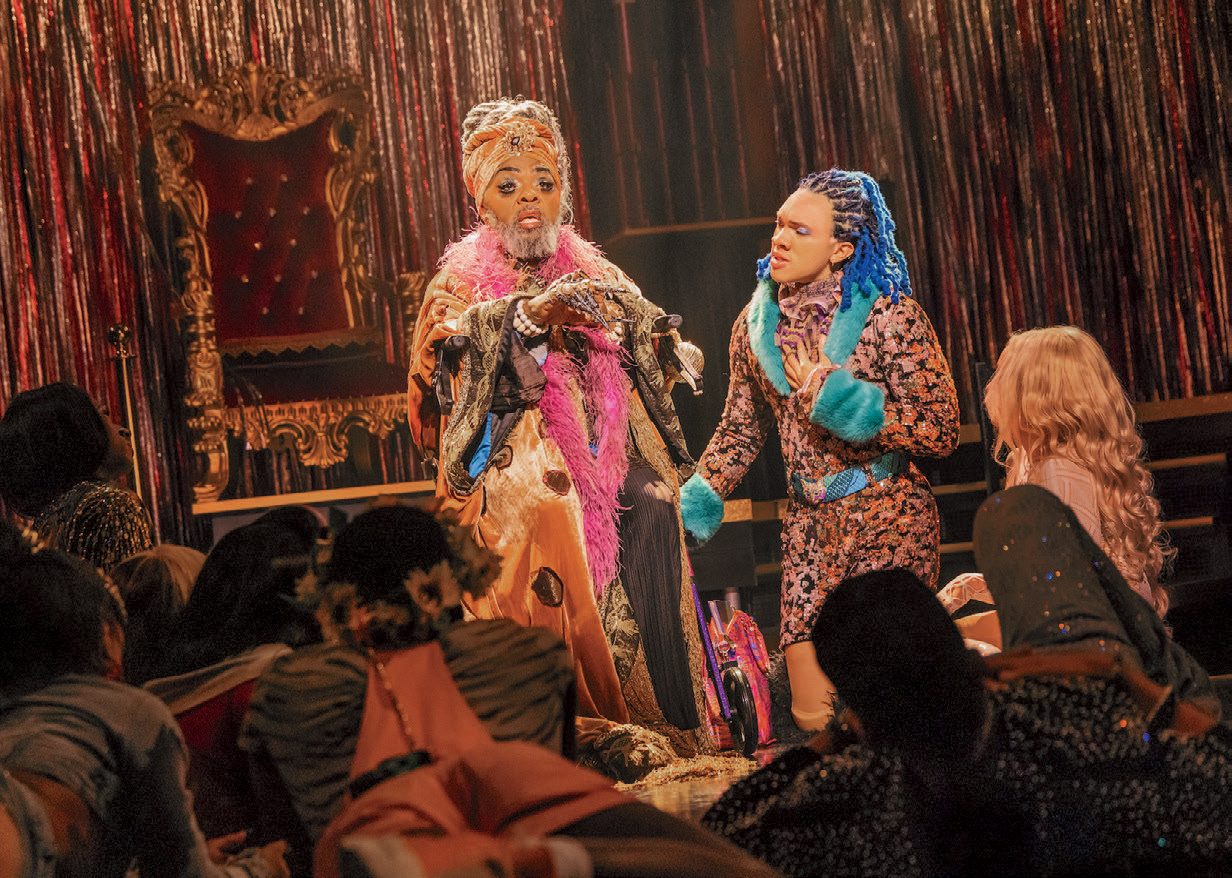
Three decades can change things, though. In March, Cats: The Jellicle Ball, co-directed by Rauch and Zhailon Levingston, opened on Broadway, reimagining the behemoth 1982 musical hit as a competition in New York’s Harlem ballroom community. There are hip hop beats thumping under Webber’s score, drag queens, death drops, voguing, and tight neon tracksuits and lush furs replacing the literal cat costumes (ears, tails, whiskers) of the original. “Tempress” Chasity Moore, a transgender woman, sings “Memory.”
Based on a collection of T.S. Eliot poems, Cats has long polarized musical theater lovers: the original production had the fifth-longest Broadway run in history, but the synth-heavy orchestrations, threadbare plot, and a widely loathed 2019 movie adaptation have made for easy mockery over the years.
There are “people who love the musical Cats and know every word, and people who hate the musical Cats and swore they would never see it again in their lives,” Rauch says.
Yet the reception for the new revival has been ecstatic. The show has racked up roundly glowing reviews and garnered nine Tony Award nominations, winning three: Best Choreography, Best Costume Design, and Best Direction of a Musical for Rauch and Levingston.
And the combination of Cats and ballroom culture has come to seem, to many, almost inevitable in hindsight; both are products of 1980s New York, organized around competitions to be fabulous and fierce.
“Cats has always been a ballroom: distinct personalities enter the floor, presenting their style and story, and a community watches to see who commands the room,” Betty Buckley, who originated the role of Grizabella on Broadway, wrote in a New York Times guest essay in April.
By May, The Jellicle Ball had extended its planned Broadway run three times due to high ticket demand. People frequently tell Rauch that the ballroom iteration of Cats “makes more sense of Cats than Cats made before,” he says.
“That’s important to me, because although we’re doing this radical resetting, we always wanted to excavate what was already there,” he adds. For Rauch, there’s always been a lot to love about Cats; the revival respects the original immensely, both in its orchestrations and preservation of Eliot’s text.
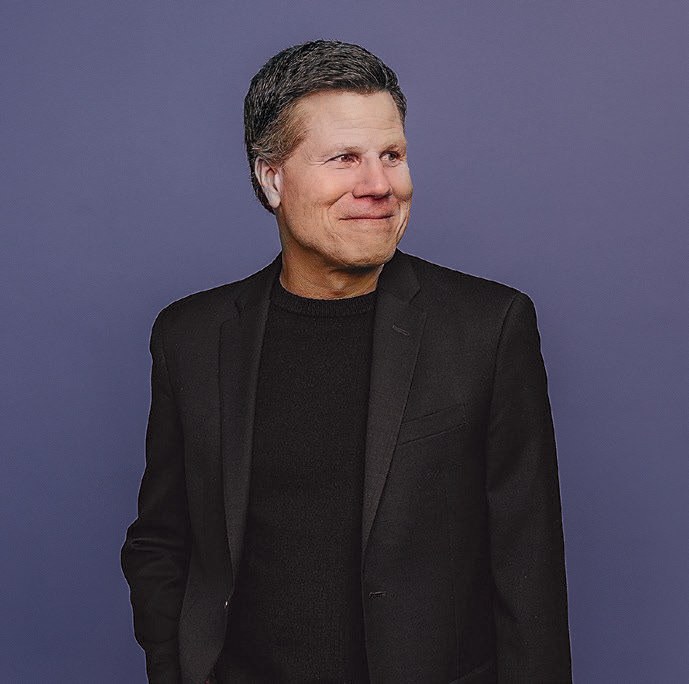
That instinct—to unlock fresh dimensions of familiar works and open them up to broader audiences—has driven Rauch’s theater career since his days at Harvard. When he arrived on campus in 1980 at 17, he wanted to be an actor. But “before my freshman year was done, I had directed my first full-length play, and I realized I was a director,” he recalls. “And once I realized that, I went crazy.”
It was a fertile era for theater in Cambridge. The American Repertory Theater was founded in 1980; Peter Sellars ’80, the famed opera director who would become a mentor, was a few years ahead of Rauch in school. As an undergraduate, Rauch studied English and American literature and directed 26 shows, including a staging of Romeo and Juliet with the famous balcony scene literally turned upside down (Juliet was on a mattress, Romeo standing over her) and a soundtrack including songs from avant-garde musician Laurie Anderson. One summer, he directed resident patients at the Massachusetts Mental Health Center in a one-act play by Molière.
“I am as extreme a case of your college years shaping your life as could be offered,” says Rauch, who received the 2026 Harvard Arts Medal in May. He notes that he met his most important early collaborators on campus—along with his husband of 42 years, the actor Christopher Liam Moore ’86. “It was an incredibly rich four years,” Rauch says.
After graduating, Rauch remained interested in the ways classic works of theater could speak to the current moment. He also wanted to “[bring] people together [in an audience] who might not normally be in a room together,” he says. In 1986, he co-founded Cornerstone Theater Company, a traveling troupe that mounted shows for rural communities across the U.S., often starring locals, with playwright Alison Carey ’82. Rauch served as the company’s director for 20 years.
One production set Shakespeare’s Twelfth Night on a California naval base shortly after the U.S. military’s “Don’t Ask, Don’t Tell” policy was enacted in 1993. The staging toyed with the play’s already-complex gender dynamics by having Moore play the roles of both Viola and Sebastian, brother-and-sister twins.
In projects like these, Rauch says, he doesn’t want to blow up sacred texts; he wants to highlight elements that are often hiding in plain sight. “My job is primarily an interpretive one,” he says. “I want to show what’s already there, always in service of telling the story with more passion and clarity.”
For example: at the Oregon Shakespeare Festival, where he was executive director for 12 years, he staged Oklahoma! with the four romantic leads recast as lesbian and gay couples.
“Take Laurey and Curly singing ‘People Will Say We’re in Love,’” Rauch says. “That whole song is, ‘We’ve got to be careful.’ By the time they get to the reprise, they’re saying, ‘Let people say we’re in love. Let’s not hide it.’ When you put that in a queer context, that unadulterated acceptance, and wanting the world to know and celebrate the love, it has a different weight.”
Rauch hopes the success of Cats: The Jellicle Ball will allow the show to carry its own themes of joy and acceptance to far-reaching corners of the country. At Harvard, a professor once told him that only 2 percent of Americans attend theater regularly. Rauch has spent a lot of time since trying to reach the other 98 percent.
“It’s most important to me that we reach as many young queer people as possible,” he says. “If we are lucky enough to have this on Broadway for a little while, and then we’re able to tour it, that would be my dream come true.”