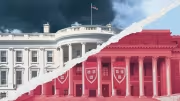
The Supreme Court ruled on March 6 that the federal government can cut off funding to universities that limit or ban military recruiting on their campuses. The 8-0 opinion (Justice Samuel A. Alito Jr. did not participate) upheld the Solomon AmendmentCongress’s response to law schools’ decision to restrict recruiting because military limits on service by homosexuals (the “don’t ask, don’t tell” policy) conflict with the schools’ nondiscrimination policies. Harvard receives about $500 million in federal research funding annually.
A coalition of law schools filed suit, alleging that the amendment violated their First Amendment rights of free speech and association, and in late 2004 secured a favorable ruling in the Third Circuit Court of Appeals. (Harvard had declined to join the legal challenge to the law; see “Recruiting Redux,” July-August 2005, page 60.) The Defense Department appealed, and the case was argued before the Supreme Court last December.
In its ruling, the court rejected both the First Amendment claim and an argument in an amicus brief prepared by many Harvard Law School (HLS) faculty members, who maintained that it should be permissible to exclude all employers (including the military) who do not maintain a nondiscrimination policy.
In a note on March 7, HLS dean Elena Kagan expressed disappointment in the decision, while noting that the school “will continue to provide Career Services assistance to the military, as [it] does to non-discriminating employers. At the same time, I hope that many members of the [HLS] community will accept the court’s invitation to express their views clearly and forcefully regarding the military’s discriminatory employment policy,” which she called “profoundly wrongboth unwise and unjust.”