Ivy League limits full-contact football practices

The new Ivy League policy goes well beyond NCAA guidelines.

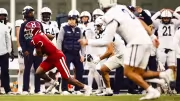
The Ivy League has decided to limit the number of full-contact football practices that teams can have in an effort to reduce the chance of head injuries to players, according to a New York Times report. A study published last year indicates that players receive more hits to the head in practices than in games. (Practices, of course, consume far more of players' active time on the field than games do.)  The new Ivy policy goes well beyond the NCAA's guidelines on the subject, and is quite possibly the most stringent of any conference.  

For additional background, read the 2010 article "Hits, Heads, Helmets" from the Harvard Magazine archives; it explores some of the issues in football-related concussions and describes a new helmet designed to mitigate them. 
Related topics

You might also like

A Heartbreaking Loss to Yale, But an Ivy Title for Harvard

The Crimson fall to the Bulldogs at Fenway Park, 20-17—their fifth straight loss in The Game. 

Crimson Football: Harvard 37, Columbia 0

A whitewash of the Lions puts the Crimson back in the Ivy driver’s seat.

Crimson Football: Dartmouth 24, Harvard 14

Benson shines, but the Crimson fall from the ranks of the unbeaten.

Most popular

How Philosophy at Harvard Saved Itself

As humanities shrink across higher education, one department is flourishing. Is its success a fluke, or a roadmap?

Ask a Harvard Professor with Emily Broad Leib

Finding simple solutions to reduce food waste—with Emily Broad Leib, Clinical Professor of Law at Harvard Law School

Explore More From Current Issue

Ancient Egyptian painted sarcophagus with detailed hieroglyphs and a woman's face.

A rare Egyptian mummy case is on display at the Harvard Museum of the Ancient Near East.

Colorful icons representing sleep, fruit, speech, and a mind with a water lily.

Take this quiz on six healthy habits that Harvard doctors recommend

A woman jogs on a path beside a boy riding a bicycle, surrounded by trees.

Why Harvard Medical School is training physicians to think more like coaches