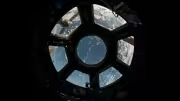
An animation of the Giant Magellan Telescope

An animation of the next class of super giant earth-based telescopes that promises to revolutionize our view and understanding of the universe.

The Giant Magellan Telescope will be one of the next class of super-giant earth-based telescopes that promise to revolutionize our view and understanding of the universe. The telescope, the subject of our May-June 2013 cover story, “Seeing Stars,” may be operational as soon as 2019 and will be located in Chile. View an animation of how the telescope will work:



*Animation courtesy of Giant Magellan Telescope - GMTO Corporation.

Related topics

You might also like

How AI Is Reshaping Supply Chains

Harvard Kennedy School lecturer on using AI to strengthen supply chains

This Astronomer is Sounding a Warning on ‘Space Junk’

As debris accumulates in low Earth orbit, the danger of destructive collisions continues to rise.

Understanding AI Vulnerabilities

As artificial intelligence capabilities evolve, so too will the tactics used to exploit them. 

Most popular

These Harvard Graduates Are Candidates for Sainthood

For advocacy and benevolence, three late alumni are reportedly in line for the Catholic Church’s highest honor.

How Philosophy at Harvard Saved Itself

As humanities shrink across higher education, one department is flourishing. Is its success a fluke, or a roadmap?

To Promote Healthy Habits in Patients, Start with the Doctors

Why Harvard Medical School is training physicians to think more like coaches

Explore More From Current Issue

A smiling man in a brown plaid suit stands outdoors with greenery in the background.

The professor and former Harvard College dean is the next president of Harvard Magazine’s Board of Directors

Ancient Egyptian painted sarcophagus with detailed hieroglyphs and a woman's face.

A rare Egyptian mummy case is on display at the Harvard Museum of the Ancient Near East.

Bronze statue of a seated figure holding a book, with a campus setting in the background.

As humanities shrink across higher education, one department is flourishing. Is its success a fluke, or a roadmap?