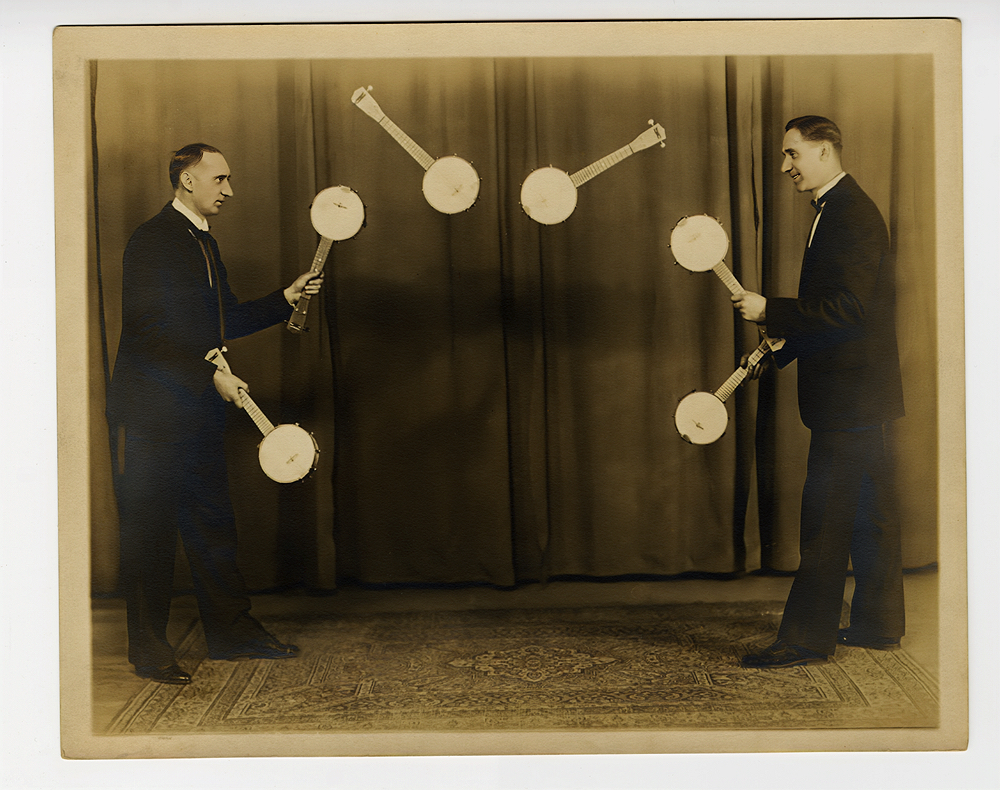
Everything is better on roller skates. At least, that’s what the Ader Brothers thought when they decided that their juggling act—in which they tossed upwards of 12 objects in the air simultaneously—needed more oomph.
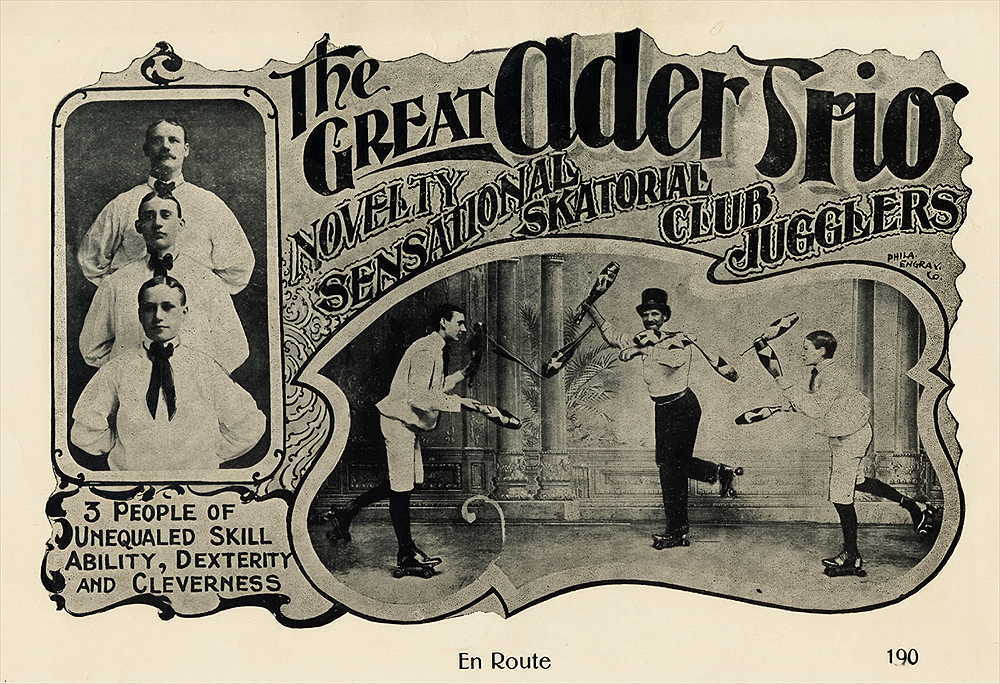
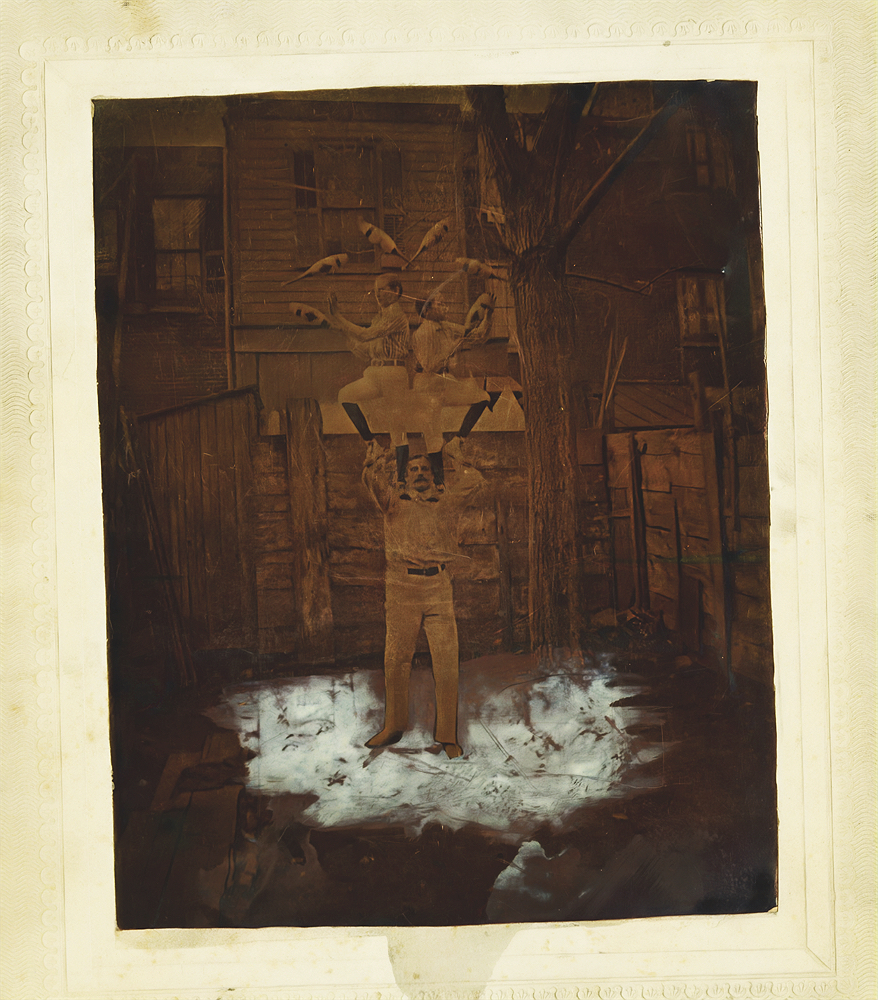
For vaudeville acts of the late nineteenth and early twentieth centuries, constraint bred ingenuity. Acts often only had 10-minute slots, so performers went to extremes to delight the audience. The Aders—David Jr., George, and their father, David Sr.—juggled while roller skating, standing atop each other’s shoulders, and performing acrobatic maneuvers. They even juggled banjos and trumpets, playing tunes on them at the same time. For such an impressive group, little information about them survives today. The International Jugglers' Association even dubbed them “The Mysterious Ader Brothers.” What we do know about the act, however, is immortalized in photographs and datebooks in the Harvard Theatre Collection at Houghton Library.
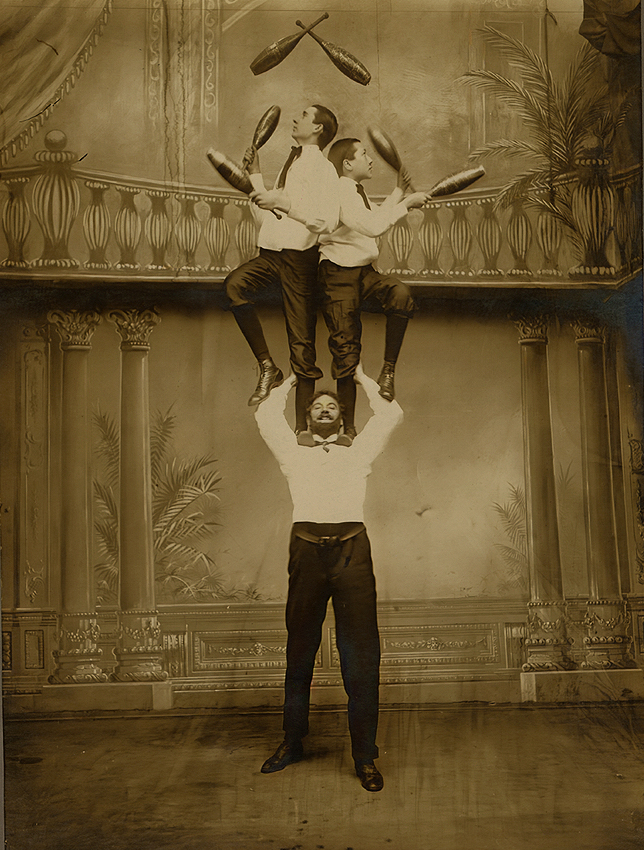
Image courtesy of the Harvard Theatre Collection/Houghton Library
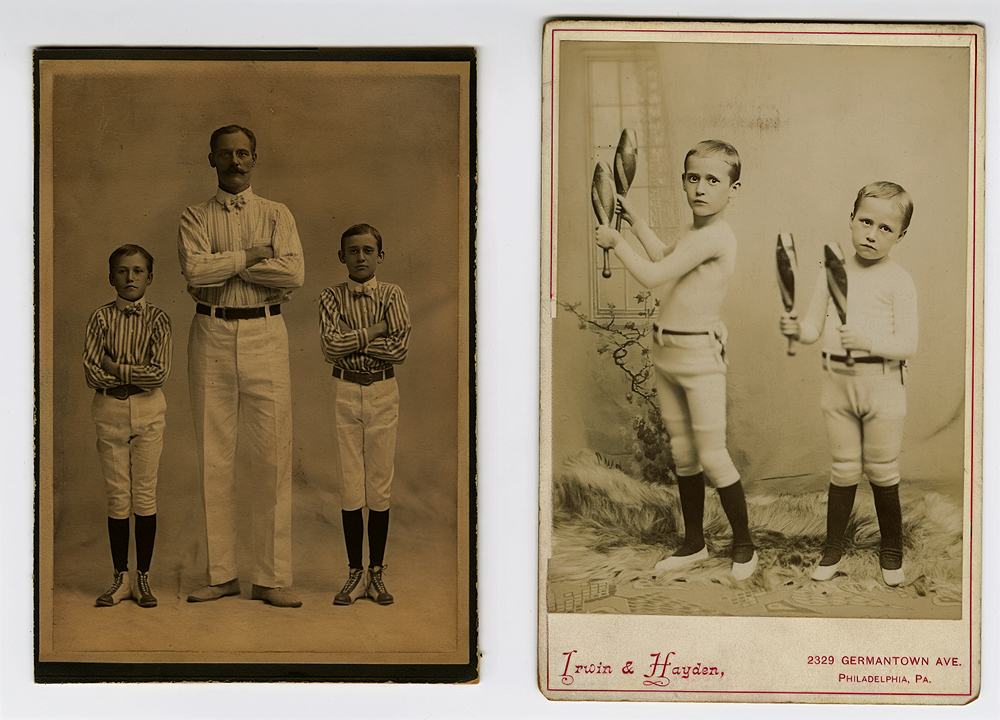
Before they entered grade school in their native Philadelphia, George and David Jr. had learned to juggle. As teens, their father (a machinist who moonlighted as a juggler) taught them to stand on either of his shoulders and toss six pins back and forth over his head. In one photograph, they perform the feat onstage—the boys’ expressions relaxed, almost bored. After all, this was just another day at the office.
Images courtesy of the Harvard Theatre Collection/Houghton Library
In 1908, the group hit the road, touring vaudeville venues around the United States and Canada. It was grueling, low-paid work—vaudeville shows looped several times a night to accommodate multiple audiences—but it was the path to stardom for many, such as Harry Houdini, Judy Garland, Ethel Waters, Bob Hope, and Fred Astaire. “If anything happens to me, my name is George Ader,” reads the back page of George’s tour datebook. It’s not clear what high drama George anticipated from the family-friendly vaudeville circuit, but it appears the cross-country tour of these “novelty, sensational, skatorial, club jugglers” (as they called themselves in advertisements) went off without a hitch.
The Ader sons were young men when World War I broke out, and they left vaudeville behind to fight. When they returned, movies were ascendant, and by the 1930s, David was working in a stationery store and George at a heating company. One hopes that sometimes, though, they still broke out their roller skates.