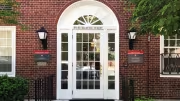
Harvard Square’s newest performance venue, Arrow Street Arts (ASA), celebrates its official opening on April 1 with Boston Opera Collective's production of La Tragédie de Carmen (April 4-7).
ASA is a combined black box theater and street-side studio that replaced the American Repertory Theater’s experimental venue, OBERON, and abutting former retail space. The combined 11,500-square-foot facility provides much-needed rehearsal and performance opportunities and is equipped to handle a wide variety of projects.
ASA founder and long-time Cambridge resident David Altshuler envisions everything from “traditional musical theater to live music, dance, spoken word, circus, comedy, immersive audio, magic, and experimental programs that integrate multiple art forms.”
A weeklong festival celebrating the new space that had been planned for March is now instead slated for September. That event will feature regional artists, organizations, and diverse genres that showcase talents from the traditional to the avant-garde. The event will be produced by Liars and Believers (LaB), a Cambridge ensemble led by Georgia Lyman and Jason Slavick focused on artist-generated collective theatrical content. Fostering regional talent is also part of ASA’s overall mission—and goes along with revitalizing the arts and accessibility to them. “We love Harvard Square,” says Altshuler, “and we believe that fresh programming delivered in renewed and expanded spaces will make a difference and motivate traditional and new audiences to come back to the Square and join us on our journey of exploration and discovery.” An an entrepreneur and philanthropist, Altshuler is the founder of the Tech Foundation.
ASA was designed to accommodate audiences ranging from 150 to 600 people—the kind of flexible interior that best supports the arts in New England. Moreover, ASA’s educational programming will help foster exploration of topics like affordability, increasing arts resources, and equity. “We are dedicated to being a part of the ‘why and how’ as we move beyond the pandemic and bring life back to our shared spaces,” Altshuler notes. “We are confident that ‘art builds community.’”