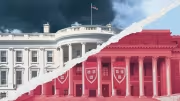
A working title for one story in this issue of Harvard Magazine—I challenge you to guess which one—was “The Maximalist.” In truth, the term applies to several of our features, not to mention the mood on campus this summer and early fall, as Harvard faced maximal pressure from the Trump administration and wrestled with the news that the University might be close to a massive settlement.
Maximalism, as outlined in these pages, can be a wonderful thing, spurring invention and discovery, encouraging audacious goals, such as scientist David Liu’s quest to speed up evolution within the cells. It can bring delight, as in Dutch Golden Age painter Rachel Ruysch’s floral still lifes—now at Boston’s Museum of Fine Arts, in an exhibit guided by Harvard professor Charles Davis—with details so luscious that they serve as guides to eighteenth-century biodiversity. (I hope our reproductions offer both an education and a welcome moment of zen.)
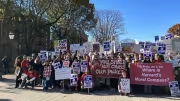
On campus this fall, the normal buzz of return has been mixed with a sense of uncertainty.
Maximalism can also shift the contours of society, which is the focus of our cover story on Supreme Court Chief Justice John Roberts Jr. ’76, J.D. ’79. With piercing logic, contributing editor Lincoln Caplan examines the Roberts Court’s maximalist view of the powers of the executive branch. Then he imagines the consequences, for Roberts’s own legacy and for the nation.
Harvard, like many other institutions, feels the effects of those rulings in real time. On campus this fall, the normal buzz of return has been mixed with a sense of uncertainty. Even if a long-discussed settlement comes to fruition, the financial and political ground rules have shifted, and the University will walk away changed: shrunken in some ways, expanded in others, with new structures and rules and guidelines and restrictions.
Change can be good, but it needs to be managed, and that will be the task ahead. As public opinion about higher education shifts outside Harvard’s gates, the University is wrestling with issues at the heart of campus life: identity, belonging, intellectual rigor, the experience in the classroom and in the dining halls, the value of speech, the way to dissent, the obligation to a community. It all does feel like a very big deal.
— Joanna Weiss, Editor