The kitchen at Ten Tables is like none we’ve ever seen. Red-faced cooks don’t swear, or growl “Plate this!” at scuttling waitstaff. Nor do they sweat heavily amid grubby conditions. We know this because, as the name states, Ten Tables is very small. The diners, chef, and server share one good-sized room divided only by a slim aluminum counter which doubles as a table for two facing the kitchen.

Courtesy of Ten Tables
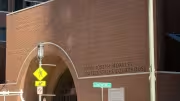
The storefront at Ten Tables suggests European charm
That casual, at-home feeling is entirely by design. “I like customers to feel like they are part of the experience, not that the experience is happening to them,” says owner Krista Kranyak. “Everything is personal here.” She opened Ten Tables about five years ago, having worked in restaurants since she was 15—her first job was as a hostess with a “brother who was a cook in the kitchen yelling at me.” For the first two years as an owner, she waitressed every night, and took not one day off. Slowly she hired a competent, fresh-faced staff impassioned by the work of serving affordable, “high-quality food that is simple and tasty,” she explains. “I think everyone here feels like this is part of their own” creative venture.
During our visit, the staff conducted its work to the rhythms of Thelonious Monk and Miles Davis; and the group’s easy, happy engagement couldn’t help but rub off on the rest of us. Our grinning waiter looked like a young Kevin Bacon, long bangs swept to the side, as he explained how the Mediterranean grain farro is cooked slowly to ensure a satisfyingly firm but chewy texture. At the end of the meal, chef David Punch came around to greet regulars and then, smiling and eager, asked how we had found the food.
The menu is selective: five appetizers, five entrées. We ordered, then sipped a 2004 Beaujolais and dipped bread into bright green olive oil while discussing other tiny eateries we have favored. (One gem is Cambridge’s Baraka Café, which serves authentic North African fare.)
Ten Tables
597 Centre Street
Boston (Jamaica Plain)
617-524-8810
www.tentables.net
Open daily for dinner.
Reservations recommended.
At Ten Tables, the emphasis is on European tastes. The homemade charcuterie plate ($9) included a tangle of salty shredded pork slow-cooked in its own fat (known as rillettes), with two matchstick-sized pickled ramps, five golden raisins in sauce, and two buttery toast points. More side tidbits with the pork might be a good idea, but everything there was delicious. The mussels and spinach in cream saffron sauce ($7)—somewhere between soup and dip—offered comfortable, if undifferentiated, flavors and could have used something crisp, raw, or zesty to offset an overall mushiness.
The entrées were sensational. Rubbed roasted pork loin ($18) came with celery, carrots, shallots, and fresh green fava beans in a broth, along with Punch’s outstanding (and sneakily hot) romesco, a traditional Spanish sauce he often makes with árbol chiles, crushed pine nuts, garlic, and sun-dried tomatoes. A cool, whipped, black-olive aioli topped the very fresh, slightly crusty bluefish ($20) that arrived with farro and perfectly wilted spinach. The winsome hazelnut brown-butter cake ($6) with homemade vanilla ice cream, blackberries, and sauce, clinched a delightful evening, though others may opt for the chic chocolate mousse with Chantilly ($6).
In the end, Kranyak’s vision reminds us that the best gifts often come in small packages wrapped by loving hands.
~N.P.B.