In the fall of 1986, Elizabeth Frates’s life trajectory changed with a single phone call. She was Beth Pegg then (her maiden name) and had just arrived for her first year at Harvard College, a math enthusiast planning to concentrate in economics. Although she was the youngest in her family, everyone thought that “Littlebit” would eventually run John Pegg and Company, a financial advising and accounting firm on Park Avenue in Manhattan that her grandfather had founded in 1925. The phone call would shatter that plan.
She had just purchased all her economics books at the Coop. “I was just so excited, I wanted to tell my parents,” she said. “So, I called home, and my mom picked up in a frenzy, saying, ‘Oh, I’ve been trying to reach you.’” Then, a non sequitur: “‘Your father loves you very much.’” Hearing those words, Frates remembers, “I knew the conversation was going to go south very quickly—which it did.” Her father, age 52, had suffered a heart attack and a stroke. He was left paralyzed on his left side.
Littlebit and her father were close. “I’m 18 and wondering, ‘Why did this happen to my dad?’” she adds. “I don’t know anything at all about medicine. Nothing. I don’t know biology. But I’m going to figure this out. This…is going to be what I do with myself.”
It turned out that Robert Pegg had been living a singularly unhealthy lifestyle. He pushed himself hard, often working past 11 p.m., sustaining himself on cake, cookies, and hard candies he kept in his office desk drawer, then sprinting to catch the last train home from Grand Central Station. Sometimes he didn’t make it and slept on a cot in the office. “Dad was a smart guy,” Frates reflects. “Yale. Columbia Business School. Running a company. But he didn’t know how to take care of himself, and he didn’t even see his own doctor. I’m not sure he had a doctor.”
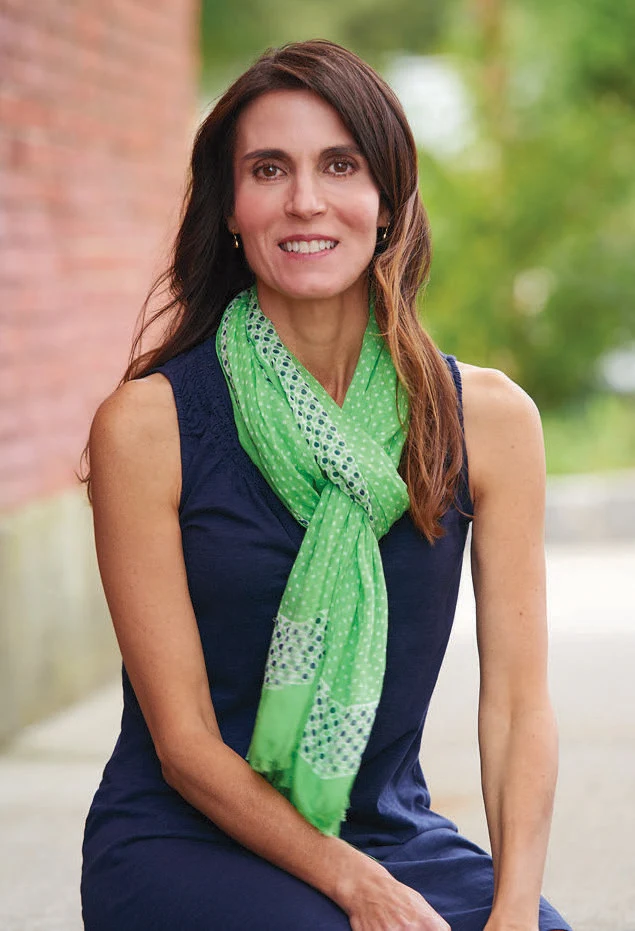
Her father’s health crisis led Frates to change her undergraduate concentration, write her senior thesis on the effects of psychological stress on the heart, and attend Stanford Medical School. Fast forward 40 years, to the spring of 2026. Frates, who graduated from the College in 1990, is now an associate professor at Harvard Medical School (HMS) in the department of physical medicine and rehabilitation. She’s also the director of lifestyle medicine and coaching in the department of surgery at Massachusetts General Hospital. And she is leading an intensive two-day class on lifestyle medicine—introducing physicians to a program that is singularly simple, and also surprisingly difficult to implement.
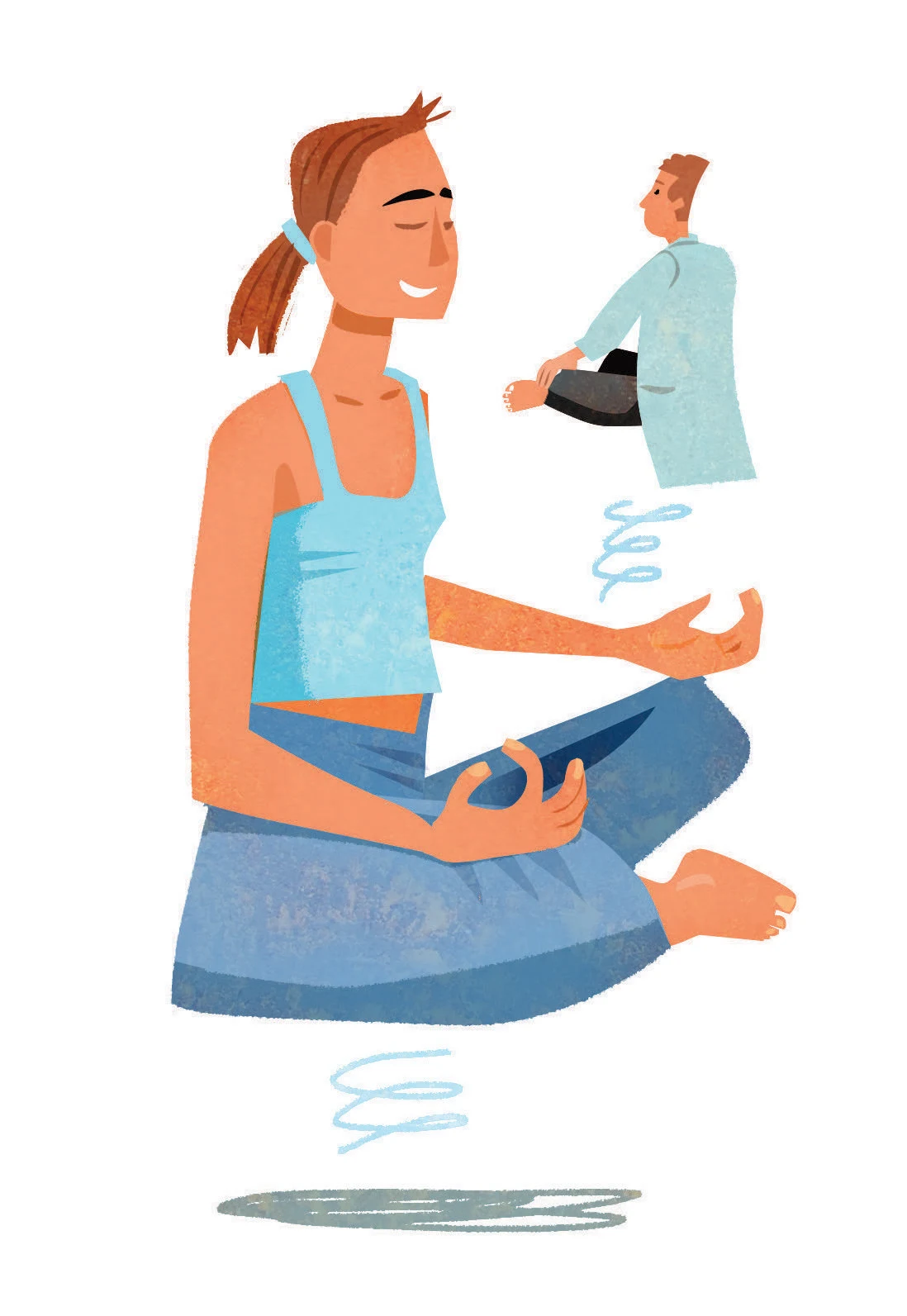
There are, it turns out, six interlocking healthy habits of body and mind that promote life-enhancing biological processes. (If you’ve ever been told, “Eat your vegetables,” “Run outside and play,” or “I want you in bed by…,” then your parents have already given away half the game.) These practices work alone, but are even better together, weaving a mesh of protection that promotes added years of healthful, active life. Set up as opposing choices, they seem obvious: you could sit all day, or do something that makes your heart beat faster; live with minimal human contact, or laugh frequently with colleagues and friends; take up smoking or drinking, or limit your riskiest behaviors; live on burgers, fries, and soda, or make nuts, whole grains, fruits, and vegetables your staple foods; react to stress with an escalating response, or learn how to lower your heart rate and blood pressure; stay up late surfing social media, or deliberately pursue deep, restful sleep.
But in everyday life, doing the right things all at once is not so easy—and knowledge isn’t enough. The results of one study of patients with high blood pressure are instructive: simply knowing about the benefits healthy habits confer moved just one in nine patients to take better care of themselves.
What Frates really wants, then, is to get physicians involved—and to make those pillars a fundamental part of formal medical training. But she faces some substantial obstacles: a packed curriculum, an American healthcare system that is more oriented toward treating ailments than encouraging healthy behavior, and even some long-embedded tendencies in the way doctors speak to their patients.
But Frates and other leaders in the field of lifestyle medicine are hopeful that they can change the system. It starts with training physicians to change their own habits.
Leading the lifestyle medicine class this past April in the Joseph B. Martin Conference Center at Harvard Medical School, Frates starts by inviting everyone to stand. Then she reads aloud the guidelines for each of the six tenets of lifestyle medicine in turn, starting with exercise. Those who adhere (engaging in at least 150 minutes of activity, or 75 minutes of vigorous activity a week) remain standing. Those who don’t will take a seat. And so on. By the time she reads the sixth set of criteria, few remain on their feet.

The point is that perfect adherence is hard. “We’re not here to judge,” says Frates. “We’re compassionate and we’re honest.” She is modeling the approach she will teach her students: a nonjudgmental, empathetic means of effectively interacting with their patients. At the same time, she interweaves scientific research with personal history as she introduces the topics together with leading subject experts who share their knowledge. The more than 90 students, including the presidents of the lifestyle medicine societies of Romania and Italy, come from around the world—North, Central, and South America, Europe, Asia, and Greenland—and all are paying rapt attention.
They understand lifestyle medicine as something distinct from the “wellness” industry, a $6 trillion consumer-focused enterprise that dominates social media and operates with few evidentiary standards. Lifestyle medicine “has developed as an evidence-based specialty—rooted in rigorous epidemiology and randomized clinical trials,” notes HMS Dean George Q. Daley. But its promises are just as dramatic: to prevent, treat, and even reverse many chronic diseases.
In her workshop, Frates delves into the evidence, and the biochemical processes, that make the pillars of lifestyle medicine so critical, and also so interconnected. She rattles off the names of hormones affected by the loss of sleep (leptin, ghrelin) and how they drive hunger and insulin resistance. She explains how sitting harms mitochondrial health, raises triglycerides, and disrupts glucose control. How dietary fiber helps regulate lipid, glucose, and energy metabolism and even generates short bursts of natural GLP-1s (glucagon-like peptide-1s, hormones that promote weight loss) lasting one or two minutes in the gut. How lack of sleep may increase stress, and how the cortisol released during stressful periods can lead to increased fat storage, negatively impact blood pressure and sleep, and, over the long term, increase inflammation and lower immunity. How people who are stressed are also less likely to exercise.

On the positive side, she notes how exercise releases the hormone irisin, which can transform ordinary white fat into metabolically active brown or beige fat (which burns calories to generate heat), and how in animal models that has been shown to affect beta cell function and regeneration in the pancreas, important for people with diabetes, pre-diabetes, and those looking to avoid this chronic condition. How the simple act of touching, hugging, and massaging releases oxytocin, which supports social bonding, trust, and emotional connections. In sum, she says, “The more we learn about the science, the more we learn how these pillars are connected.”
For Frates’s students, these physiological explanations are fundamental to their learning experience: she is teaching practicing physicians and other healthcare professionals who already speak this language.
Her aim? To persuade them to adopt these practices in their own lives, model them, and then to prescribe lifestyle interventions for their patients. (Not to the exclusion of pharmaceuticals, she emphasizes—pills have their place beside the pillars.)
Frates served as the president of the American College of Lifestyle Medicine (ACLM) from 2022 to 2024 and helped write the first certification exam for physicians and healthcare professionals in the field; she has also co-authored four books on the subject. Founded in 2004, the ACLM began offering accreditation to clinicians in 2017 and has trained hundreds of thousands of healthcare workers across 92 countries in what is one of the fastest-growing disciplines and residency curricula in modern healthcare. The ACLM’s lifestyle medicine residency curriculum, for instance, grew from seven programs spanning the United States, Puerto Rico, and Canada at its launch in 2018 to 368 in 2024. Frates has made lifestyle medicine course materials for medical schools, bachelor’s and master’s programs, and even for pediatricians and teachers of teenagers—available free on the ACLM website so that they can be replicated elsewhere. And she has inspired physicians around the world to bring lifestyle medicine to their own countries, in places like South Korea, Romania, Greece, Singapore, and Nigeria.
At HMS, students in the four-year medical school curriculum were first offered “Nutrition and Lifestyle Medicine” as a longitudinal theme in 2020, with the material integrated into existing courses. In 2024, the school added a required three-hour standalone online course, “Nutrition Science for Health and Longevity: What Every Physician Needs to Know.” Students report that the class showed them how to effectively integrate nutrition into clinical practice and inspired them to eat better themselves.
Harvard is in many ways the ideal place to train physicians in lifestyle medicine. The University is home to many of the world’s leading experts in the six pillars.
For students who want to go deeper, Frates leads a popular lunchtime lifestyle medicine interest group for MDs-to-be. The gatherings typically attract 30 to 50 members of the first-year class, says fourth-year medical student Ellie Enichen, but the ideas percolate more widely. The tenets of lifestyle medicine have become so prevalent among her HMS friend group, she says, that when they go together to the gym or on a run, or cook a meal together, they refer to the six pillars offhandedly, joking about how they are also making social connections. Frates, she adds, devotes a lot of time to mentoring future physicians; Enichen’s HMS classmate, Vivian Wang, describes her as “devoted” and “inspiring to the next generation of clinicians.”
Frates also runs a journal club devoted to lifestyle medicine for residents and physicians in Harvard’s affiliated hospitals and healthcare facilities. Participants in the journal club discuss the latest published scientific studies online, often with guest experts sharing their researxch.
Harvard is in many ways the ideal place to train physicians to integrate lifestyle medicine into their practices. The University is home to many of the world’s leading experts in the six pillars: professors of nutrition and epidemiology Frank Hu and Walter Willett, the author of Eat, Drink, and Be Healthy: The Harvard Medical School Guide to Healthy Eating; Baldino Jr. professor of sleep medicine Charles Czeisler; professor of medicine I-Min Lee, who developed national and global guidelines for physical activity; Cabot research professor of public policy Lisa Berkman and professor of psychiatry Robert Waldinger, who have studied the impact of social connections on happiness and longevity; former assistant HMS professor of psychology Robert Brooks; and assistant professor of medicine Darshan Mehta, the director of the Benson-Henry Institute for Mind Body Medicine.
Harvard’s ranks of teaching physicians also include many specialists in what is probably the toughest pillar of all: risk reduction, addiction, and behavioral change. Frates brought some of these doctors to her workshop to share their expertise; the students formed long lines to speak with them in person following their presentations. The class was all in for learning new reasons to eat healthfully, exercise, and manage their sleep and stress levels.
But what has proven most challenging—at HMS and medical schools nationwide—is teaching physicians how to create the conditions that will support lasting behavioral change in their patients.
Frates says the first step is training healthcare providers to transcend their expertise. Experts are people who hold knowledge and power; their natural inclination may be to dictate solutions as top-down prescriptions for patients. But simply telling someone what to do, behavioral research has shown, doesn’t work nearly as well as helping them nurture their own desire for change.
So instead, Frates teaches physicians and other healthcare professionals in her classes to become more like coaches: empathetic, attentive, and deeply focused on the patients’ own desire for improving their health. She encourages them to listen to what the patient is saying and to pay particular attention to the language of change: “I need to lose weight,” or “I want to walk more, but I can’t find the time.” Physicians can help patients explore ways to support that desire, not just logistically, but by tapping into, and perhaps even helping to transform, their own internalized rules and beliefs, as well as their interactions with others. One study of patients with high blood pressure found that, when appropriately coached, about 45 percent of patients achieved adherence to optimal lifestyle patterns at six months, a success rate nearly five times greater than is typical with education alone.
Lifestyle medicine is a team effort: the physician becomes less a soloist and more a conductor, orchestrating further care, education, and support.
What initially compels patients to change is as varied as their personal stories. Sometimes it takes a catastrophic event, as with Robert Pegg. After the stroke, he substantially altered his lifestyle (with help from a physician-led cardiac rehabilitation center) and made an almost complete recovery, except for fine motor movement in his left hand. He changed his diet, began exercising, and cut his work time to just four hours a day. In the Lifestyle Medicine Handbook: An Introduction to the Power of Healthy Habits, published in 2018 to help physicians by pairing clinical guidelines with behavior change strategies, Frates describes how he began to spend more time with family and friends. And how, “for the first time in my life, I saw him kiss my mom in front of me. It was a little peck on the cheek,” she writes, “but it was a big change and an important rearranging of his priorities.” He felt that he enjoyed life more fully, she adds, and “actually reached optimal health and wellness” after his stroke. He lived another 27 years.
During one of Frates’s journal club meetings this spring, a presenting physician highlighted one common, non-life-threatening condition that frequently kickstarts lifestyle changes in men: erectile dysfunction. The inability to attain or maintain an erection, which can also be an early warning sign of cardiovascular disease, affects 52 percent of American men between the ages of 40 and 70.
Another compelling impetus to change, suggests Frates, is tailored to parents who consistently put their children’s welfare ahead of their own: the desire to remain healthy enough to one day play with their grandchildren.
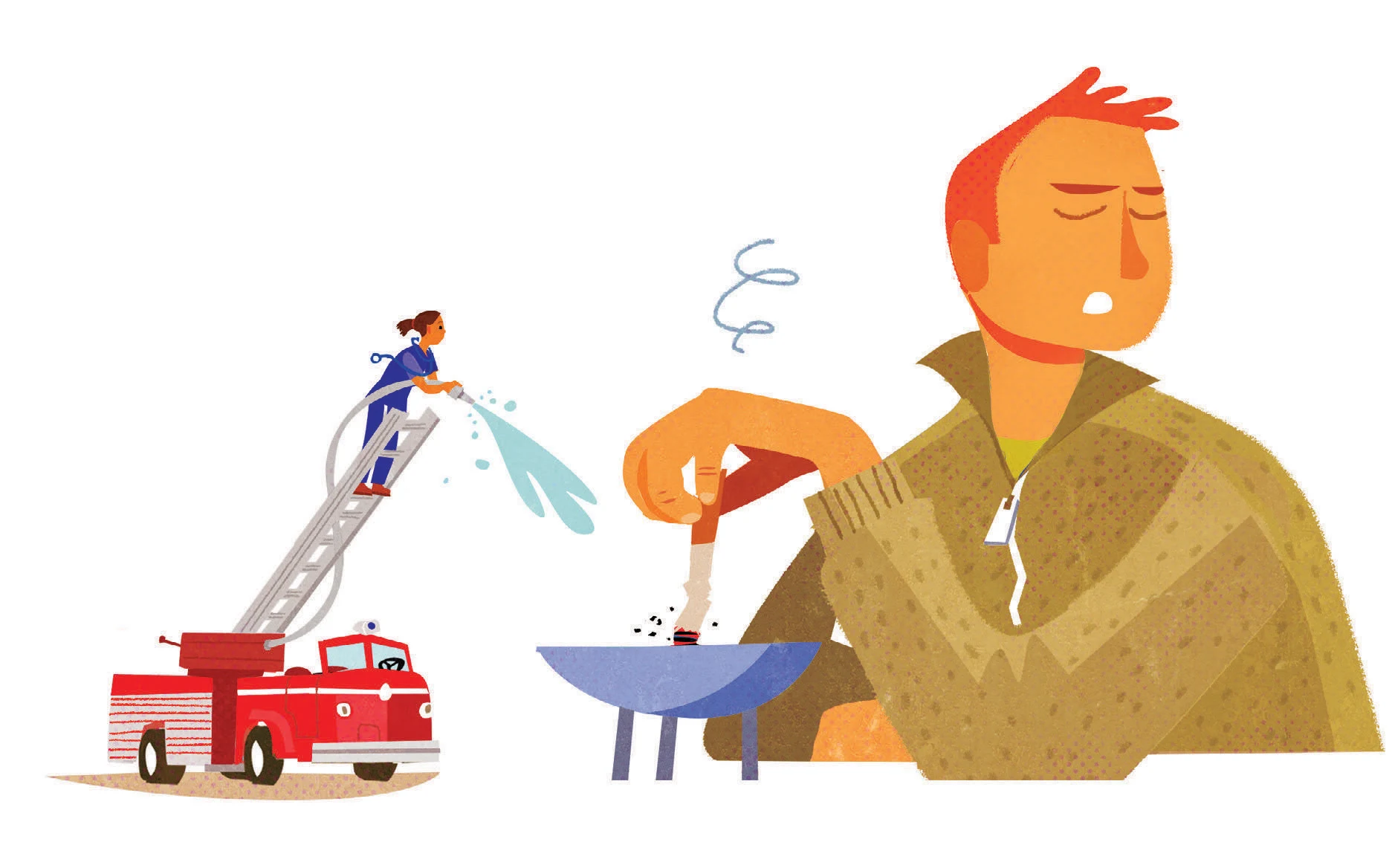
To encourage behavioral changes, providers of lifestyle medicine often borrow from techniques used to treat addiction. Addictive substances are defined as forces that hijack the circuits of survival. However distantly connected, an inability to stop eating foods that contain sugar, salt, and fat (something humans evolved to seek out, for survival in a world of scarcity) shares deep biochemical roots with the innate rewards that accompany smoking or drinking. When interacting with patients as a coach, says Frates, healthcare professionals use motivational interviewing to encourage behaviors that promote health. They start with reflective statements: “It sounds like stopping is really important to you,” and “You’ll stop when you are ready.”

Rather than handing down instructions, in other words, doctors encourage patients to talk about their goals and the obstacles to reaching them. Once changes have been implemented—a process that can take months or years—patients can reflect on the resulting rewards, even the small ones: feeling great after a walk, waking up rested, or feeling good after a healthy dinner.
It’s a practice that’s earned the approval of leaders within the medical establishment. “We’ve incorporated these elements into the HMS curriculum because every physician should understand these principles,” Daley says. Some of the practices Frates is teaching are also making their way into HMS’s external-facing programs. During her first year of medical school, Wang teamed up with Frates to run volunteer and peer-led wellness workshops for underserved youth in the Boston area, built with support from the HMS Office of Community Centered Medical Education. Called LIVELY (for Lifestyle Interventions Through Empowerment and Learning for Youth), the program won a volunteer organization of the year award in 2025 from the Boys and Girls Clubs of Boston, and received additional funding from the American Psychiatric Association. It has since expanded to other institutions and was adapted for implementation in a Boys and Girls Club in Puerto Rico by Noah Janfaza ’25.
On the national front, lifestyle medicine has moved from the periphery of organized medicine into the American Medical Association’s house of delegates, where it has held seats since 2024, giving the field a voice in setting national medical policy.
But how to demonstrate that whole-person interventions can be cost-effective is the billion-dollar question. In 2021, a study of payment practices for lifestyle medicine pointed out that “adoption is hindered by a reimbursement policy that supports traditional fee-for-service payment, incentivizing brief appointments, medications, surgeries, and procedures.” Original Medicare covers just three comprehensive lifestyle medicine programs—all for intensive cardiac rehabilitation.
Lifestyle medicine advocates point out that the current system is costly, too: the chronic disease epidemic of obesity, heart disease, cancer, and diabetes accounts for much of the $5.7 trillion in annual U.S. healthcare expenditures, which represents 18 percent of the nation’s economic output. And the Make America Healthy Again (MAHA) movement, popularized by U.S. Secretary of Health and Human Services Robert F. Kennedy Jr. ’76, has embraced some of the principles of lifestyle medicine; at the time of publication, the Center for Medicare and Medicaid Innovation had plans to launch a pilot in October 2026, borrowing the MAHA name, to test the use of lifestyle interventions.
The MAHA ELEVATE (Make America Healthy Again: Enhancing Lifestyle and Evaluating Value-based Approaches Through Evidence) model will award $100 million to cover and assess 30 lifestyle medicine proposals during a three-year period. If the interventions work well enough in the Medicare population, and with favorable enough economics to justify incorporating them into existing coverage, the broad adoption of lifestyle medicine alongside existing treatments could follow.
Those are big “ifs,” of course; the future will depend on empirical results, as well as on politics and priorities within the medical community. But the pilot aligns with Frates’s vision of what healthcare should be. A visit to the doctor, in addition to collecting measurements of weight, blood pressure, and other vital signs downstream of lifestyle, would include a comprehensive assessment asking about patients’ habits of movement, nutrition, and substance use, their connections to others, and their commitment to recovery through sleep and stress management. (A validated assessment tool for all six pillars, created by Frates and colleagues, is available for use by physicians and patients alike.)
Guided by the patient’s answers, the physician would become less a soloist and more a conductor, orchestrating further care, education, and support. “This is a team effort,” Frates told her class. “It requires physicians, nurses, health coaches, registered dietitians, physical therapists, social workers, [and others to] fully address the patient’s needs and help the patient achieve their goals.”
And, as she likes to point out, it’s all driven by evidence. “This is what keeps me going,” she says. “I love looking at the science, and we are learning new things pretty much every week.”