Photograph by Stu Rosner
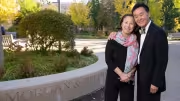
John Chervinsky
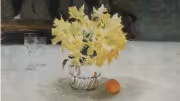
Like many people, John Chervinsky takes his work home. But what this lab engineer takes home may one day end up in a museum. In his second career, as a still-life photographer, he places scientific bric-a-brac (a magnet, a tuning fork) alongside other objects (a candle, a lily), aiming to ask a question or illustrate a problem. “The creative side of good science comes from the same place in the mind as the creative side of making art,” he says, “yet scientists and artists don’t interact with each other as much as they should.” His own propensity to tinker, whether with photographs or lab equipment, comes from his father, who was a machinist and factory foreman in Niagara Falls. In 1984, after earning a degree in electrical engineering, Chervinsky moved to Boston, where in time he got a job as a lab technician with Rumsford professor of physics and McKay professor of applied physics Jene Golovchenko, and also began experimenting with photography. (He still works with Golovchenko, now as the laboratory engineer for the Harvard Nanopore Group; see “A Personal Genome Machine?” March-April 2007, page 11.) When, all within a few weeks in 2001, his wife, Kirsten, became seriously ill, the World Trade Center was attacked, and his friend and fellow photographer Guy Pollard died unexpectedly, Chervinsky found himself retreating often to his attic studio. Photography, no longer merely a hobby, helped him deal with a life that then was “just falling apart.” The work he did impressed the local arts community, and in 2005 the Griffin Museum of Photography mounted his first solo exhibition. Since then, he’s shared his scientific still-lifes with gallery-goers from Santa Fe to New York City.