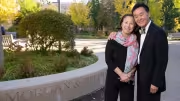
The Harvard Alumni Association (HAA), says new president Martin J. Grasso Jr. ’78, offers “the luxury of staying in the conversations we had as undergraduate and graduate students with the most interesting and intellectually stimulating people we know.” The Boston-based CEO of Pearl Street Capital Group began his one-year term July 1, taking over from Paul L. Choi ’86, J.D. ’89. The HAA includes 330,000 alumni worldwide, and coordinates clubs, SIGs, and class reunions, along with educational trips, online learning, international gatherings, and opportunities for professional and social networking.
The HAA also harnesses the power and talents of scores of alumni volunteers who serve on committees, help put on Commencement, recruit and interview applicants for admission, produce class news and notes, and otherwise keep classmates engaged in University life.
As one such volunteer, Grasso has served on the HAA board’s executive committee since 2013 and is a former co-chair of the College broadening engagement committee charged with cultivating a critical base of support: alumni between their twenty-fifth and fortieth reunion years. The work has kept him close to intellectual life at the University, the vitality of young, bright students, and a cohort of enthusiastic fellow alumni. He says he has also enjoyed “mentoring high-school students in the college application process who are keenly interested in attending Harvard.” He credits his public-school teachers in Revere, Massachusetts, as well as a “young, scrubby-faced, junior admissions officer”—William R. Fitzsimmons ’67, Ed.D. ’71, now dean of admissions and financial aid—with convincing him that “Harvard might actually be within reach, both academically and financially.”
Grasso’s also grateful to his parents’ teachings: the effective and “cheery nature” that his mother, a homemaker, brought to volunteer civic work; the way his father, a postal worker, gas-station manager, and World War II veteran, exemplified “the value of a job well done by somehow dignifying even the most menial of tasks.” Both still influence his approach to life and work.
Pearl Street Capital Group, he explains, “provides debt capital to very rapidly growing technology and life-sciences enterprises that are backed by the elite venture capital syndicates in the U.S.” The job not only stimulates Grasso’s “brain plasticity, virtually every day,” it also contributes to the former ice-hockey player’s lifelong, extensive workout regimen: he monitors scientific advances in sports medicine and fitness training in search of “new methodologies for maintaining physical health and longevity.”
These stimuli helped him set the theme for the HAA board of directors’ upcoming annual meetings. (The February session, for example, features George Church, Winthrop professor of genetics and director of the Personal Genome Project.) Grasso plans to emphasize how “volunteerism in general, and being a part of the HAA in particular, greatly improves the quality of one’s life,” he adds. “My experience at the HAA has made this notion axiomatic for me.”