In “Struggle for Existence,” the third chapter of On the Origin of Species, Charles Darwin describes not only constant competition and scarcity but also cooperative interdependencies between plants and animals. One major example: bumblebees and the European violets they pollinate. If the bees were to go extinct, Darwin speculated, so would the flowers.
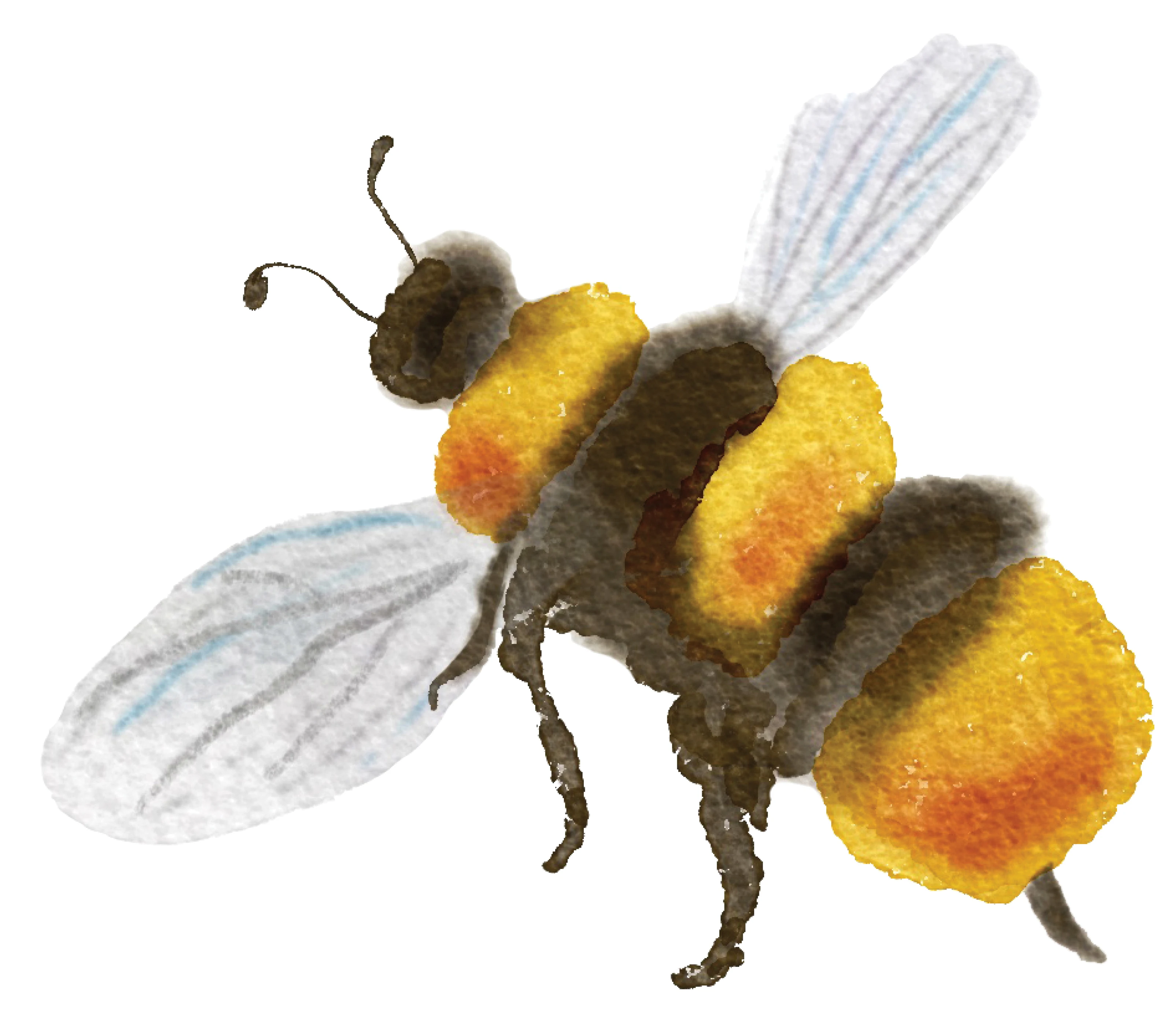
A century and a half later, Darwin’s example still animates scientific research. In a study published last September, professor of organismic and evolutionary biology Charles C. Davis and his co-authors modeled the interactions between bees and violets in the United States. They found that one way climate change threatens plant species is by disrupting their relationship with pollinators.
Davis, who studies biodiversity and serves as the curator of vascular plants at the Harvard University Herbaria, explains that while bees play a significant role in the life cycle of violets, the plants do not strictly depend on them to survive. “These are strange species,” Davis says: they can reproduce sexually through pollination, or they can reproduce asexually through a self-fertilization process in which the flower never actually opens.
Still, it would be a problem if flowering plants like violets reproduced only asexually, says Shijia Peng, a former postdoctoral fellow in Davis’s lab who conducted the bulk of the research for the study, which was published in the Proceedings of the National Academy of Sciences. “It would decrease genetic diversity” and eventually “maybe lead to extinction,” says Peng, now at the University of Oxford.
As the climate changes, the study found, so too does the relationship between bees and flowers. Using herbarium specimens and crowdsourced observations from amateur naturalists, Peng focused on 23 violet and seven bee species. She built a dataset of more than 15,000 violet observations collected from 1895 to 2018 and more than 6,700 crowdsourced bee observations collected between 1900 and 2022. This yielded thousands of datapoints, each taken at a specific location across the eastern United States.
By mapping the flowering, fruiting, and climate information and cross-referencing it with bee observations, the researchers could see when bees and violet flowers were in the same place at the same time—and found an increasing separation between the two partners. During the last 120 years, rising temperatures have shifted when violets bloom, while the timing for bees remains the same, Davis says: “They’re falling out of sync with each other.”
This research suggests that the usual practice of quantifying a given species’ extinction risk—which doesn’t consider its interactions with other organisms—might not tell the full story. Peng argues that global conservation frameworks, based on decades of studies that don’t take cooperative mutualisms into account, may be underestimating some species’ true level of vulnerability. The new study’s “stunning insight,” says Davis, “was that, if you look only at the plant side of the equation, you don’t see particular threats to the species. It’s only once you factor in this interlocking mutualism that the picture of the threats starts to really crystallize.”