Before he was the acclaimed author of The Martian Chronicles and Fahrenheit 451, Ray Bradbury was just another teenage boy with a science-fiction zine. Pronounced “zeen,” these self-published, often-low-budget magazines are staples in subcultures and underground movements—including punk-rock devotees, palindrome-writers, and the riot grrrl feminists of the 1990s—but the medium first got its start in the 1930s, in the bedrooms and basements of devout sci-fi fans. Their zines, which helped launch genre legends like Bradbury and Robert A. Heinlein, were handmade, wacky, and delightful. A single issue might house a hand-drawn comic titled “The Return of the Space Boggle,” a poem about a ghost with dry skin, and an epistle from a teenaged sci-fi author on “the various problems connected with space travel that make it difficult to write up sex properly.”
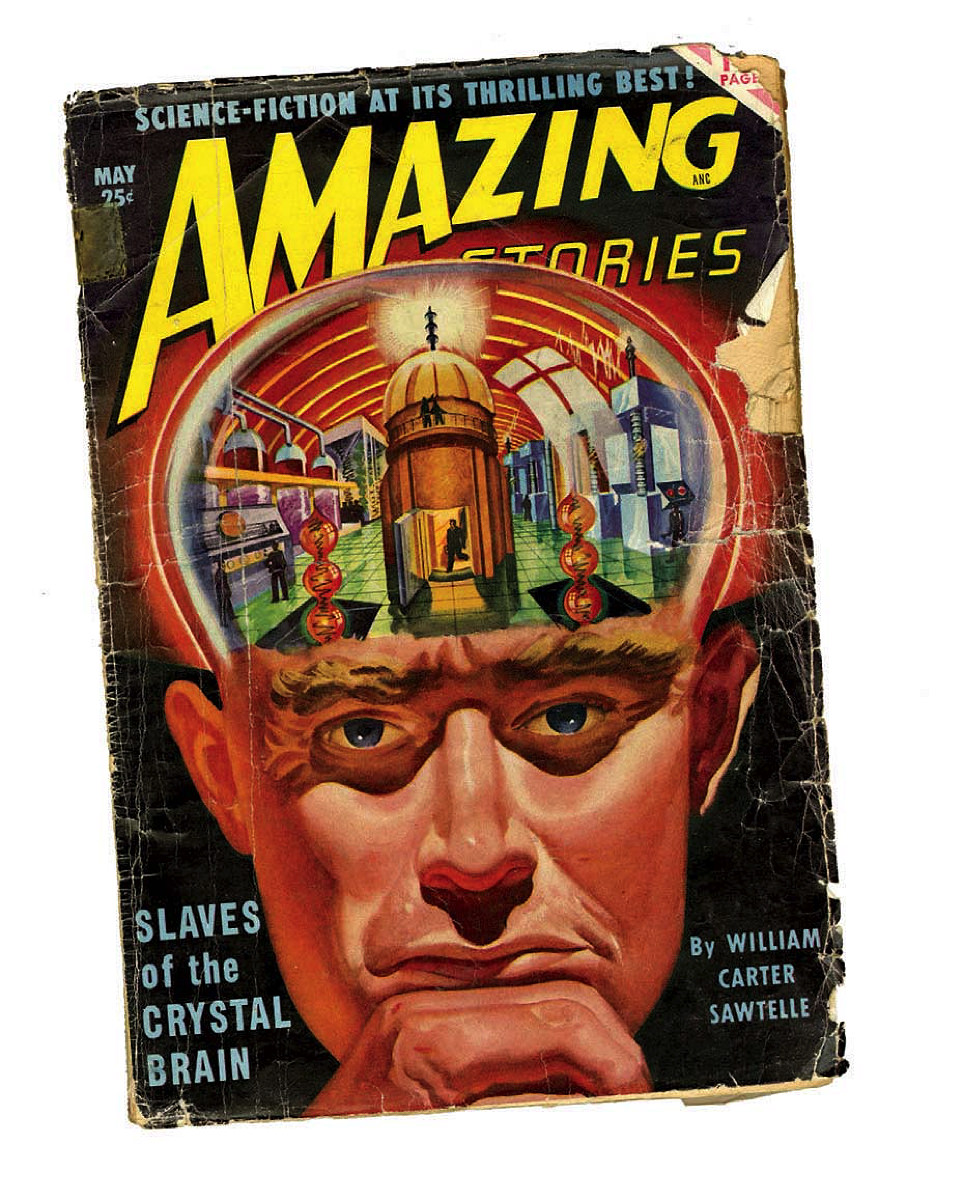
Magazines like Amazing Stories entertained readers for 25 cents
Courtesy of the Houghton Library Science Fiction Collection
Scores of these fanzines (published between the 1930s and 1970s), as well as sci-fi paperbacks, magazines, and manuscripts, have a home in Houghton Library’s Science Fiction Collection. With books from writers like Isaac Asimov and Bradbury, the collection celebrates sci-fi’s capacity for profound social commentary, but it also embraces the genre’s lovable kitsch. For 25 cents, readers could acquire magazines with titles like Fantastic Story (tagline: “A thrilling publication!”) and Amazing Stories (tagline: “Science-Fiction At Its Thrilling Best!”). For 35 cents, fans could delve into books like The Thing That Made Love, the cover of which features a woman fleeing the titular monster who brings “weird, terrible ecstasy” to young women. Curiously, the heroine’s shirt has become partially unbuttoned during the harrowing escape, but her blonde ringlets and red lipstick remain intact. Vidal curator of modern books and manuscripts Leslie Morris says, “You can kind of see the appeal to men here.”
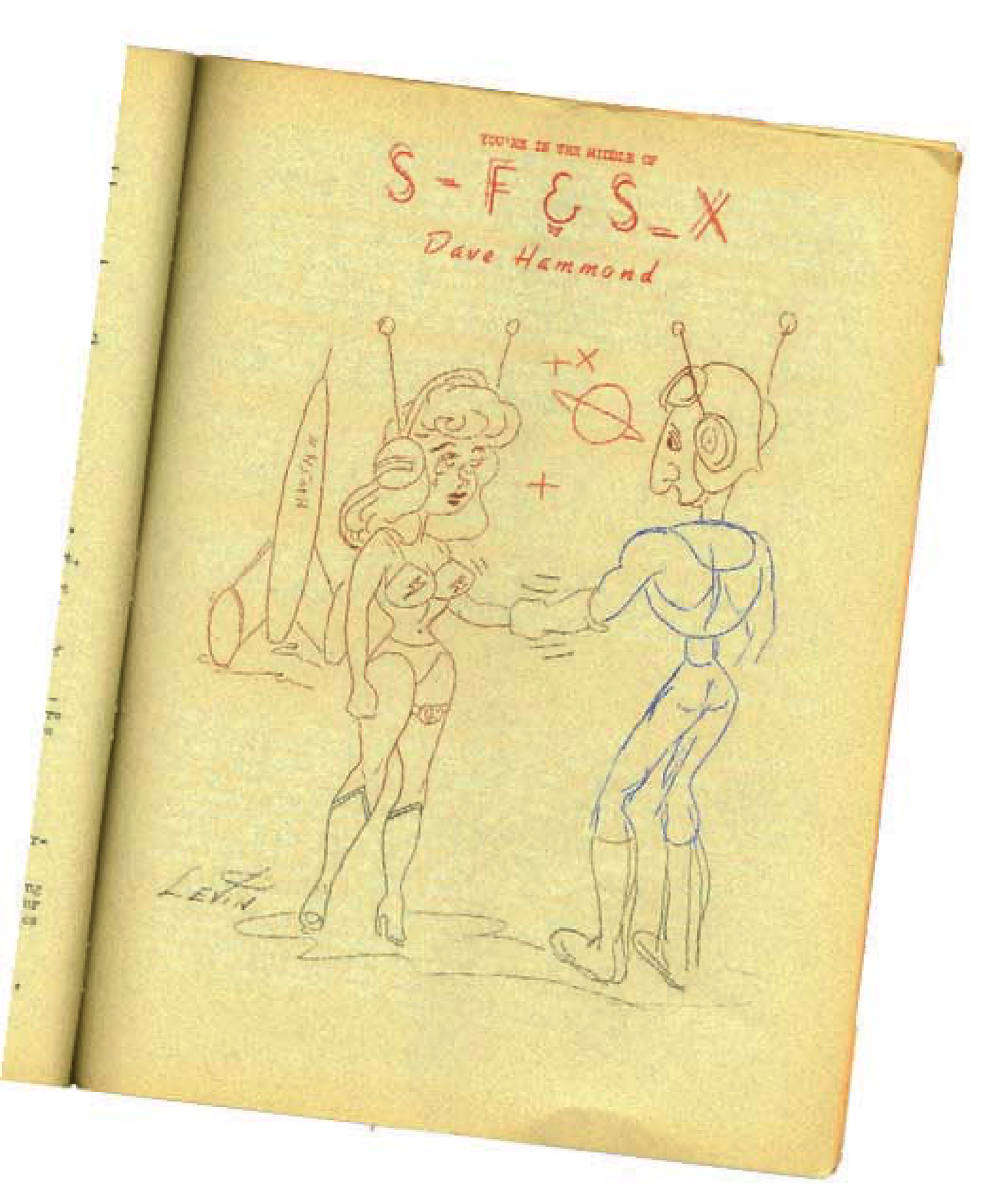
From the fanzine, Confusion
Courtesy of the Houghton Library Science Fiction Collection
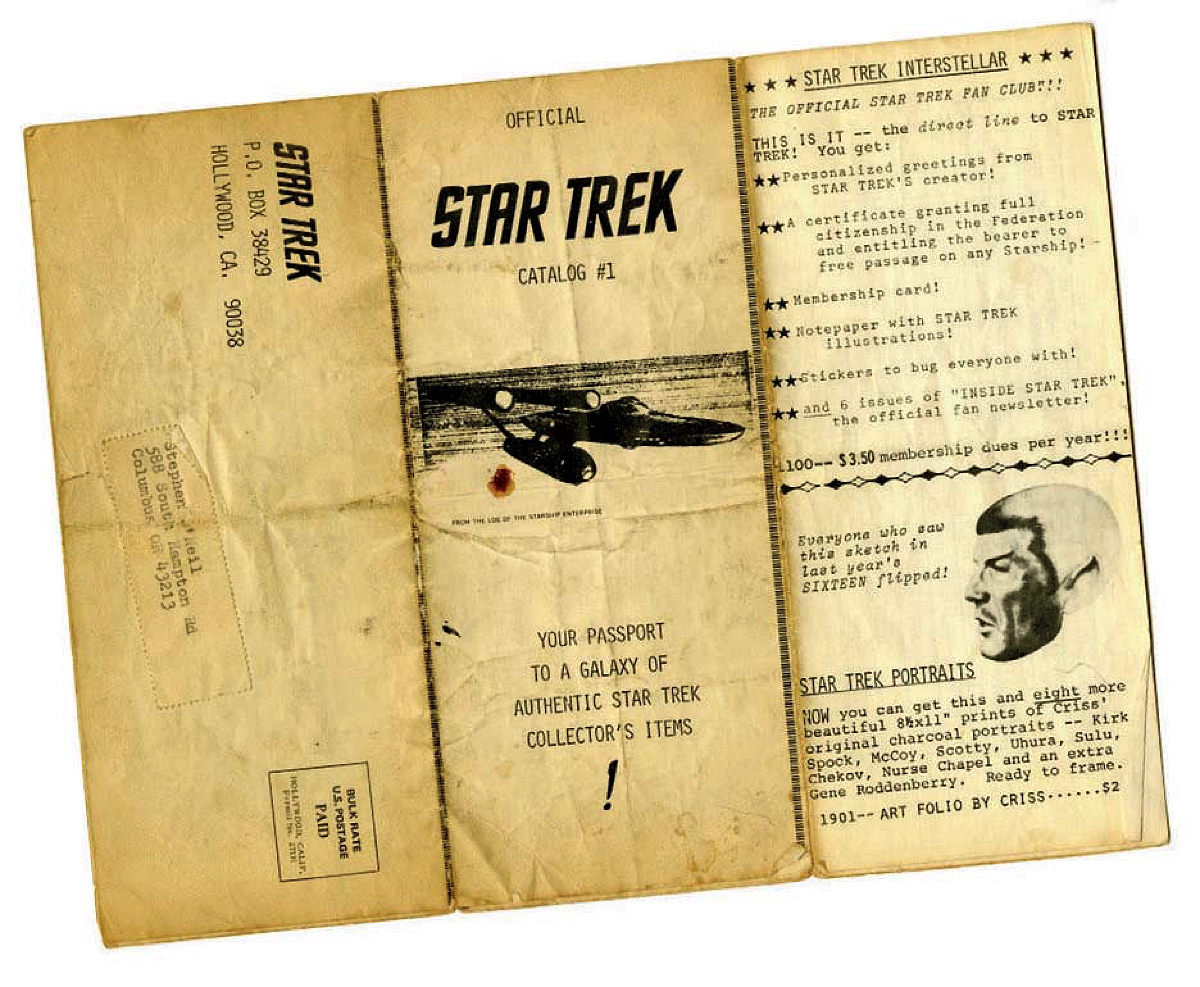
Sci-fi fans were delighted when the genre jumped to the silver screen, notably in the 1960s with Star Trek, and they worked hard to keep it there. They joined the show’s fan club, which offered perks like “free passage on any Starship,” and purchased charcoal portraits of Spock and Kirk from the official Star Trek catalog. NBC tried to cancel the show in 1967, but Star Trek fans mobilized through the network of zines, catalogs, and magazines they’d been cultivating since the 1930s. After receiving countless strongly worded letters, the network relented, the geeks triumphed, and Star Trek was renewed for another season.
Courtesy of the Houghton Library Science Fiction Collection