It does not take long for a reader to realize that Selin Karadag, the tall, funny, and clever Harvard freshman who narrates The Idiot, has more than a few things in common with Elif Batuman ’99, its tall, funny, and clever author. Like Selin, Batuman came to Harvard hoping to discover the deep secrets of books, “what literature really meant.” Like Selin, she tried to answer this question through linguistics, but soon found that the field lacked a master key to language. (One seminar assignment requires Selin to explain a theory to Martians, using logic notation. “It wasn’t clear to me why the Martians were supposed to be so good at logic,” she thinks.) Like Selin, Batuman instead gravitated toward Russian literature, which she found “profoundly human,” eventually earning a Ph.D. in comparative literature; she detailed the experience in her bestselling collection of essays, The Possessed.
Batuman, now a staff writer for The New Yorker, has chronicled weird corners of academia: an Isaac Babel conference that brings together relatives of the author who hate each other (“THAT OLD WITCH WILL BURY US ALL,” one yells at the other); Danteans in Florence who sing out his entire work, dressed in red shirts from Zara; a conference of Tolstoy scholars where, luggage lost, she is forced to attend the proceedings in pajamas and is applauded for her devotion to the Tolstoyan movement. She’s also a gifted reporter who has written dispatches from Turkey, where much of her family originates. A novel seems like a departure—except that she had wanted to write The Possessed as fiction, until her editors learned that her summers learning Uzbek in Samarkand and attempting forensic dissections of Tolstoy’s estate Yasnaya Polyana had actually happened. She places little importance on genre, joking that no one made Proust say, “This is a memoir about my childhood.”
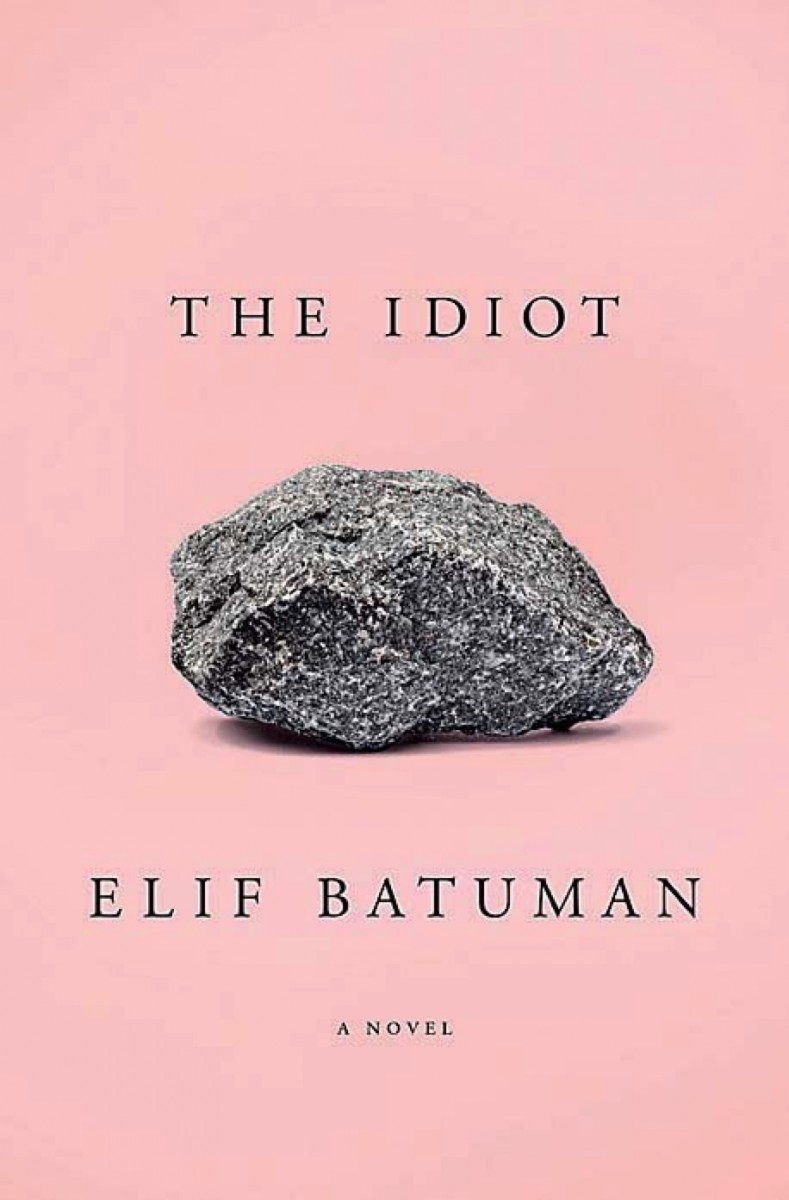
The Idiot (its title, like that of The Possessed, is a nod to Dostoyevsky) is a large and often loose account of Selin’s first year of college. Over the course of the book, she falls in love with an older math student and eventually follows himto Hungary, where she teaches English in a village. (Among her responsibilities: judging a Hungarian leg contest.) It’s animated by a voice that seems at once very much Batuman’s own and fully recognizable to any student who enters Harvard Yard: overwise yet totally naive. At the opening of the book, Selin sets up an Internet connection. “‘What do we do with this, hang ourselves?’ I asked, holding up the Ethernet cable. ‘You plug it into the wall,’ the girl said.”
Batuman has lamented, in criticism for N+1 and The London Review of Books, that contemporary fiction is too often artificially concise and whittled down, while “the ghosts of deleted paragraphs rattle their chains from the margins.” The novel, she thinks, should contain seemingly inconsequential bits of daily existence: “all the irrelevant garbage, the effort to redeem that garbage, to integrate it into Life Itself, to redraw the boundaries of Life Itself.” And so The Idiot, appropriately, has a delightful fullness, going from what Selin is reading—Nabokov’s lectures, Bleak House, Epictetus—to varied details about undergraduate life: the food at Annenberg, passages from a beginner Russian textbook, the conversations of other students. (In an art seminar called “Constructed Worlds,” for example, “One student had constructed a world that was just Star Wars. It was completely identical to Star Wars, only she had given all the characters old Welsh names.”)
Partly this fullness results from the book’s creation process. By the time she got to Harvard, Batuman knew she wanted to be a writer, and was constantly writing everything down in spiral notebooks “to a very weird degree.” Much of this material, including many emails she sent, made it into the novel. But she didn’t yet know how to write for others, trying instead to cram dozens of points onto the page. “It didn’t occur to me that I could say all the things I wanted to say in a way that anyone could understand.” She credits her senior tutorial in Russian literature for teaching her how to write something someone might actually read. Her professor made writing “a situation of kindness,” where the reader wants to have a good time—and so does the writer.
Batuman is now working on a book about Turkey, as well as a sequel to The Idiot. “I had this idea,” she says, “that writing autobiographical fiction was cheating in some way, or it was less creative.” But there’s a problem-solving element to writing about oneself, she continues, when you realize that what gets you from one point to another in the text is an experience of your life you hadn’t ever thought of before. During such moments of consonance between experience and literature, “It feels that reality is supporting you….You’re being carried on a cushion of the world as it is,” she says. “It’s the most exciting part of reading, too”: noticing something you hadn’t been aware of before, and wouldn’t have thought could be described.