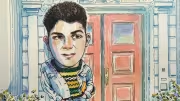
The Harvard Art Museums has a new curator of American art: Horace D. Ballard will join the institution on September 1 as Stebbins associate curator of American Art. He arrives from Williams College Museum of Art, where he has served since 2017, most recently as curator of American art. He specializes in artwork and visual cultures from the United States, as well as seventeenth- and eighteenth-century art from the British, Portuguese, and Spanish colonies in the Americas. As a researcher, he studies eighteenth- and nineteenth-century portraiture of the Atlantic World, the history of photography, artists Thomas Eakins and Benjamin West, and the material and visual cultures of religion.
Ballard holds a bachelor’s degree in English literature and American studies from the University of Virginia, a master of arts in religion from Yale Divinity School, and a Ph.D. in American studies and American visual culture from Brown University. He has worked previously at Monticello/Thomas Jefferson Foundation, the Birmingham Museum of Art, the Rhode Island School of Design Museum, Yale University Art Gallery, and the Fralin Museum of Art at the University of Virginia. He has taught at Yale, Brown, and the Rhode Island School of Design.
At Harvard, Ballard will supervise the museums’ collection of pre-twentieth-century American paintings, sculpture, and decorative arts. He will also help acquire new objects and diversify and expand the field, as well as identify collaborative opportunities with other institutions at Harvard, including the programs in American and African studies, and the Peabody Museum of Archaeology and Ethnology.
In a press release announcing his appointment, Ballard hinted at his priorities for the new position. “I believe in the capacious potential of academic museums to refine the ethics of our attention,” he said. Calling the Harvard Art Museums a “laboratory” for multidisciplinary approaches, he added, “I spent time in the collections as a graduate student, and I experienced firsthand the power of art to incite empathy, wonder, and sociopolitical change. The field of American art is in a period of reckoning and reflection.”