Two miniature mosaics, each the size of a Kindle and shrouded in mystery, depict 41 male figures. Researchers at Dumbarton Oaks, where the mosaics are part of the Byzantine collection, know roughly when they were made (the early fourteenth century) and about where (Byzantium, likely Constantinople), but not how, by whom, or why. Now, staff at Dumbarton Oaks, Harvard’s center for Byzantine, Pre-Columbian, and landscape studies, in Washington, D.C., are working to answer those questions. “The more we look at these objects,” says Byzantine collection curator Elizabeth Dospěl Williams, the more the researchers think, “Actually, we don’t know anything at all about them.”
Now viewed as art, the mosaics were initially important for religious rituals. Byzantine Christians, she says, used icons as “windows for prayer…worshiping what they represent.” The pieces likely would have been displayed in a grand church, mounted within a large frame, and illuminated by candlelight. One represents St. John Chrysostom, haloed and wise, hand raised in prayer. The other depicts the Forty Martyrs of Sebasteia: Roman soldiers forced to recant Christianity or die.
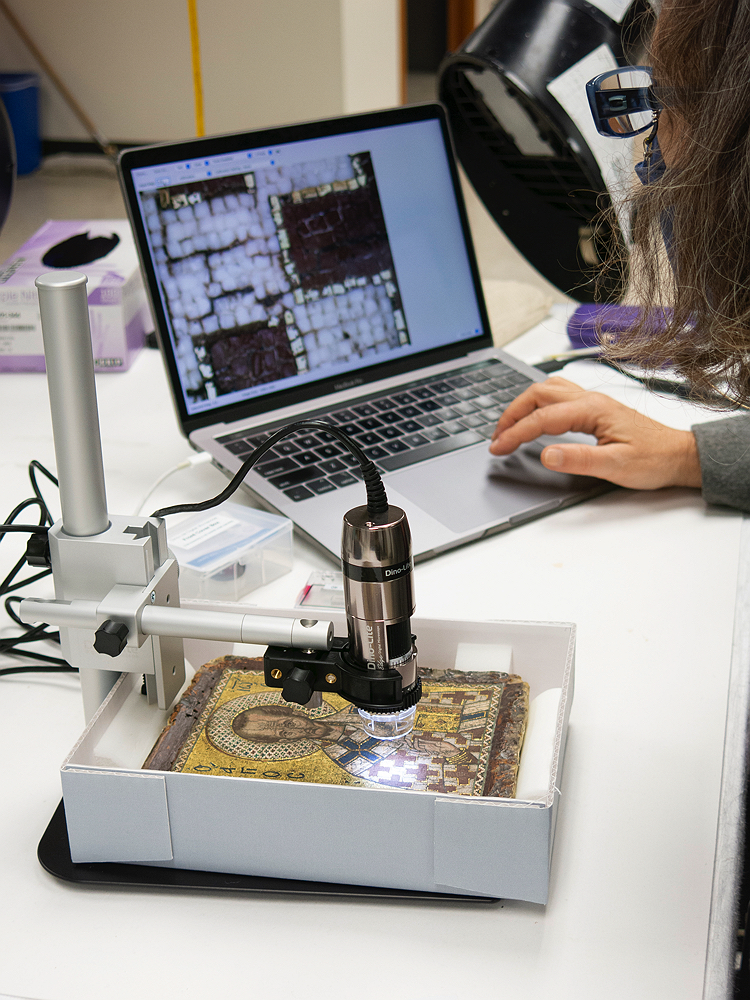
The mosaics, impressive as works of art, emulate techniques from other media. The saint portrait evokes enamel work, says Williams, with its zigzag patterns and raised halo. The martyr scene looks like a painting, with brushstroke-like tile arrangements, expressive and distinct faces, and well-defined musculature.
It has not been easy to learn more about these mini mosaics: fewer than 40 still exist (many in monastic collections inaccessible to research), and no Byzantine documents mention their existence. In 2023, Dumbarton Oaks experts partnered with the Smithsonian and other research institutes to assess the pieces’ origins using modern methods such as x-ray fluorescence and CT scans. “The more we did analyses, the more the differences between the two came out,” says Williams. “Either they’re different workshops, different artists, or different periods.” Through scanning, researchers could see the extent of damage (worm tunnels in the wood backing) and intervention (encasing in wax, repairing tiles).
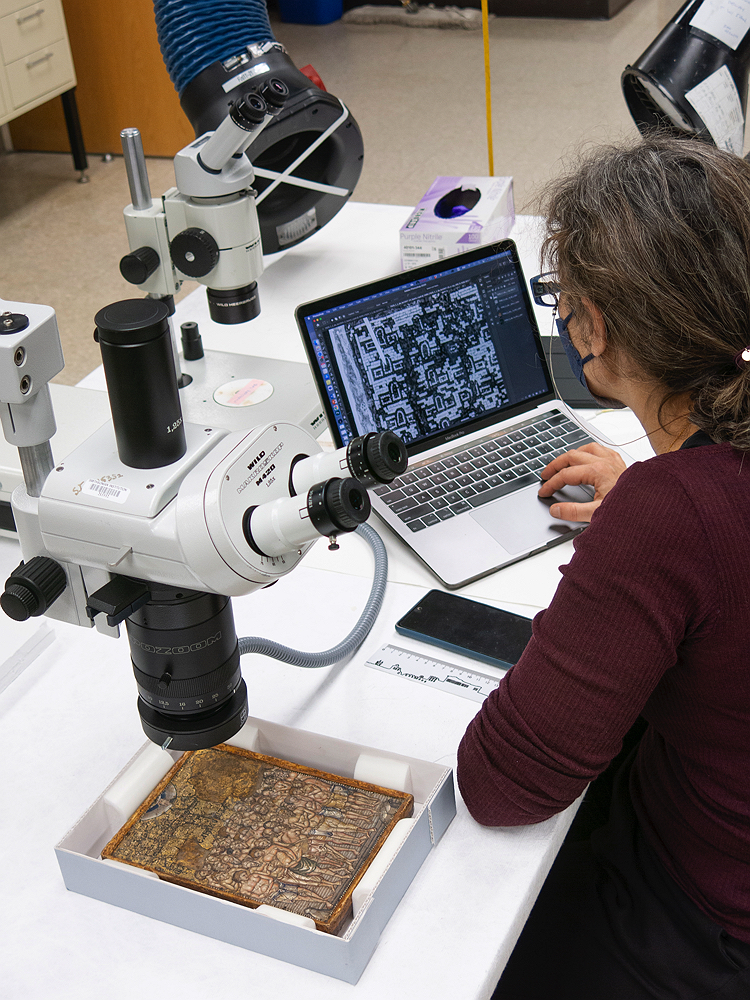
Contemporary research tools enabled them to hypothesize about the manufacturing process. “They’re clearly putting wax onto a board,” she says, and “working with tiny, minute tools of some kind to place the tesserae”—tens of thousands on each portrait. Still unknown is whether the artists used magnifying equipment to see the tiles and whether the works represent a single artisan’s craft or a team’s.
The mosaics, says Williams, represent a paradox of late Byzantine culture. In the 1300s—150 years before its eventual fall—the empire was in ruin, its capital already sacked and looted. When the Byzantine Empire was strong, she continues, its art was “big and gaudy.” But these later works—while intricate and expensive—are smaller. “It’s almost like [the Byzantines] are channeling all this energy into a magnificent craft production,” she says. “If you’re losing political control, what do you do to express the culture?”