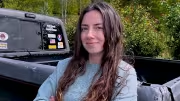
Since her first living history gig in Salem, Massachusetts, Lauren Shear, A.L.M.’15, a records specialist at Dana-Farber Cancer Institute by day, has portrayed key—yet often little-known—women of Revolutionary history at the Boston Tea Party Museum, the Boston State House, and more. She once played Mercy Otis Warren on C-SPAN. (This interview has been edited for length and clarity.)
What drew you to reenacting?
I’ve always been smitten with history—my husband jokes that my ideal film genre is “women in bonnets screaming.”
Who have you portrayed that audiences may not expect?
Betsy Cummings, a Tory milliner who had a good reason for being royalist: her work was based on imports she needed to remain financially independent. It was interesting to present that counterview of the Patriot movement.
Where do you go for research?
Harbottle Dorr, [a Sons of Liberty member during the Revolution], kept tons and tons of newspapers with annotations, and they are browsable online. It’s a fun way to build Boston in your mind. We would look at the ads to know what was in the shops, what was happening on market days, what people were fighting about.
What might surprise people about the colonial era?
The practicalities of the way women dressed. The clothing was all natural fibers and moisture-wicking. The stays gave you back support. You could gain and lose weight, and your clothing would shrink and grow with you based on how it was pinned and laced together, so you needed fewer outfits.
You worked at the Tea Party Museum for two years. Any favorite moments?
I really enjoyed the high schoolers. They were raucous and really on board, especially in scenes with opportunities for interaction. There was one kid—they get their own little acting moment—he said [that with rising tea prices], “I couldn’t pay for my windows, my children were freezing.” [The actor playing] Samuel Adams said, “How many children is it now for you, Thomas?” And he went, “47!” And everybody broke. Sam Adams was crying. Those moments will make them remember the things they learned that day.