Mercy Otis Warren knew how to conjure up a good villain. A poet, playwright, historian, and brilliant propagandist, Warren ran in social circles with the (often-Harvard-educated) men who helped to drive the Revolution—and was as influential as any of them.
One of the first American women to write mostly for public consumption, she composed a series of satirical plays in the years leading up to the war’s outbreak that galvanized the movement for American independence. Her first was The Adulateur, published in 1772 in the Massachusetts Spy. The play’s villain is a despot named Rapatio, a thinly veiled depiction of the much-reviled Massachusetts colonial governor, Thomas Hutchinson. “I’ll trample down the choicest of their rights, / And make them curse the hour that gave me birth,” Rapatio growls in his first moments on stage, referring to the Patriots. “I’ll make the scoundrels know who sways the sceptre.”
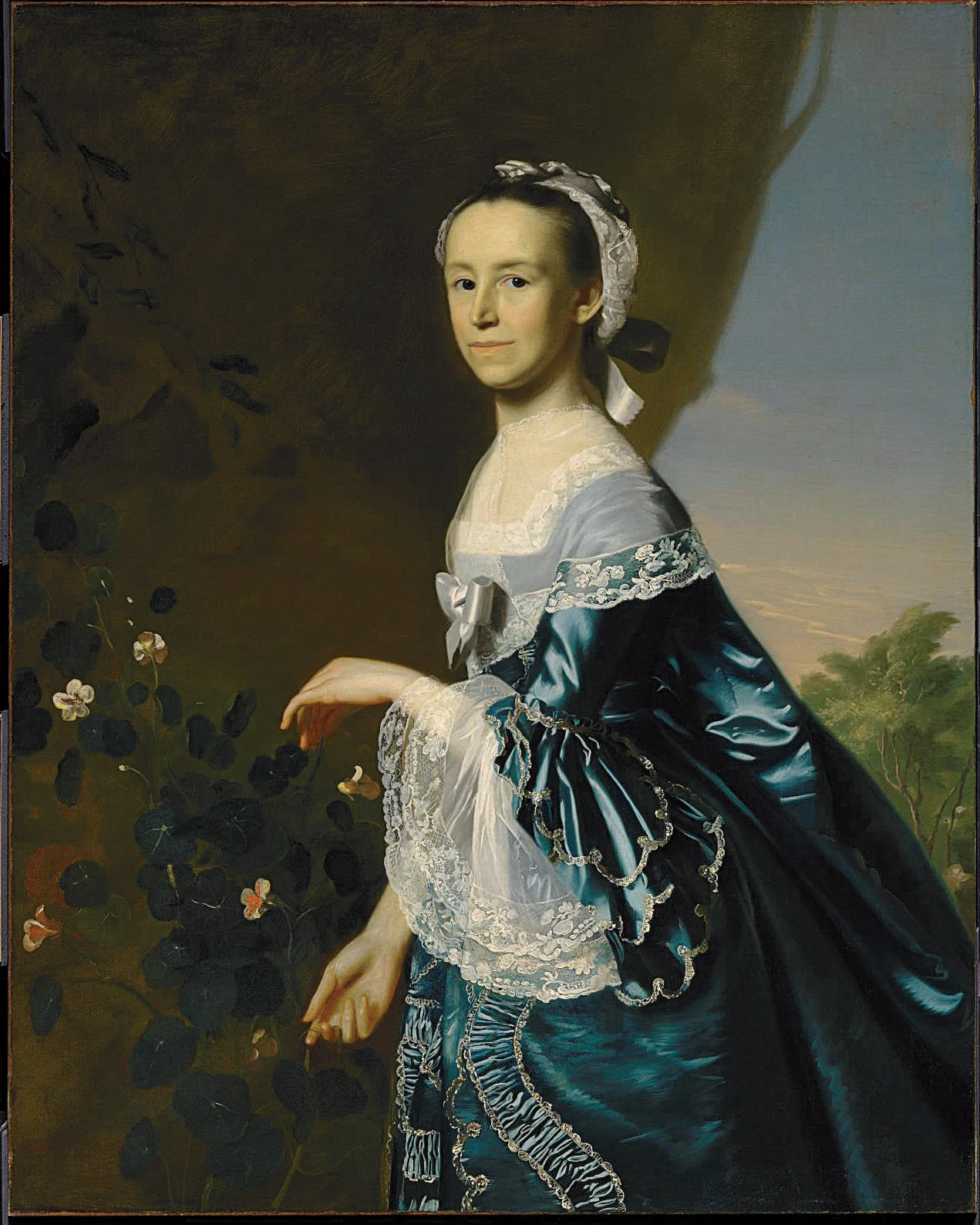
Warren was deeply involved in the war of words the colonists were waging against the British. (Her brother James Otis Jr., A.B. 1743, was the first to articulate the argument that eventually turned into the infamous refrain of “no taxation without representation.”) She published her work anonymously, fearing royal retribution, but most Patriot leaders knew her identity. After the Boston Tea Party in 1773, her friend John Adams, A.B. 1755, who once called her the “most accomplished woman in America,” asked her to write a poem about it; she quickly produced a long, fanciful verse praising the participants for their “defiance to the servile train, / The pimps and sycophants of George’s reign.” Adams arranged for it to be published in the Boston Gazette.
After Britain passed the Intolerable Acts to punish Massachusetts for its rebelliousness, Warren wrote a series of poems encouraging women to boycott British goods. In January 1775, she published her third satirical play, The Group, which skewered Loyalists as depraved and mercenary. Less than four months later, on April 19, the Revolution’s first shots were fired at Lexington and Concord.
Warren had grown up steeped in politics. Her father, James Otis Sr., was a lawyer and elected member of the Massachusetts legislature, who had educated her alongside her brothers in history, literature, and—importantly—Enlightenment philosophy, with its emphasis on individual liberty and personal property rights. After graduating from Harvard, her brother, James Jr., followed their father into law and legislative politics.
Beginning in the 1750s, both men found themselves increasingly at odds with British officials, and particularly Hutchinson, whom they viewed as consolidating too much power (it didn’t help that Hutchinson had beaten James Otis Sr. for the job of Massachusetts chief justice). In 1761, James Otis Jr. represented a group of Boston businessmen in a case challenging the Writs of Assistance—broad warrants that allowed British authorities to search any shop or home at any time for smuggled goods, with no need for probable cause. In the courtroom, Otis delivered a five-hour oration calling the writs “the worst instrument of arbitrary power” and insisting that “a man’s house is his castle.” He lost the case but exhilarated colonial spectators. “Otis was a flame of fire,” Adams later recalled.
When the British parliament abruptly began levying taxes on the colonies, Otis wrote some of the most forceful critiques—including a 1764 pamphlet arguing that taxation without representation amounted to tyranny. It became a potent rallying cry.
But in 1769, misfortune struck. James Jr. was hit in the head during a fight with a colonial customs official. Already prone to manic behavior, he became increasingly mentally unstable after the injury and was forced to retire. Mercy Otis Warren stepped in to answer his correspondence, and within a few years, she was publishing her own work.
By then, she’d long been part of the revolutionary movement. In 1754, she married James Warren, A.B. 1745, a merchant and farmer turned politician who—like the rest of his wife’s family—joined the Patriot cause. Their home in Plymouth, Massachusetts, became a gathering spot for groups like the Sons of Liberty. The Warrens helped create an underground network for all 13 colonies to share information, and Mercy Otis Warren was a correspondent and confidant to numerous leaders, including John and Abigail Adams; Samuel Adams, A.B. 1740, A.M. ’43; John Hancock, A.B. 1754; Patrick Henry; and Thomas Jefferson.
She was as fiercely radical as any of them: in November 1775, with Boston under siege, her husband wrote to John Adams, imploring him to negotiate with King George III. Mercy disagreed and insisted that he include her thoughts in the letter. “You should no longer piddle at the threshold,” she wrote. “It is time to leap into the theatre to unlock the bars and open every gate that impedes the rise and growth of the American republic.”
After the Revolution, her ferocity remained. As Americans were deliberating about the new Constitution, Warren, wary of centralized government control, came out as staunchly anti-federalist—a position that pitted her against her old friend and champion John Adams. In 1788, she wrote an essay warning that, without a bill of rights and guarantees of a free press, freedom of conscience, and trial by jury—and limits on judicial power and warrants for search and seizure—the proposed government would lead to “an aristocratic tyranny” and “uncontrolled despotism.” Her impassioned arguments helped push Congress to pass the Bill of Rights in 1789.
Those arguments, and the passion behind them, animated Warren’s writing throughout her life. In The Adulateur, her first published work, the protagonist is a Patriot named Brutus, whom she modeled after her brother. In the first scene, he rallies a crowd in the streets for the fight he knows is coming:
Who hatest wrong, and wills creation happy,
Hear and revenge a bleeding country’s groans;
Teach us to act with firmness and with zeal:
’Till happier prospects gild the gloomy waste.
While from our fate shall future ages know,
Virtue and freedom are thy care below.