Had circumstances unfolded differently, American history might have immortalized Joseph Warren, A.B. 1759, A.M. ’62, in the pantheon of Revolutionary War heroes. Warren was the physician who tended to the victims of the Boston Massacre. He was the colonial leader who sent Paul Revere and William Dawes on their midnight ride to Lexington and Concord. In the decades after his death at the Battle of Bunker Hill, more towns and streets across the new nation were named after him than George Washington himself.
Warren was born on May 30, 1741, in Roxbury, Massachusetts, the son of a devout farmer. He began his first year at Harvard in 1755, at age 14—one of the four youngest students at the College. (His brother, John Warren, A.B. 1771, A.M. ’74, later co-founded Harvard Medical School.)
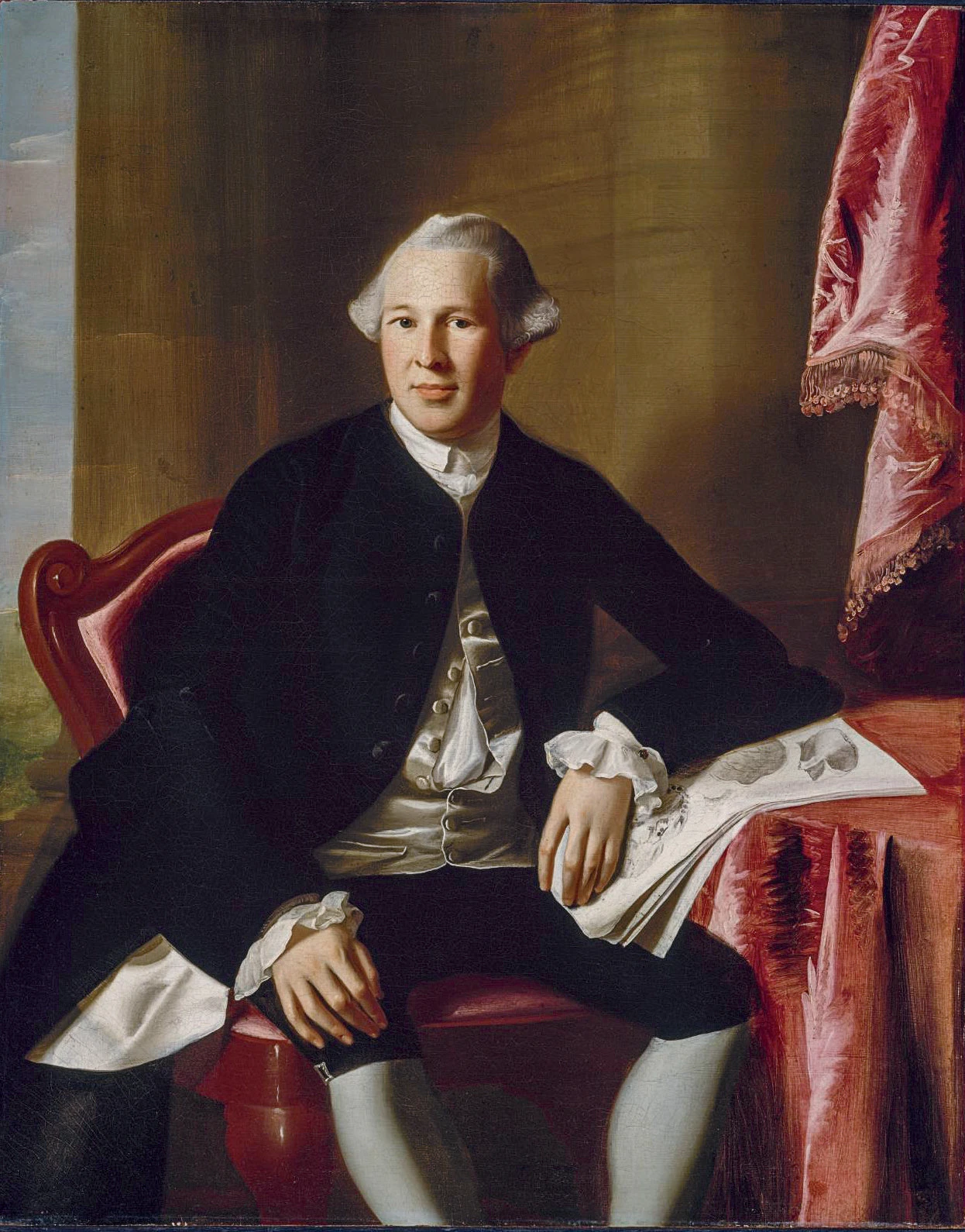
The mid-eighteenth-century Harvard education, under President Edward Holyoke, was rich in the Enlightenment themes that would inspire the revolutionary set: ancient Greek and Latin authors; the classic civic virtue of citizen leadership; scientific method and inquiry; moral philosophy.
As a doctor, Warren built trust and respect by treating everyone from poor and common laborers to Whig leader John Adams and Tory Lieutenant Governor Thomas Hutchinson. But his political leanings were clear. He joined organizations that rallied Massachusetts residents against British policies, including the Committee of Correspondence (the Facebook of the day), the Committee of Safety (a militia-CIA combination), and the Sons of Liberty, where he became a close friend of Samuel Adams, A.B. 1740, A.M. ’43. In 1774, Warren was the primary author of the Suffolk Resolves, a precursor to the Declaration of Independence.
But it may have been his rhetorical skills that cemented Warren’s reputation as what one British lord dubbed “the greatest incendiary in all of America.” Speaking at Boston’s Old South Meeting House on the fifth anniversary of the Boston Massacre, Warren declared a moral imperative to fight tyranny. He arrived dressed in a flowing white Roman toga—a throwback, perhaps, to his undergraduate days, when he acted in a play about a Roman senator willing to surrender his life for liberty. “On you depend the fortunes of America,” he told the crowd. “You are to decide the important question, on which rest the happiness and liberty of millions yet unborn. Act worthy of yourselves.”
A month later, in April 1775, Warren learned of General Thomas Gage’s order for 800 British troops to march to Concord. He responded by ordering Paul Revere and William Dawes to ride to Concord and warn people along the way. At that time, there was no army; only a militia of citizen volunteers. On June 14, Warren was appointed major general of the Massachusetts militia. A day later, the Continental Congress named George Washington commander-in-chief of the Continental Army.
But Warren and Washington would never meet. Early on the morning of June 17, 1775, Warren attended a meeting of the Committee of Safety at the Hastings House in Cambridge. Afterwards, because he had hardly slept for days, he decided to take a nap. When he was told that the British regulars were in Charlestown, he rose immediately and rode a horse to join the American Patriots’ militia at Bunker Hill. There, despite his rank, he allowed the experienced generals Israel Putnam and William Prescott to continue their command.
The Battle of Bunker Hill was the first battle of the Revolutionary War, and the bloodiest. Warren went where the fiercest fighting was expected, nearby Breed’s Hill, where his presence provided a tonic of relief and confidence for the provincial militia he was fighting alongside. His fellow militia members spanned the breadth of Massachusetts society: merchants and mechanics, farmers and laborers, enslaved and free Black men, and Indigenous people. With Warren at their side, they felled some of Britain’s finest officers.
Then the Patriots ran out of ammunition.
According to accounts from soldiers who were present, Warren “lingered to the last,” trying his best to offer cover to his retreating troops. A single bullet to the head killed him. Warren ended his life as he lived it, as he told fellow Patriot William Eustis, A.B. 1772, A.M. ’74, LL.D. 1823, a few weeks before the battle: “These fellows say we won’t fight. By heaven, I hope I shall die up to my knees in blood.”
His death, at the time, was well-documented—including in John Trumbull’s 1786 painting, The Death of General Warren at the Battle of Bunker’s Hill. Revolutionary War veterans named streets and towns in his honor, as they settled the frontier as far west as Ohio.
So why is Warren so little-known today? He burned his personal papers to prevent the British from learning the Patriots’ plans. The war veterans who admired him eventually passed on—and with them, America’s memory of a fallen hero who didn’t go on to build the nation he had helped create.
But his contemporaries imagined what might have been. Loyalist Peter Oliver, A.B. 1730, A.M. ’33, speculated that, had Warren lived, George Washington would have been “an obscurity.”
An earlier version of this article misstated the date of the Battle of Bunker Hill.