250 Years Ago, Harvard Was Home to a Revolution

A look at the sights, sounds, and characters that put the University on the frontlines of history

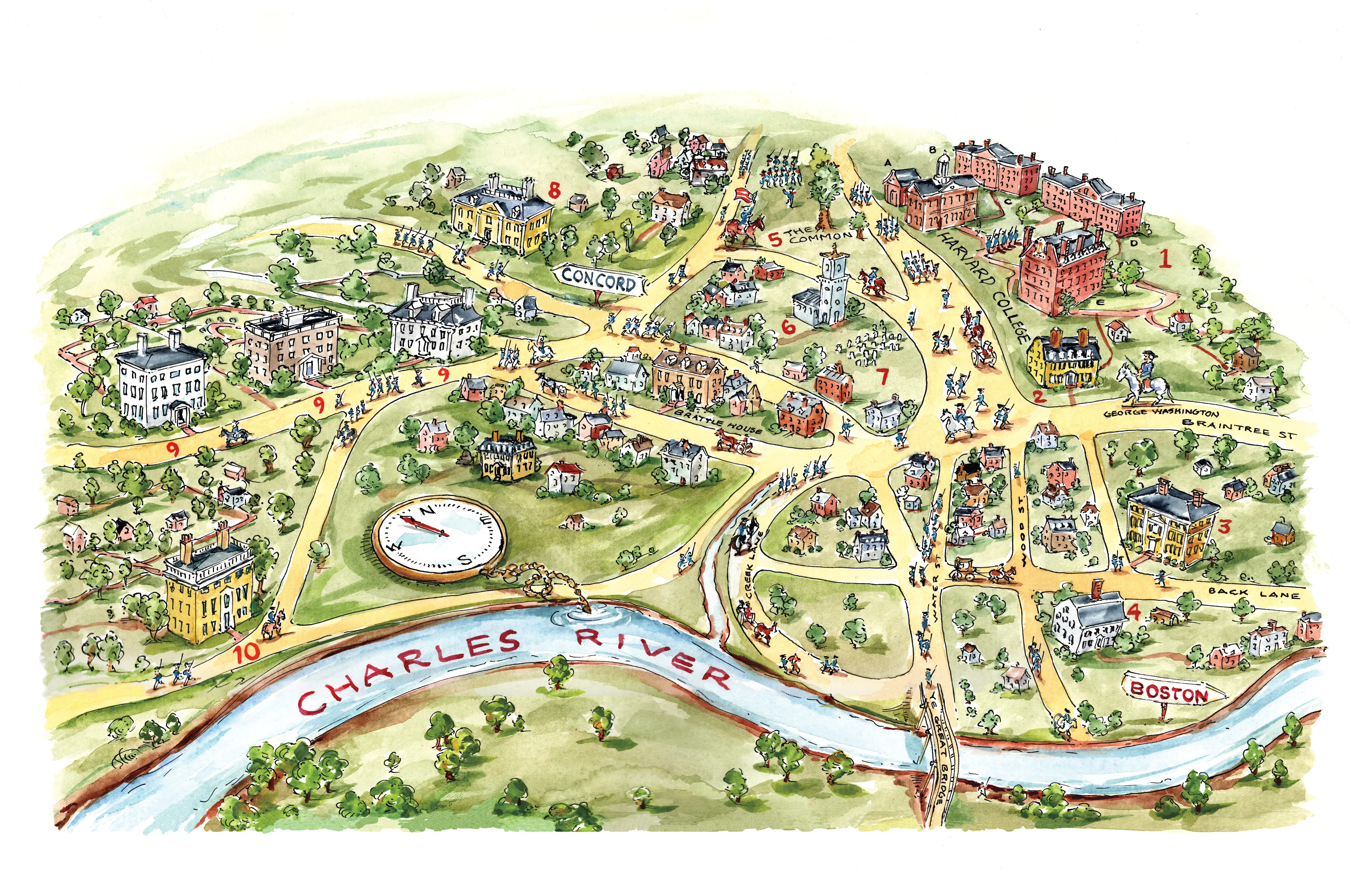
Colorful illustrated map of Colonial Cambridge and the Harvard College campus featuring buildings of the campus, houses, Cambridge Common, and the Charles River

Please see below for an interactive version. (Map is not to scale.)  | Illustration by Mark Steele

Editor's note: For an interactive map of Cambridge in revolutionary times, see below. 

In the years leading up to the American Revolution, Cambridge was a hub of intellectual fervor, planning, and preparation. All around Harvard Square today are reminders of those turbulent days, from the classrooms and dormitories that once housed Patriot troops to the stately homes that some Loyalists fled as Revolutionary passions grew. Certain sites are now familiar landmarks: Christ Church, the Old Burying Ground, and Cambridge Common, where George Washington first took command of the Continental Army. Many have since become part of the University’s footprint. In Apthorp House, now part of Adams House, General Israel Putnam planned the Battle of Bunker Hill. Elmwood, now the Harvard president’s official residence, became a hospital during the war. John Hicks’s residence, now the Kirkland House Library, housed officers from Washington’s army. And Washington briefly quartered at Wadsworth House before he made the Vassall mansion—now Longfellow House—his headquarters.

Interactive Charles River map with 10 annotated historical landmarks
100% Scroll · pinch · tap pins
Charles River historical map


It’s possible, with a little imagination, to conjure the atmosphere of those days and picture the characters who crossed paths in these streets—some of them etched in every history textbook, many of them lesser-known. In the following pages, you’ll find some of their stories: an inspiring doctor turned general who met a tragic end; a resourceful youth who grew to become a prominent Black abolitionist; a politician committed to advancing natural rights; a woman who wrote witty missives against tyranny; and the Harvard students who departed campus for a memorable year to make room for the war effort. These dreamers, thinkers, and fighters joined together to shape history, ensuring that Harvard’s path would always be intertwined with the nation’s.
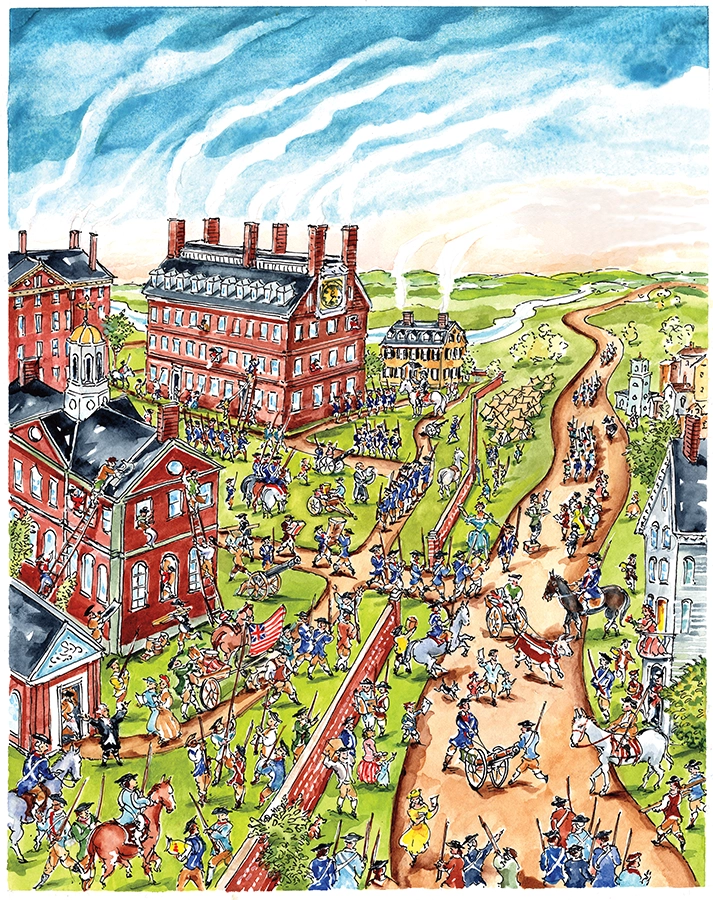



Illustrated birds-eye view of the Harvard College Campus and Cambridge during the American Revolution and the occupation of American soldiers
Illustration by mark Steele
Related topics

You might also like

Harvard’s 375th Commencement Exercises

Conan O’Brien headlines a star-studded cast

George Washington’s Sash on Display at Peabody Museum Starting May 25

A famous American fashion statement helps bring Revolutionary history to life.

Lafayette’s Unexpected Gift to George Washington: Pheasants

The two birds will be on display at Harvard this summer.

Most popular

How Philosophy at Harvard Saved Itself

As humanities shrink across higher education, one department is flourishing. Is its success a fluke, or a roadmap?

Judge Dismisses Case Demanding Harvard Admissions Data

The government failed to meet procedural requirements before suing the University.

To Promote Healthy Habits in Patients, Start with the Doctors

Why Harvard Medical School is training physicians to think more like coaches

Explore More From Current Issue

Bronze statue of a seated figure holding a book, with a campus setting in the background.

As humanities shrink across higher education, one department is flourishing. Is its success a fluke, or a roadmap?

Collage of book covers featuring various titles on a vibrant orange background.

These newly released novels, histories, and memoirs grapple with identity in all its forms.

Delicate green cocoa pods and small white flowers on a tree branch, surrounded by soft greenery.

Harvard researchers investigate climate’s impact on cocoa crops, innovations in nasal vaccines, and links between pain and skull marrow.