
“I follow sounds,” says percussionist-composer Jessie Cox, who joined Harvard last fall as an assistant professor of music. “For me, playing music, or finding a new sound, is about hearing something that was unthinkable.” That’s an apt statement. Cox’s compositions often feel like a leap into the unknown: wildly, playfully, disquietingly experimental, crossing genres and geographies and pushing the limits of what counts as an instrument. He’s interested in the sounds of extinct birds and the oral histories embedded in traditional drums. He once wrapped cotton around instruments’ strings to hear their whispering, hissing overtones. (Rubber bands, he found, elicit a bell-like sound.) A graduate of the Berklee College of Music and Columbia University, Cox began his music career at age three, when his mother enrolled him in solfège classes to learn rhythms and pitches after she noticed him hitting objects around the house just to hear the sounds they made. By age six, he was learning the djembe drum and writing music; at 12, he was playing in cover bands and studying with internationally acclaimed artists. He was also learning to navigate a different kind of cultural landscape, as a black child with roots in Trinidad and Tobago growing up in the bilingual Swiss city of Biel/Bienne. There’s no national conversation in Switzerland about race, he says, and no word for blackness. His exploration of the subject—mediated through music, including a piece about George Floyd by Nigerian-Swiss composer Charles Uzor—culminated in a book, Sounds of Black Switzerland: Blackness, Music, and Unthought Voices, published in April. When he’s not following sounds, he’s practicing bonsai. He enjoys its slowness, a contrast with music’s immediacy. “But,” he adds with a grin, “there is an ulterior motive which is musical: it would be very nice if the bonsai could someday become an instrument.”
Harvard Percussionist and Composer Jessie Cox
An experimental percussionist-composer pushing the limits of music

Jessie Cox | Photograph by Stu Rosner
You might also like
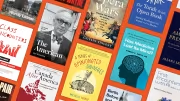
America’s Past, Opera's Future: 11 New Books from Harvard Authors
These newly released novels, histories, and memoirs grapple with identity in all its forms.

Boston Ballet’s Ming Min Hui on Changing Audiences and Timothée Chalamet
The outgoing executive director and Harvard Business School graduate went from dancing The Nutcracker to growing a ballet company.
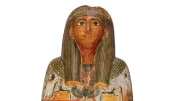
Padimut at Harvard
A rare Egyptian mummy case is on display at the Harvard Museum of the Ancient Near East.
Most popular


Explore More From Current Issue

These newly released novels, histories, and memoirs grapple with identity in all its forms.

The professor and former Harvard College dean is the next president of Harvard Magazine’s Board of Directors

The Harvard triathlete and coach says she helps normal people to “do extraordinary things.”