I met Robert Coles in his small office at Harvard University Health Services around 1971. I was a senior at Yale majoring in psychology, and, most importantly for Coles, I was studying photography there with Walker Evans, one of his heroes.
Before looking at the photographs I’d brought to show him, Coles began to grumble about a contentious faculty meeting he’d been required to attend that day. He turned to me and said, in that gravelly voice I would later come to know so well: “Alex, remember this about the university—it’s all the playground. It’s all the playground!”
Years later, after we had collaborated on several books, I saw that it was on the actual playground, playing with children, where Coles himself was most comfortable.
I especially remember one day in 1984 outside Washington, D.C. I was on assignment for The Washington Post Magazine to work with Coles on an article about Southeast Asian refugee children. For most of a hot July, I’d been hanging out with Cambodian refugee children who lived with extended families in a drab brick housing complex with dark hallways and crowded rooms. Mostly they played outside, chasing one another, climbing trees in a dirt courtyard, hanging from branches as if they were inhabiting an Asian jungle environment many had never seen.
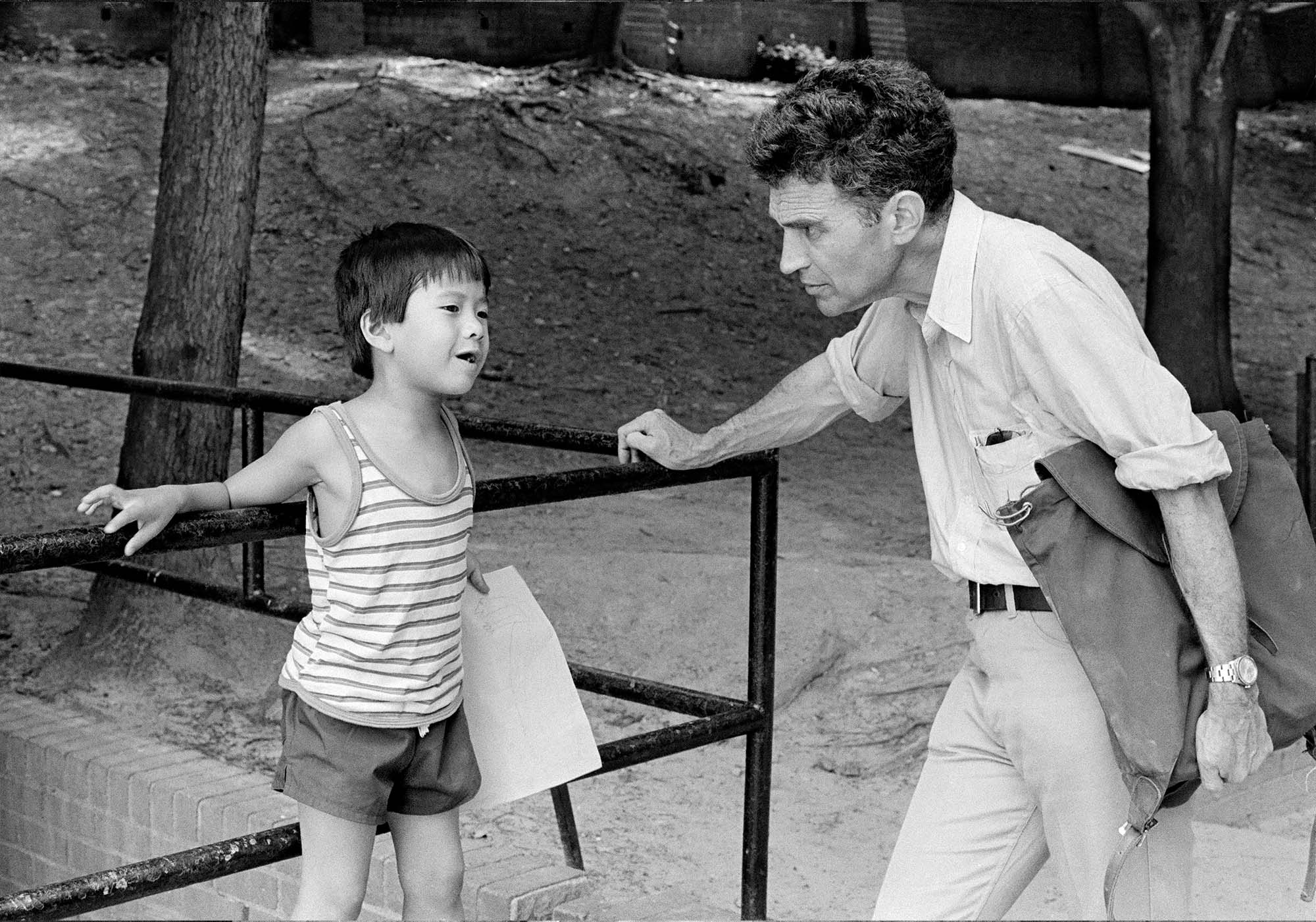
I had seen enough Helen Levitt photographs to try to be invisible with them, to step back and observe their play and interactions and occasionally to take a picture. But one day, Coles arrived with his own inner child, his focused attention, and his crayons and paper. Though I’d worked with Coles for years on projects in New Mexico and Alaska, I’d never seen anything like the joyful way these boys were drawn to Coles, or he to them. That day I was able to take a photograph that captured their jubilant interaction.
Coles once told me: “No one ever really listens to children, but if you genuinely listen—and children can tell if you are listening—they will tell you everything. And sometimes you have to be prepared for what they say.”
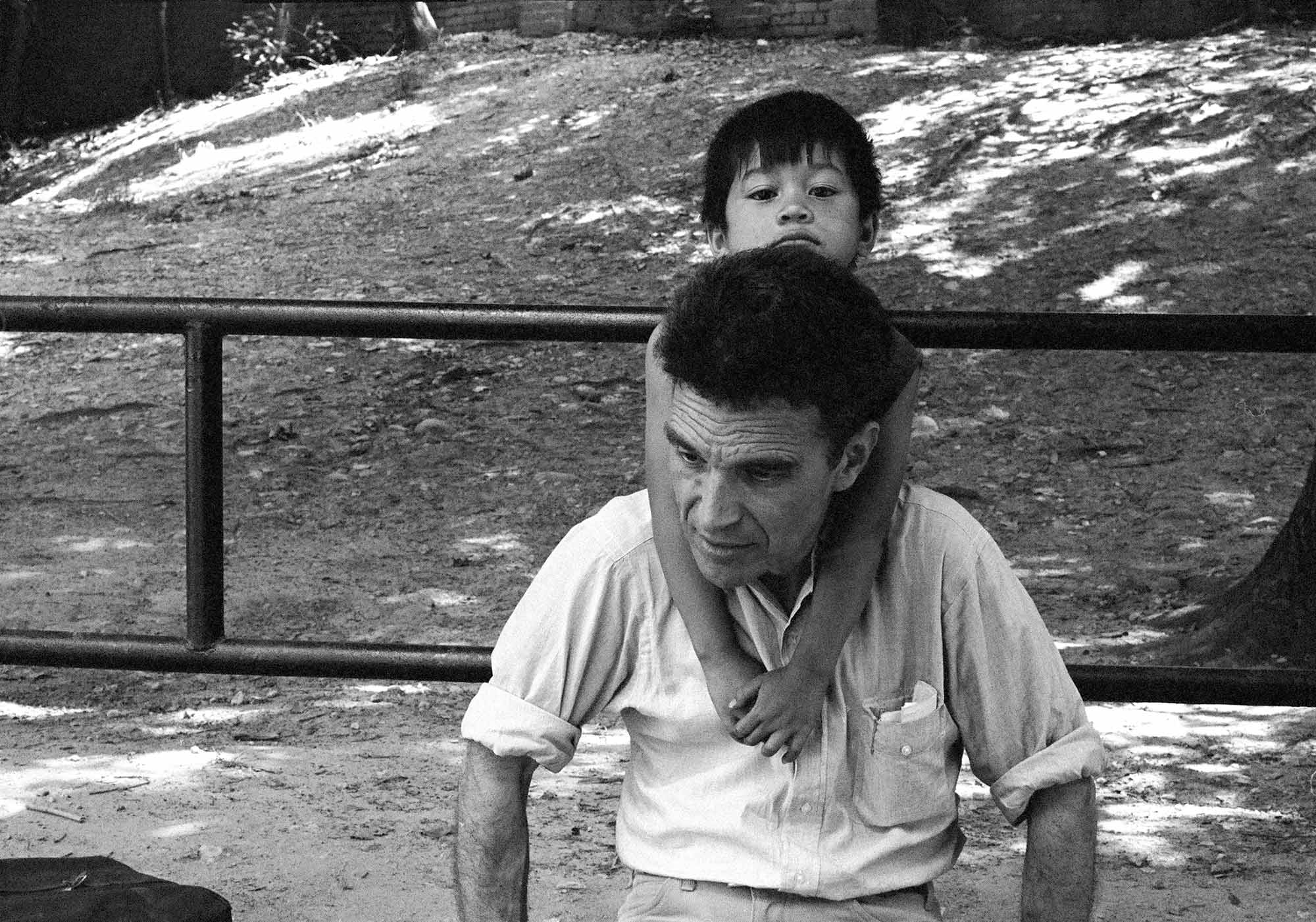
I took another photograph that day of him and a young boy. In one picture, Coles is listening to the boy. In another, the boy is draped over Coles’s back. Both of them look exhausted but calm. Later, when Coles and I were alone, he told me the boy had described atrocities in his village, perhaps things he’d witnessed or simply heard his parents talking about.
Looking at these pictures again, I can imagine Coles’s lifetime of listening to and engaging with children, both the joys and the burdens of that life. What I know is that he opened the doors, for me, to a life of the mind and eye, a life I am still living and loving.