Mapping the Sense of Smell
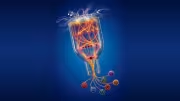
Scientists at Harvard Medical School have created the first detailed “map” of how the sense of smell is organized, helping to solve a longstanding mystery in biology. By studying millions of cells in mice, professor of neurobiology Sandeep Robert Datta and colleagues discovered that the 1,100 smell receptors in the nose are not randomly arranged, as once thought, but precisely positioned: as immature smell cells in the nose develop, their location helps dictate which receptors they select and wires them to corresponding locations in the brain. The result is a coordinated olfactory network linking the nose to neurons, much like those already known to link eyes and ears to the brain. The discovery clarifies how smell works at a fundamental level and provides a framework for understanding—and potentially treating—loss of smell.

The Dual Assault on Journalism
Independent journalism is at risk in “fragile democracies” such as Turkey and Hungary, Emre Kizilkaya, NF ’19, argues in a working paper developed at Harvard Kennedy School’s Carr-Ryan Center for Human Rights. Kizilkaya shows that in such countries, dual forces—the governments’ multipronged actions to control the media and the algorithms that determine what news people see online—make truth-based journalism economically unsustainable. It’s a system where political power and digital platforms synergistically reshape the marketplace of ideas, leaving the public with misinformation and propaganda. The solution, he argues, is to treat journalism as a public good, like clean air or public infrastructure, and to hold tech platforms accountable by creating rules to protect the information ecosystem.
An Implanted Liver That Grows
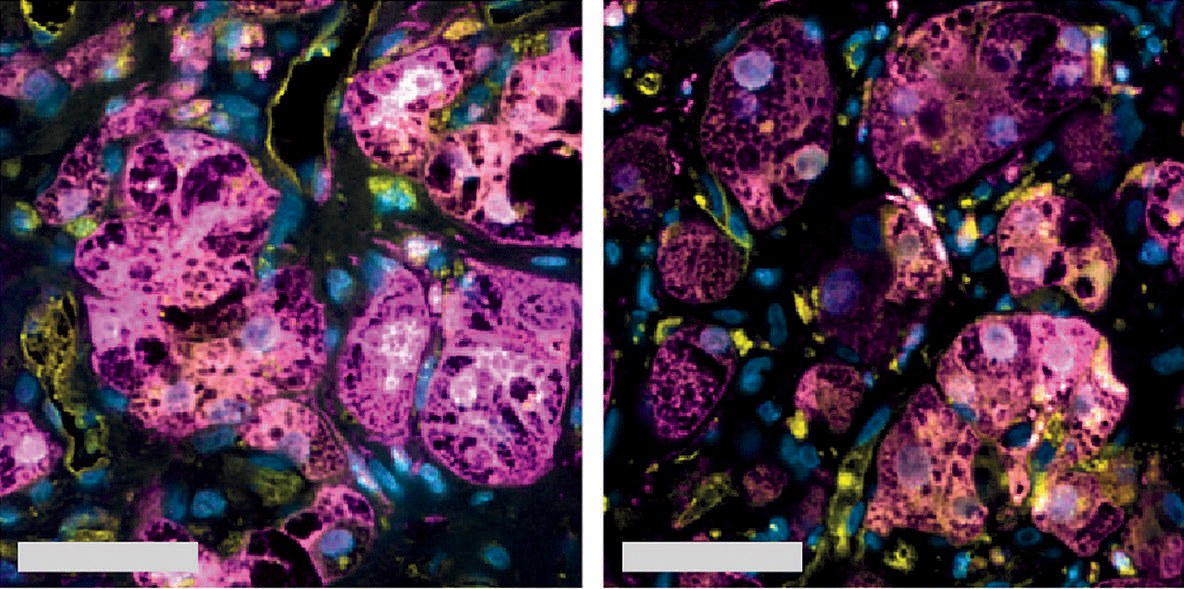
Scientists at Harvard’s Wyss Institute have developed a way to grow liver tissue in vivo, which could help patients waiting for transplants. The liver—critical for sustaining life—is the largest organ in the body, weighing more than three pounds. In animal tests, instead of trying to build a full liver in the lab, Christopher Chen ’90, M.D. ’99, and colleagues implanted a small piece of engineered liver tissue and then triggered it to double in size once inside the body. They used a common drug to control two growth signals, allowing the tissue to expand when needed and stop growing when either signal was removed. The temporary liver functioned without causing harm. Eventually, this approach might enable small human liver implants to expand to therapeutically useful sizes.