After the University doubled its proposed pay raise for non-tenure-track faculty and researchers on Tuesday, one of Harvard’s two picketing academic unions called off its weeklong strike, even as contract negotiations continue and other key issues remain deeply in contention.
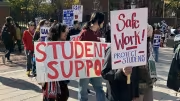
Harvard Academic Workers-United Auto Workers (HAW-UAW) walked off the job on November 10, joining the University’s graduate student workers, who have been on strike since October 27 (and who remain on the picket line). Representing about 2,500 employees, HAW-UAW includes lecturers, preceptors, instructors, postdoctoral fellows, teaching assistants, research associates, and adjunct faculty members. The union has been bargaining since 2024 for its first contract.
The University’s latest compensation offer includes an immediate 7 percent pay increase and 1.5 percent bonus, as well as 3.5 percent raises during each of the next three years. “That was a significant enough step that it communicated to us that the University was making real movement toward settling this contract,” said J. Gregory Given, an Expository Writing preceptor and member of HAW-UAW’s bargaining committee.
Harvard also made what Given described as other small concessions. In a letter to faculty members across the University, Deputy Provost Jessica Soban and Managing Director of Labor and Employee Relations Paul Curran said that the University had raised the salary level at which employees are eligible to receive the maximum reimbursement for childcare costs, from $55,000 to $85,000—a move that partially addresses union demands.
The University also agreed to guarantee that at least one Harvard health plan would comply with federal requirements for J-1 visas. The move would codify a fix to a problem that arose briefly in 2025, when increased deductibles and copays threw University plans out of compliance with the J-1 visa program, which allows many international scholars and researchers to come to Harvard. “This was at the height of the Trump administration’s aggression around immigration enforcement,” Given said, adding that Harvard officials worked with the union to solve the problem before the new health plans went into effect.
On other core issues, the University and the union continue to disagree. One is the eligibility of hundreds of workers whom Harvard says should be to excluded from the union because they are paid through stipends. Another is HAW-UAW’s demand for union security provisions, which would require that workers covered by the contract pay union dues or a fee to the union, even if they decide not to join. Union security is a standard clause in many contracts, including those Harvard has with its dining, custodial, and clerical workers, but Harvard officials have argued that “academic workers should be able to decide for themselves to opt to join a union or pay union dues.”
The two sides are also divided over protections against harassment, discrimination, and bullying in the workplace. This has been a serious stumbling block in the University’s negotiations with graduate student workers as well. Both unions say that the University’s internal process for handling grievance complaints, which was updated in 2023, is confusing and inadequate. The unions are pushing for an independent process that they view as more robust and responsive. Harvard has argued that all University community members should be subject to the same grievance procedures.
In negotiations this week, HAW-UAW offered a compromise, Given said, in which workers with grievance complaints would first go through the University’s procedures and only seek an independent process if they were not satisfied by the outcome. The idea is adapted, he said, from the union contract for MIT’s graduate workers. “It’s much more limited in scope and a different timeline than what we’d been proposing in the past,” Given said. The University rejected the offer. “We’ll keep talking,” Given said.
He added that he is hopeful about reaching an agreement soon on the remaining unsolved issues. The next bargaining session between HAW-UAW and the University is scheduled for December 1. “We started the strike close to a contract,” Given said, “and we think we ended the strike closer to a contract. But there are a few outstanding issues that we think it’s worth continuing to bargain over, and still room for the University to move to meet us in the middle.”
In their message to Harvard faculty members, Soban and Curran struck a similar tone. “While some differences remain,” they wrote, “we will continue to engage with HAW-UAW this week with the aim of finalizing an agreement soon.”
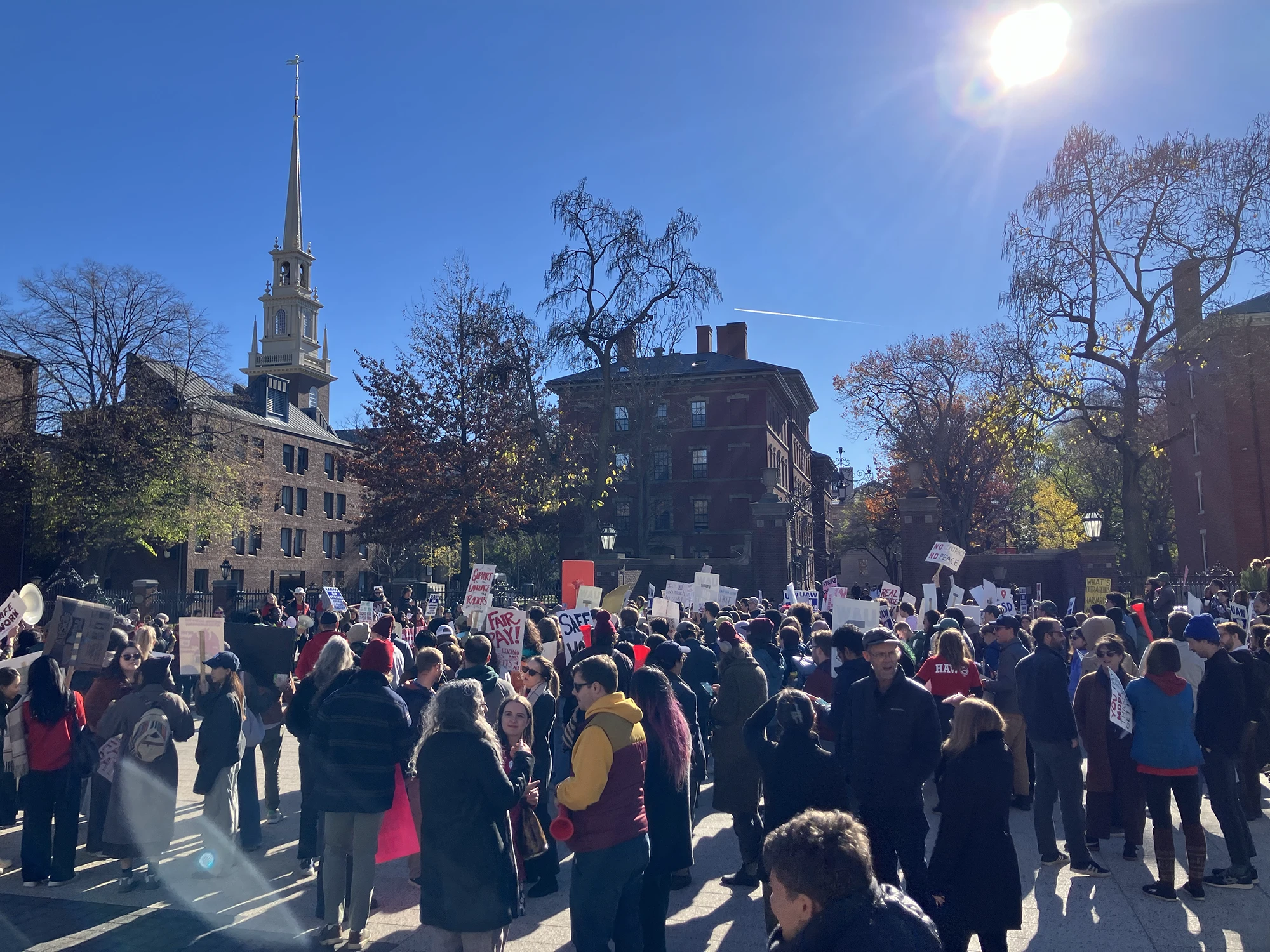
The academic employees’ return to work ends what was, briefly, the largest walkout in Harvard history. For now, the Harvard Graduate Students Union-United Auto Workers (HGSU-UAW) is the only union on strike; Harvard’s dining service workers voted last month to authorize a strike but have not set a walkout date. Given said HAW-UAW members continue to support graduate workers—on Monday and then again on Wednesday, the two unions held joint rallies in Zimmer Hall Plaza.
“We want to keep doing whatever we can in solidarity with them,” Given said. “We’re continuing to encourage our colleagues not to scab on HGSU work, and we hope that the University will settle a reasonable contract with them.”
A Tuesday bargaining session between HGSU-UAW and the University did not yield much agreement, said Denish Jaswal, the president of graduate student union. Afterward, the union agreed to try a mediation process with Harvard. The two sides will meet with a mediator Friday, and again on Tuesday, November 24. Additional sessions will be scheduled the following week if necessary, Jaswal said. “We are hopeful that mediation can result in a contract very soon,” she said.
HGSU-UAW and the University remain at odds on several key issues, including pay and benefits, non-citizen worker protections, and the previously noted grievance process for harassment and discrimination complaints. The union is also pushing for union security provisions and fighting to keep hundreds of workers whose positions Harvard wants to exclude from union membership. Last week, after a heated bargaining session that University officials ended early, Curran asked HGSU-UAW leaders to consider a mediation process. The two sides worked with mediators during negotiations for two previous contracts.