“Don’t call me a saint. I don’t want to be dismissed so easily,” was the famous kiss-off from Dorothy Day, who helped found the progressive Catholic Worker Movement in 1933. Today, the radical activist is in line to become an actual Roman Catholic saint, the highest veneration in the world’s largest church. Saints are “the brightest ornaments of the church militant,” according to eighteenth-century hagiographer Rev. Alban Butler, author of The Lives of the Saints. They are, he writes, “our future companions in eternal glory.”
Some might think of saints as solemn old men draped in cassocks decorating the margins of illuminated manuscripts, like St. Francis of Assisi or St. Augustine. But the Catholic Church—which views saints as transcendent role models—is canonizing new saints all the time, from a teenaged Italian computer programmer who died of leukemia in 2006 to a Venezuelan nun who founded a congregation in the 1960s.
Also among the thousands of Catholics reportedly in line for canonization are three twentieth-century Harvard graduates. Within the past year, the Vatican has advanced the sainthood causes of Argentine businessman Enrique Shaw, who completed an advanced management program at Harvard Business School in 1957, and antiabortion advocate Ruth Pakaluk ’80. Antiwar activist John Timothy Leary ’80 also appears on an unofficial Wikipedia list of “American Candidates for Sainthood.”
The Vatican did not respond to an inquiry about Leary’s current status, and it rarely discusses potential sainthood cases while they are being considered. What’s known is that the path to sainthood is like a steeplechase, long and strewn with obstacles. Joan of Arc, for instance, was canonized roughly 500 years after she was burned at the stake in 1491. Now, the elevation of Chicago-born Robert Francis Prevost to Pope Leo XIV has boosted hopes that more Americans will join the sacred ranks. There are currently only 11 American saints, but there are believed to be at least 70 American names being considered for eventual sainthood.
Why should we care about potential “Harvard saints”? For one thing, the stories of Harvard’s sainthood candidates shine light on the University’s twentieth-century relationship with the Church—and how it had improved from earlier days. After all, Harvard’s first endowed lecture series, the eighteenth-century Dudleian lectures, were dedicated to “the detecting and convicting and exposing of the idolatry of the Roman Catholic Church, their tyranny, usurpations, damnable heresies, fatal errors, abominable superstitions”—you get the point.
Furthermore, saints aren’t just men and women staring down from stained glass windows. Saints are symbols of community spirit and selflessness (though some saints fare less well in the eyes of history, such as the recently canonized Fr. Junípero Serra, credibly accused of enslaving Indigenous Californians in the 1700s). To believers, saints can also be a source of holy guidance, explains University of Massachusetts Dartmouth law professor emeritus Dwight Duncan ’73, a canon lawyer who is one of Pakaluk’s postulators, or advocates for her sainthood cause. “A saint or a venerable is a friend that we have in heaven who can be asked for favors, or so-called miracles,” he says. “Those interventions are needed; people feel vulnerable and alone, and they need models of exemplary behavior.”
A Benevolent Business Leader
The path to sainthood starts when a Catholic diocese suggests a candidate, suffused with the biblical “heroic virtues” (faith, hope, charity, prudence, justice, fortitude, temperance) and renowned for good works, to the local bishop. The only key requirement is the same prerequisite for getting your face on a U.S. postage stamp: you have to be deceased. The bishop forwards the name to Rome. The desired reply, in Latin, is nihil obstat—“nothing stands in the way”—at which point, the candidate is named a “Servant of God” and the process begins.
If a cause gathers momentum and finds favor in Rome, the Vatican subsequently accords a sainthood candidate “venerable” status. Then, after considering evidence of a reported miracle or miracles, the Vatican’s clearinghouse, the Dicastery for the Causes of Saints, could declare the candidate“beatified,” or eligible for local veneration. Formal canonization accords the saint veneration throughout the Catholic world.
For example, last year the Pope announced a miracle attributed to Enrique Shaw’s intervention: the parents of a five-year-old Argentinian boy who suffered a devastating head injury in 2015 prayed to Shaw for their son’s recovery. “The boy survived and today, now a teenager, lives a normal life with no lasting effects,” the Catholic news agency OSV reported.
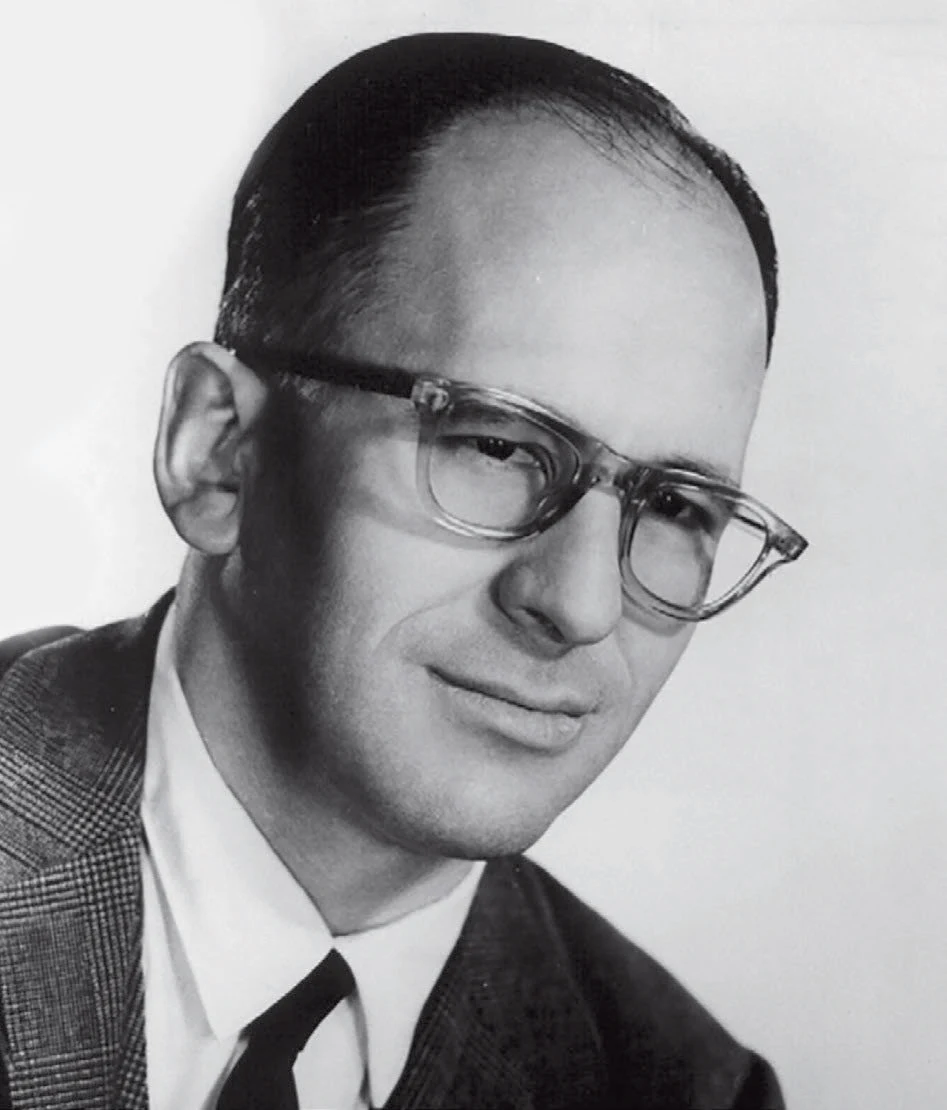
Of the potential Harvard saints, Shaw’s candidacy is the furthest advanced. First nominated for sainthood in 2001 by then-Cardinal Jorge Bergoglio of Buenos Aires (later Pope Francis), Shaw would be the first business-leader saint in the Church’s history, according to the Acton Institute for the Study of Religion and Liberty. He has been hailed for giving lie to Jesus’s maxim that “it is easier for a camel to pass through the eye of a needle than for one who is rich to enter the kingdom of God.”
Born into an upper-class Buenos Aires family, Shaw became the managing director of his in-laws’ business, Rigolleau glassworks. A leader of Catholic Action, a lay organization that seeks to inculcate Christian values in everyday life, Shaw was also a cofounder of Argentina’s Christian Association of Business Leaders. He was arrested twice during anti-Catholic crackdowns under the dictatorship of Juan Perón.
At Rigolleau, Shaw established a pension fund and healthcare system for the company’s 3,400 workers that provided medical care, financial support in case of illness, and loans when deemed necessary for a family’s well-being. He laid out some of his core beliefs in a speech, “The Mission of Business Executives,” invoking the Bible, St. Thomas Aquinas, and numerous popes and cardinals to formulate a code of behavior for business leaders.
“Work is not an end,” the speech states, citing a fellow Catholic executive. “Neither is production nor welfare…Productivity is an instrument to make better human beings worthy of their supernatural destiny.”
“If even half of the businessmen today were like Enrique Shaw, things would be a lot better,” Rigolleau employee Adelina Humier said in a memorial documentary commissioned by the Association of Business Leaders. “He said that behind every worker there was a mother, a brother, waiting for their daily bread.”
Shaw died in 1962, after a protracted battle with cancer, at age 41. When he needed blood transfusions, over 260 of Rigolleau’s factory workers lined up to donate blood to him.
An Ambitious Activist
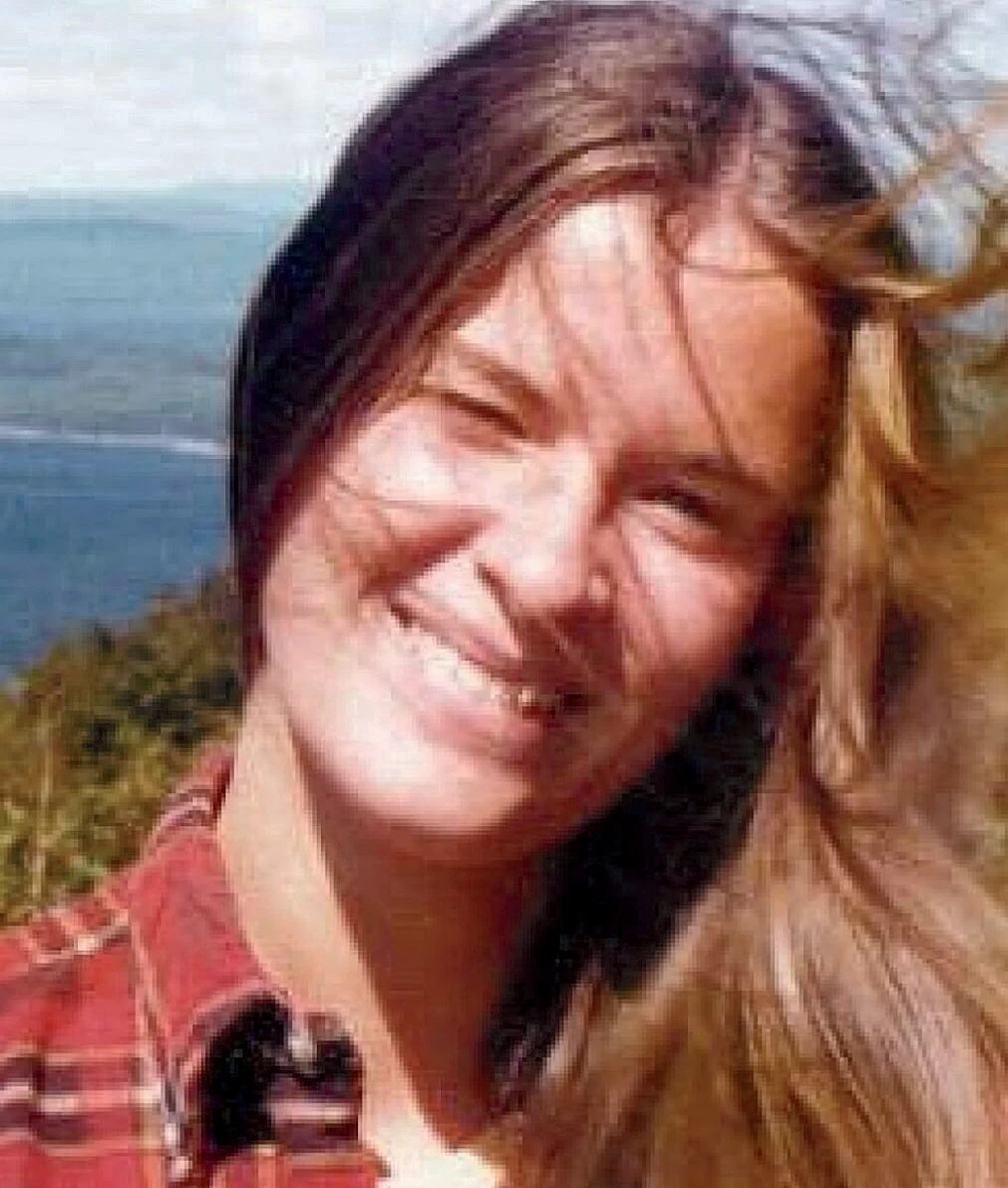
Ruth Pakaluk, who, like Shaw, died tragically young from cancer, was in many ways a typical undergraduate when she came to Harvard from Norwood, New Jersey, in the late 1970s. In a letter to a hometown friend, Pakaluk—then Ruth Van Kooy—echoed the anxieties of thousands of undergraduates before and after: “It’s still exam period here, but I’m having a very tough time getting myself to work…I’m convinced I’m going to get B’s in all my classes, and B’s don’t seem worth working for.”
Ruth quickly paired up with Michael Pakaluk ’80, Ph.D. ’88, and they were married in the fall of 1978, when they were both still undergraduates. “Our decision [to get married] was almost as unusual then as it would be now,” she recalled in The Appalling Strangeness of the Mercy of God, a posthumous memoir co-written by Michael. “Only two other undergraduates at Harvard were married, but they weren’t married to Harvard students or even to students at all; their spouses were older.”
Ruth and Michael, a lapsed Catholic, were spiritual seekers who considered themselves atheists at the time they met. As sophomores, they began attending First Church in Cambridge on Cambridge Common. They also joined the Evangelical InterVarsity Christian Fellowship, a national ministry with a branch at Harvard. Influenced in part by Malcolm Muggeridge’s book on Mother Teresa, they were wending their way towards Catholicism. As Michael later explained in a yet-to-be-published personal memoir of his Harvard years: “The Catholic Church was either very bad or very good. Yet Mother Teresa was making the first option appear untenable.”
The couple formally converted to Catholicism one year after graduation, on Christmas Eve in Edinburgh, where Michael was studying on a Marshall Scholarship. “It became clear to us that the Catholic Church had stood firm on certain teaching historically affirmed by all Christians but which Protestant churches had abandoned in the face of strong forces of popular culture,” Ruth wrote.
As part of her spiritual reorientation, Ruth had a powerful change of mind on abortion. “Ruth arrived at Harvard a fervent believer in a woman’s right to an abortion,” Michael wrote in their joint memoir. Just a few years later, she founded Harvard-Radcliffe Human Rights Advocates, an official Harvard student group opposed to abortion. She gave birth to the first of her seven children, one of whom died in infancy, the year after she graduated. In 1986, she became president of Massachusetts Citizens for Life and launched herself into a public career of antiabortion advocacy.
“Ruth was a good daughter of Harvard in the sense that she was very ambitious. But her ambition was for truth, grace, holiness, and the welfare of the most vulnerable.” -Michael Pakaluk
An effective debater and public speaker who often faced off against abortion-rights advocates, Pakaluk was no stranger to asperity. In a letter to an acquaintance who had opted to attend divinity school, she wrote: “I won’t pretend to be enthusiastic about Harvard Divinity School. I joke with friends about not being able to decide which institution is more deserving of God’s wrathful judgment: the [reliably pro-choice] Boston Globe or the Harvard Divinity School.”
Pakaluk died at 41, the same age as Shaw. That is not the only overlap between the two sainthood candidates. Michael Pakaluk has taught about Shaw in his “Gospel of Work” course at Catholic University’s Busch School of Business. On its website, the Washington, D.C.-based business school claims “to house the world’s only stained-glass window of Enrique Shaw,” adding: “In a special gesture, Catholic University received permission to depict Shaw with a halo—even though he is not yet canonized—symbolizing the profound impact his example has on future business leaders.”
Now, Pakaluk is one step behind Shaw on the sainthood track. Late last year, her postulators received the two-word go-ahead from Rome, elevating her status to “Servant of God.” By email, Michael Pakaluk reflected on how his late wife’s education shaped her legacy. “Ruth’s great natural talents were tested and polished at Harvard, and she put these to work in service to the good of her country, as she understood it, and to that of the Roman Catholic Church,” he wrote. “Ruth was a good daughter of Harvard in the sense that she was very ambitious. But her ambition was for truth, grace, holiness, and the welfare of the most vulnerable.”
A War Opponent on the Frontlines
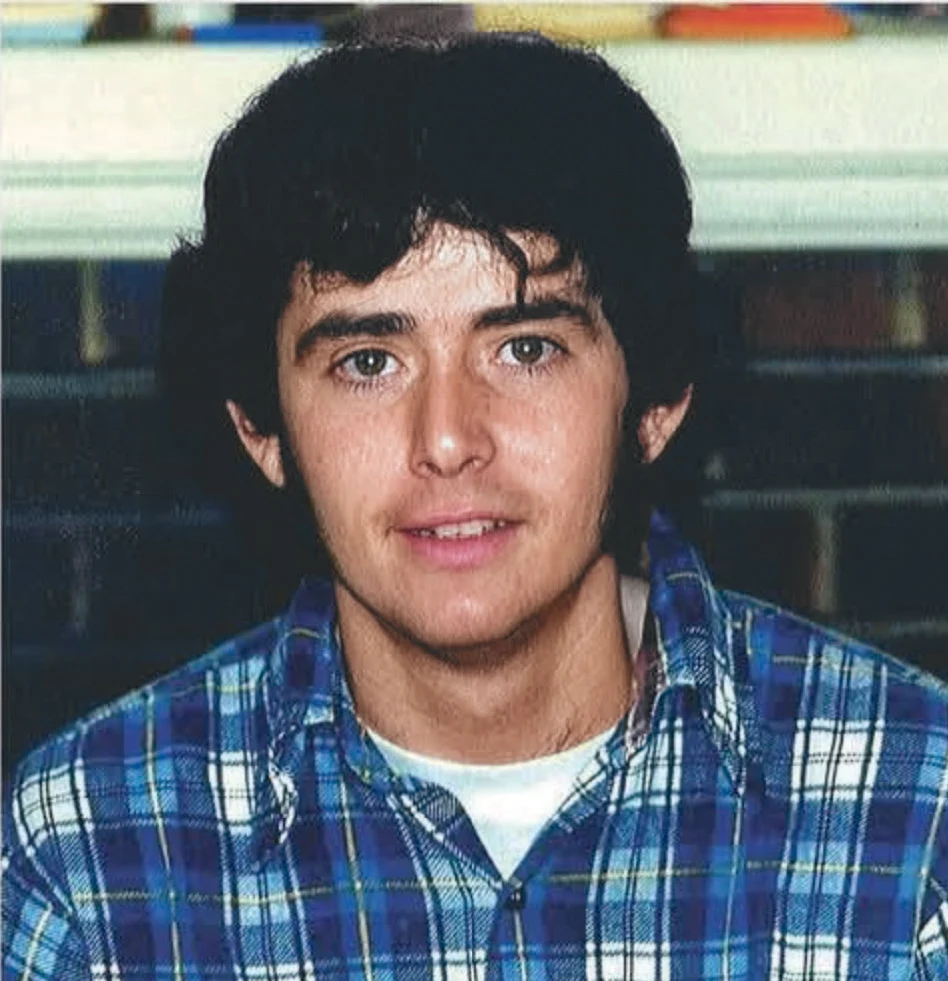
John Timothy Leary, politically active in his Vernon, Connecticut, high school, arrived at Harvard one year after the Pakaluks. Like Ruth, he became an advocate for Catholic causes, primarily evincing a fiery commitment to social justice and opposition to all manifestations of war. His activism also overlapped with Pakaluk’s. Leary was arrested several times during sit-ins at abortion clinics, but never sent to jail.
Leary’s first brush with social activism came via Phillips Brooks House, where he volunteered to be a prison tutor. Soon he was handing out antiwar leaflets outside a South Boston post office—and getting beaten up by disapproving locals. “Knocked down, kicked and bloodied, [Leary] and his companions decided not to press charges,” according to a mini-biography published by the Pax Christi USA Center on Conscience and War, which he helped found. “Instead they expressed sorrow for the South Boston community which has suffered particularly heavy losses during the Vietnam war.”
Soon after arriving at Harvard, Leary moved out of the dorms and into a group home with like-minded activists. Sister Evelyn Ronan, who worked at the time at the Harvard-Radcliffe Catholic Student Center, remembered that Leary and his apartment mates often sheltered homeless people for the night. “He would always give his bed to the next guy who came in looking for shelter and then he’d sleep in his green sleeping bag,” she recalled. “They lined his coffin with that sleeping bag.”
Around Christmas 1980, Leary and some friends from Pax Christi distributed leaflets at Draper Laboratory, a research center for missile systems. The handouts included the Peace Prayer of St. Francis of Assisi and a personal message from Leary’s group: “We hope this prayer will deepen our personal commitment to peace and help open ways for us to work together to eliminate all war, injustice, and fear.”
Yet again, the Pax Christi crew got arrested, and when it came time for Leary to graduate, a possible 30-day jail sentence for the Draper caper was hanging over his head. Nothing came of it. Instead, he received Harvard College’s Ames Award, given to seniors “who have shown heroic character and energy with helping others and whose substantial contributions may not have been acknowledged.”
“He was very well-known and attractive in the fullest sense of that word,” says Fr. William Kelly, a senior chaplain at the Harvard Catholic Center. “He attended Mass every day, and you would see him at [the homeless shelter] Rosie’s Place and at the Haley House soup kitchen.”
Ronan, now living in a convent north of Boston, says of Leary: “When you looked into John’s eyes, you could see all the way to heaven.”
Just 14 months after graduating, Leary died of cardiac arrest while jogging, at age 24. Rev. Peter Gomes, the Pusey minister at Memorial Church, eulogized him at his funeral service: “He became in his short life the complete and total man for others, and those who knew and loved him testify to the love of Christ that shone in him.”
The famed Jesuit antiwar activist Fr. Daniel Berrigan wrote a poem in Leary’s memory, which read, in part:
…Rare spirit, rare
Harvard College had not his peer,
‘An award for drawing do-gooders,’
he joked when honors came his way…
In his element at last
he follows the walker of waves.
Alex Beam is an author and frequent contributor to The Boston Globe.