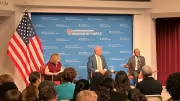
President Drew Faust announced today that Harvard will strive to become fossil-fuel-neutral by 2026, and fossil-fuel-free by 2050. These ambitious goals are being unveiled a year after the University declared success in reducing its greenhouse-gas emissions by 30 percent from 2006 levels (in part by relying more on electricity generated using natural gas, a less carbon-intensive fuel than those it is supplanting).
Based on recommendations made by the Climate Change Task Force co-chaired by William C. Clark, Brooks professor of international science, public policy, and human development at the Kennedy School; Rebecca M. Henderson, McArthur University Professor at the Business School; and Katie Lapp, executive vice president, Harvard’s aim to become fossil-fuel-free would be made through expanded use of sustainable energy sources. Massachusetts is undertaking a significant state commitment to augment its supplies of sustainable energy, which may make it easier for state consumers and institutions to shift their mix of purchased electricity: the Commonwealth recently approved utility company Eversource’s proposal to deliver Canadian hydropower through a transmission line that would run through New Hampshire (which that state then rejected). In addition, the University will take several other steps in order to increase sustainability on campus, including:
- Expanding its living lab research initiative, bringing together multi-disciplinary teams of students and faculty on campus and in neighboring communities to pilot innovative and creative solutions to the climate crisis.
- Appointing a new Sustainability Executive Committee composed of faculty, administrators, and students to administer the University’s fossil-fuel-emissions reduction strategy and to provide periodic reviews of progress related to its short- and long-term sustainability goals.
- Undertaking a strategic-planning process led by Lapp and vice president for campus services Meredith Weenick, with input from Harvard’s schools, to address ways to further reduce reliance on fossil fuels in electricity procurement, transportation, district energy supply, and capital planning.
A full statement can be found here.