Walking up to the new home of Harvard’s American Repertory Theater, the first thing that stands out is the wood—a pale cedar that covers huge swaths of the 70,000-square-foot complex on North Harvard Street in Allston. During a visit in mid-February, it gave the partially completed site the feel of a gigantic barn rather than a state-of-the-art performance facility. Wood is also predominant inside the David E. and Stacey L. Goel Center for Creativity and Performance, where it is combined with a few strategically placed brick walls and movable acoustic paneling to optimize the sound throughout the complex’s big and small performance rooms.
“In the final finished space, we will have a load of acoustic paneling on the ceiling, and areas of the wall will be perfect for acoustic absorption,” said chief architect Tom Gibson, walking through the area that would become the center’s communal lobby. “It creates a deader space, which allows amplified music to be played and people to bounce around.”
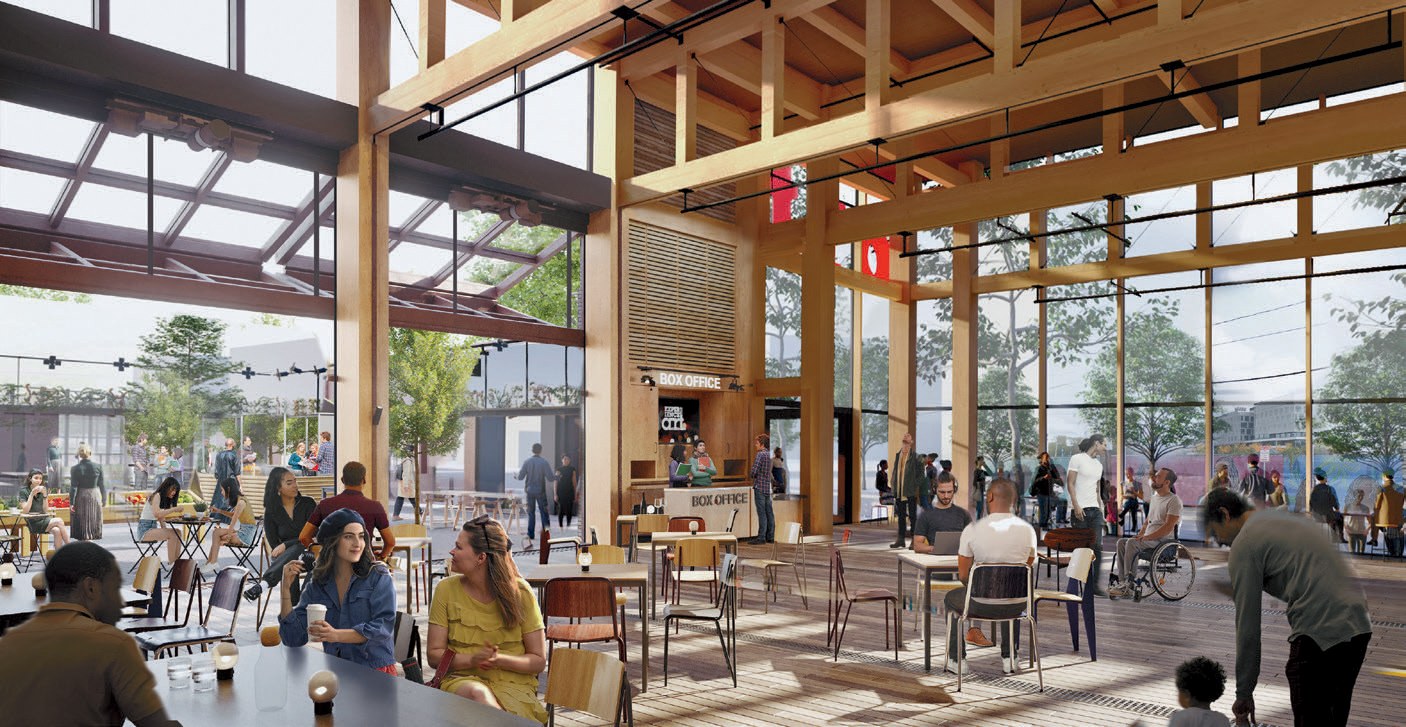
After 47 years in the Loeb Drama Center in Cambridge, the A.R.T. will make the one-mile move across the Charles River into the Goel Center in October. The new space, a few blocks from Harvard Stadium, was designed by the London-based architecture firm Haworth Tompkins as a self-sufficient structure—both environmentally, and in terms of creating and mounting live productions.
The buildings are constructed with sustainable materials, including cedar, timber laminate, and 190 tons of reclaimed brick. More than 2,000 individual mass timber structures make up the complex’s columns, beams, floors, walls, stairways, and elevator shafts, and a glass roof will let in natural light.
Water and electric utilities will come from Harvard’s lower-carbon District Energy Facility, according to the A.R.T., and the roof will be outfitted with solar panels. The Goel Center’s builders are aiming for a Living Building Challenge Core accreditation from the International Living Future Institute, given to sustainable development projects.
“The surfacing and the ventilation strategy has informed the silhouette of the building,” Gibson said, describing a labyrinth of airways through which outdoor air travels from the building’s courtyard into its performance spaces in the milder seasons. “That’s not every month, but spring and fall, we will minimize our electrical use naturally.”
There’s an artistic benefit to that, Gibson added: “If you’re bringing fresh air into a space, with oxygen levels going up and CO2 levels coming down, that really helps with the audience alertness.” There’s science to back him up: a 2025 study from the Harvard Chan School of Public Health found that students in classrooms with higher ventilation rates were more alert and performed better on cognitive tests.
The complex is tailored to the many phases of the theatrical process, too. There are two interior performance spaces: the 700-seat West Stage for large, mainstage productions, and the 300-seat East Stage for more intimate shows, both with retractable seating to accommodate bigger, standing crowds. An open-air lobby, with tables, communal seating, and a small cafe, will open to a large courtyard out front, where the A.R.T. anticipates holding both ticketed and free outdoor performances and events.
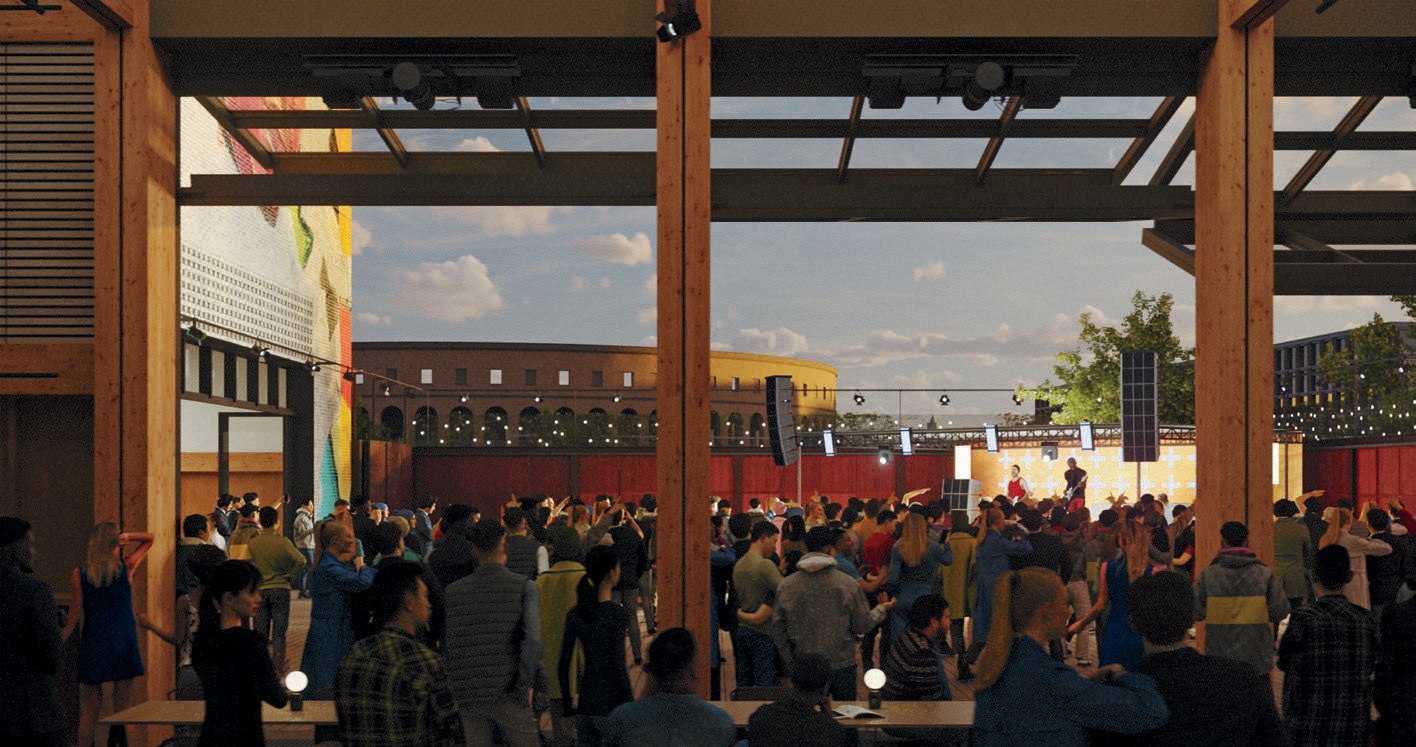
For performers, writers, producers, and directors, the center also includes several soundproof rehearsal studios, big or small enough to replicate the actual scale of the productions in the Goel’s two theaters. (For Loeb productions, rehearsals were held offsite.) In another major upgrade, there’s a fully functional prep kitchen for prop food—something that, one imagines, would have been a dream for the creators of the A.R.T.’s pie-centric musical Waitress a decade ago.