
John Asher Johnson, his wife, Erin Johnson, and their young sons Owen and Marcus meandered by car from Caltech to Cambridgeport last summer—a mere flick of an eye for the new professor of astronomy, who studies exoplanets, light years away. (Some 800 exoplanets are known, as many are being confirmed, and there are thought to be billions to trillions.) An enthusiastic teacher, Johnson outlines his field using the “Exoplanets Explained” video, in the PhD TV series on YouTube: the voices are his and his graduate students’, happily distinguishing Doppler-effect, radial-velocity planet detection from direct imaging, star transits, gravitational microlensing, and other techniques. All are in use at Harvard’s exoplanet research group, which he calls “unique in astronomy.” At Caltech, he was the team; here, colleagues include professors David Charbonneau (in whose office Johnson is camping out during a sabbatical year) and Dimitar Sasselov, lecturer David Latham, and others. Because Harvard teaching opportunities are innovative and diverse, he says, in Cambridge, “I can be a university professor in the fullest sense,” building on the nonhierarchical ethos he established at his “ExoLab” in Pasedena. When he is not playing basketball, bicycling, building Legos with the boys, or preparing to teach the introductory stellar and planetary astronomy course this spring, Johnson thinks about deploying future observational instruments on Earth and in orbit. He aims for “unambiguous detection of life signatures outside our solar system within our lifetimes.” Unlike other astronomical objects, he has written, planets “inspire a subtle emotional curiosity…because they alone can be thought of as places, not things.”
Profile of exoplanet professor John Johnson
An exoplanet hunter joins the faculty

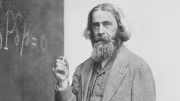
John Asher Johnson | Photograph by Jim Harrison
You might also like

FAS Reports Financial Stability, But Rising Debt
Leaders say the cost of consultants and severance will be recouped within 18 months.

FAS Readies for Administrative Transition
Faculty leaders say layoffs will yield $20 million in annual savings.
They Might Be (Harvard) Giants
Two tales of University greats—and an encounter with a Tiger
Most popular


Explore More From Current Issue

These newly released novels, histories, and memoirs grapple with identity in all its forms.

Harvard researchers investigate climate’s impact on cocoa crops, innovations in nasal vaccines, and links between pain and skull marrow.

The Harvard triathlete and coach says she helps normal people to “do extraordinary things.”