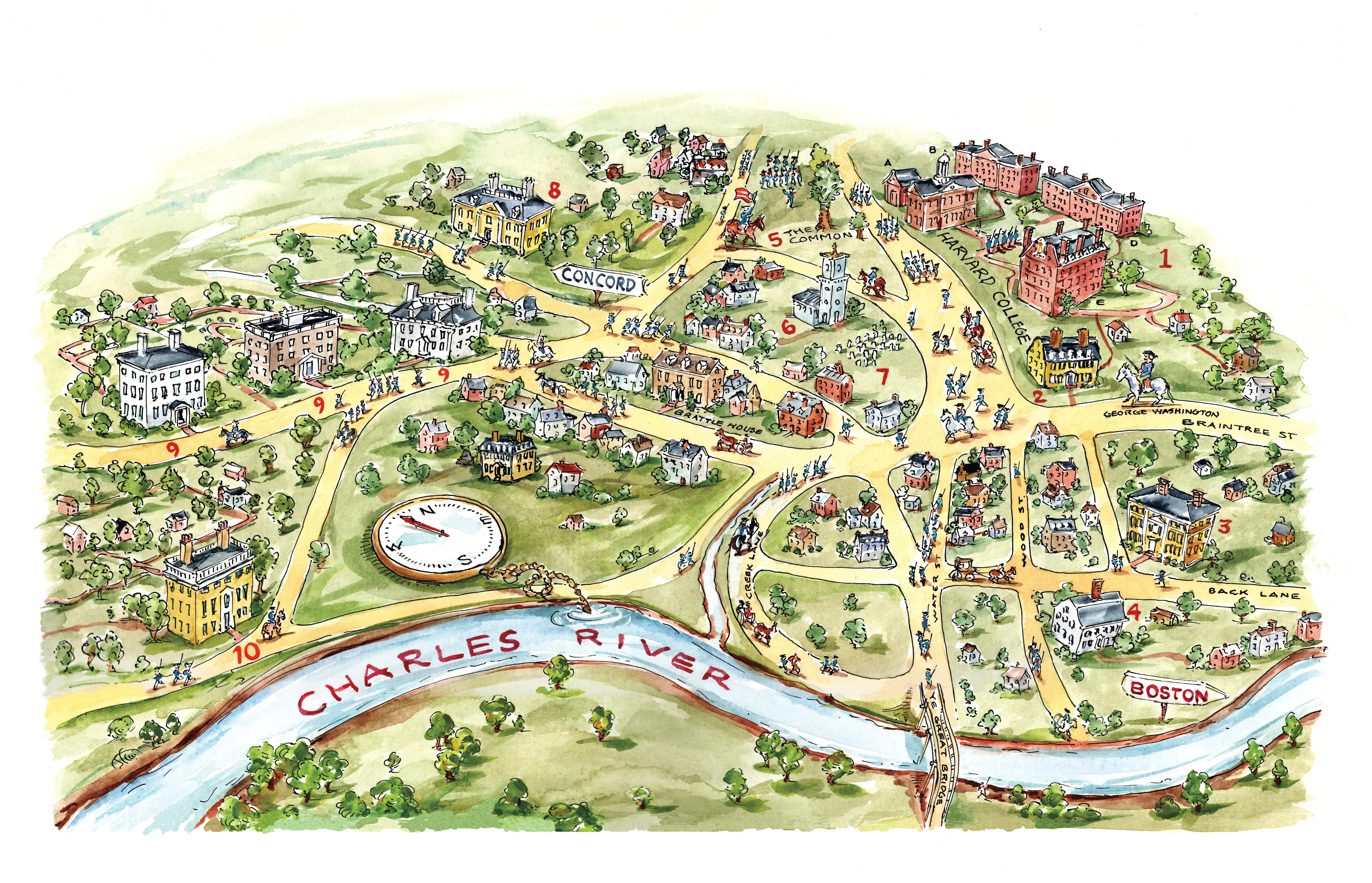
Editor's note: For an interactive map of Cambridge in revolutionary times, see below.
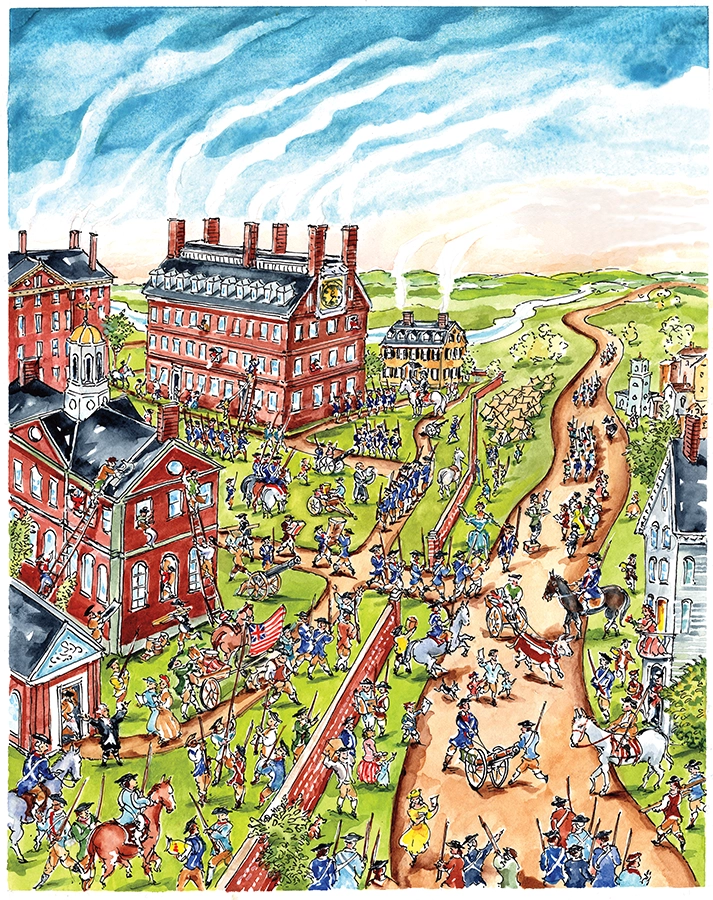
In the years leading up to the American Revolution, Cambridge was a hub of intellectual fervor, planning, and preparation. All around Harvard Square today are reminders of those turbulent days, from the classrooms and dormitories that once housed Patriot troops to the stately homes that some Loyalists fled as Revolutionary passions grew. Certain sites are now familiar landmarks: Christ Church, the Old Burying Ground, and Cambridge Common, where George Washington first took command of the Continental Army. Many have since become part of the University’s footprint. In Apthorp House, now part of Adams House, General Israel Putnam planned the Battle of Bunker Hill. Elmwood, now the Harvard president’s official residence, became a hospital during the war. John Hicks’s residence, now the Kirkland House Library, housed officers from Washington’s army. And Washington briefly quartered at Wadsworth House before he made the Vassall mansion—now Longfellow House—his headquarters.
Interactive Charles River map with 10 annotated historical landmarks
It’s possible, with a little imagination, to conjure the atmosphere of those days and picture the characters who crossed paths in these streets—some of them etched in every history textbook, many of them lesser-known. In the following pages, you’ll find some of their stories: an inspiring doctor turned general who met a tragic end; a resourceful youth who grew to become a prominent Black abolitionist; a politician committed to advancing natural rights; a woman who wrote witty missives against tyranny; and the Harvard students who departed campus for a memorable year to make room for the war effort. These dreamers, thinkers, and fighters joined together to shape history, ensuring that Harvard’s path would always be intertwined with the nation’s.