In early June, as the pandemic’s disproportionate toll on racial minorities and the poor came into sharper focus and protests roiled the country in the wake of George Floyd’s killing, Megha Majumdar ’10 released her first novel, A Burning. Set in India, it weaves together the narratives of three loosely connected characters whose lives are changed by a terrorist attack that takes place in the opening pages. Jivan, a young Muslim woman who posts an ill-advised Facebook comment, finds herself accused of plotting the attack. Her former gym teacher, PT Sir, seeking a life of meaning and purpose, is swept up in a local right-wing party. Lovely, an aspiring actress, lends humor and exuberance to the narrative. She is a hijra, the designation in India for trans and intersex people, recognized as a third gender. (Simultaneously marginalized and mythical, hijras are both beggars and blessers of weddings and births.) The plot circles Kolkata’s slums and prison and packed local trains, its guava sellers and rickshaw drivers and illicit night markets.
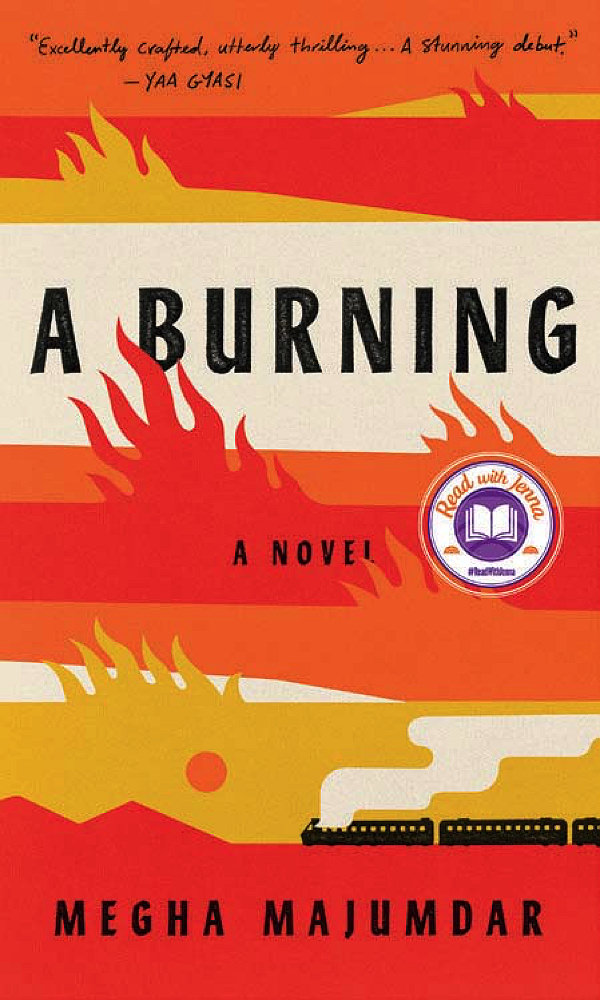
Majumdar did not expect much U.S. interest in A Burning. “I mean, it’s so very specifically about India,” she says. But the book debuted to rapturous reviews and became a bestseller almost immediately. American critics described the story as “propulsive,” “immersive,” “bright and scalding.” “Her characters start telling us about their lives, and those lives are suddenly palpable, vital, voiced,” wrote James Wood, professor of the practice of literary criticism, in The New Yorker. “I can’t remember when I last read a novel that so quickly dismantled the ordinary skepticism that attends the reading of made-up stories.”
But something else attracted Americans to the book, too. As much as A Burning is concretely about contemporary India—its rising Hindu nationalism and persecution of Muslims, its suppression of dissent, its social inequities and renewed sectarian violence—it also reflects the current moment domestically, in ways that feel urgent and obvious: the uprising against police brutality, the vulnerability of marginalized groups, the structural racism built into the texture of everyday life. “Part of what I’ve been thinking about is how people in the U.S. are seeing that their society does not always serve them,” Majumdar told The Wall Street Journal shortly after the book was published. After all, she adds, her concept for the narrative grew out of a similar question: “How do people dream and laugh and strive under oppressive systems?” How do they live out their specific ambitions, retain their individual humanity?
The impetus to write A Burning came several years ago, as she watched the rise of right-wing nationalism in India. An editorial assistant at the literary publisher Catapult in New York, where she acquires literary fiction and nonfiction manuscripts, Majumdar grew up in Kolkata, the child of a teacher. “My days pretty much revolved around school and schoolwork,” she recalls. She attended a school where subjects were taught in English, as opposed to Hindi or Bengali, “and there was a lot of pressure to do really well, because doing well in school, you know, opens doors.” She remembers hours in the library with a small group of friends, studying SAT prep books and world-history texts that went beyond the classroom curriculum. “We were aiming to apply to colleges abroad and had the idea we would go together,” she says. “It was an exciting time—a time of hard work, but also a time full of possibility and trying to make this kind of wild thing happen.”
She came to Harvard with a general interest in writing and a hunger for everything else. “My freshman year, I was so greedy to learn as much as I could about the world,” she says. “I was coming from a place where everything that I studied was focused on India”: history, economics, geography, politics, literature. In Cambridge, she studied creative writing and took classes in South American history and African development politics. In another course, she studied the Russian borderlands. Almost without conscious intent at first, she concentrated in anthropology.
After Harvard, she began a Ph.D. program in social anthropology at Johns Hopkins. She left with a master’s instead, but graduate school was influential for her. She spent one summer in Senegal, following a USAID project that was installing computers in public schools for the first time, and studying how the students and teachers incorporated the computers into their daily interactions. “I was always interested in issues of development and human rights,” she says. “I really enjoy anthropology for how it urges you to think in complex ways about another person’s experience of the world.…I thought that was the field I would work in.”
In a way, it is. Majumdar’s characters are rich and vivid and complexly drawn, the arcs of their lives sketched in fleeting moments and small, attentive, often contradictory, details: there’s no clear villain, despite the crushing moral consequences of some choices they make. Researching the book, Majumdar spent time in India, where she travels often, and closely followed events unfolding there. She studied ethnographic accounts of hijra communities and watched YouTube videos of places she couldn’t get to, like the kitchen in the women’s prison where Jivan, awaiting trial as an accused terrorist, cooks roti (flatbread made from stone-ground flour) alongside other prisoners.
She also mined her own childhood memories. Early in the book, Jivan and her family and neighbors are violently evicted from their neighborhood so the coal underneath it can be extracted. Police arrive armed with bamboo sticks, followed by bulldozers. “Soon our houses were exposed to the sun, all lime walls and cracked corners,” Majumdar writes. “They looked like we had never lived in them at all.” That scene was based on an event she remembers reading about in the local newspaper. “I was in middle school,” she says. “And it stayed with me: the police had come and destroyed this slum and all the houses in it. All these years later, it found its way into this book.”
Not unlike the study of anthropology, writing a book like A Burning is, she says, “very much the accumulation of absorbing what people around you are saying, how they behave, the stories they tell—these small observations—what you see on television and read about in the newspaper. All of that nourishes a book like this.”