An actor, a director, and a playwright, all of whom kickstarted their careers at Harvard, took home Tony Awards at the June 7, 2026, ceremony, which showcased and honored excellence in Broadway theater during the past year.
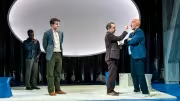
The first award handed out during the televised portion of the ceremony, Best Actor in a Play, went to John Lithgow ’67 for his portrayal of the celebrated children’s author Roald Dahl in Mark Rosenblatt’s Giant. The play, which centers around the fallout from the aging Dahl’s virulent and well-documented antisemitism, served as a domineering showcase for Lithgow, who delivered a performance The New York Times called “a fascinating study in monstrosity.”
Lithgow studied acting at Harvard under the dramatist Robert Chapman and has credited his decision to pursue acting to an appearance in a campus production of the Gilbert and Sullivan opera, Utopia Limited. A three-time winner, Lithgow won his first Tony 53 years ago for his Broadway debut. “I’ve had dozens and dozens of ecstatic moments on the stage,” he said in his acceptance speech on Sunday. “But I have to tell you right now, this moment has got to be one of the best.”
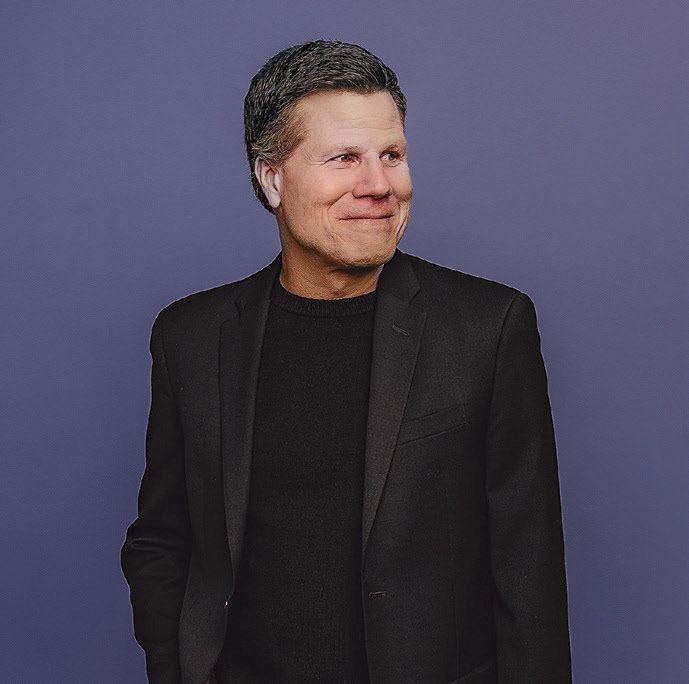
Later in the evening, William “Bill” Rauch ’84 and Zhailon Levingston shared the Best Direction of a Musical award for their revival of Cats. The production, which strips away the more literal feline trappings of Andrew Lloyd Webber’s 1981 musical and sets it in the world of Harlem drag ballroom competitions, has been a smash hit with critics and audiences; talking recently with Harvard Magazine, Rauch said that people frequently tell him that it “makes more sense of Cats than Cats made before.”
Rauch and Levingston delivered a zippy, tag-teamed acceptance speech honoring “the Black and brown trans women and gay men who were ballroom’s pioneers” and sent a callout across the airwaves: “To the 12-year-old kid who doesn’t fit in, who may be watching this on a television with the volume turned down low, come find your home at the Jellicle Ball.”

Later, Bess Wohl ’96 accepted the Best Play award for Liberation, about an activist group during the 1970s women’s liberation movement. The win capped off a huge year for Wohl and Liberation, which opened to critical acclaim on Broadway in October and won the Pulitzer Prize for Drama in May. As Wohl noted in her acceptance speech, it was the first Best Play Tony win for an American-born woman playwright since 1989, when Wendy Wassterstein won for The Heidi Chronicles. In a recent Harvard Magazine interview, Wohl said she worked on Liberation for about 15 years.
“I talked to women from the movement, which was incredibly inspiring, but I also knew not to be overly devoted to creating something like a documentary,” she said. “It’s a patchwork quilt of fiction, fact, reality, fantasy, and time-jumping.”
Accepting the Tony, Wohl thanked her daughters and mother, whose activism in the 1970s helped inspire the play. She closed her speech by honoring “women everywhere who have the courage to use their voice. And to all the girls out there, may you speak your truth and may the world be wise enough to listen.”