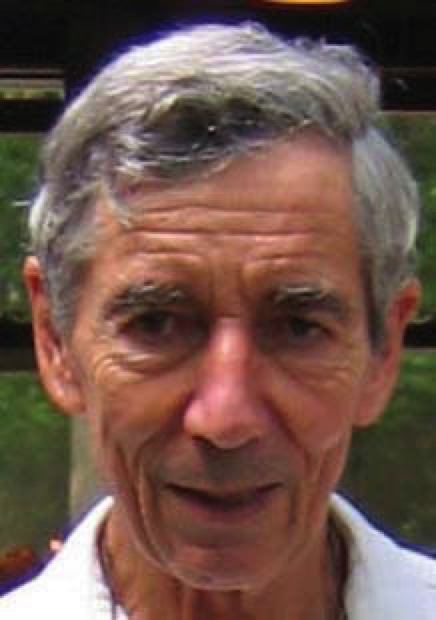
Harvard Magazine puzzle master retires

A longtime contributor hangs up his pencil.


John de Cuevas

Long-time Harvard Magazine crossword-puzzle master John de Cuevas ’52 has hung up his pencil, explaining, “I turned 86 last October and in the last few years have experienced a slackening of mental and physical powers.” He continues to create puzzles for his website, “but the extra ones I was doing for Harvard are more than I can manage now.” We thank him for bringing pleasure to puzzle-doers for decades. His full notice appears at harvardmag.com/decuevas-17—complete with a reproduction of his devilish creation for the University’s 350th anniversary, from the September-October 1986 issue.

~ The Editors
Related topics

You might also like

A Harvard President’s VW Beetle That Kept On Giving

Derek Bok donated his car for a good cause.

The Year a Beat Poet Squatted at Harvard

In 1954, Gregory Corso moved into Eliot House. How he stayed there is a literary legend.

Cambridge Once Fought Harvard’s DNA Research. Now There’s a Play About It.

A theatrical reenactment explores a 1976 clash between science and democracy.

Most popular

Keri Russell Calls ‘The Diplomat’ a Love Letter to Public Servants

A Harvard Kennedy School event looks behind the scenes of the Netflix drama. 

How Philosophy at Harvard Saved Itself

As humanities shrink across higher education, one department is flourishing. Is its success a fluke, or a roadmap?

To Promote Healthy Habits in Patients, Start with the Doctors

Why Harvard Medical School is training physicians to think more like coaches

Explore More From Current Issue

Ancient Egyptian painted sarcophagus with detailed hieroglyphs and a woman's face.

A rare Egyptian mummy case is on display at the Harvard Museum of the Ancient Near East.

Illuminated hanging sculptures resembling organic forms, casting warm light in a dim space.

Artists Enzo Camacho and Ami Lien turn a colonial symbol from Cambodia inside out.

Bronze statue of a seated figure holding a book, with a campus setting in the background.

As humanities shrink across higher education, one department is flourishing. Is its success a fluke, or a roadmap?