At Harvard’s Beck-Warren House, Ghosts Speak Many Languages

The quirky 1833 home now hosts Celtic scholars.

Cozy nook with a patterned rug and various colorful pillows against wooden walls.

Warren’s wood-paneled platform bed alcove | PHOTOGRAPH BY NELL PORTER BROWN; HARVARD MAGAZINE

Across campus, Harvard’s toiling employees might dream of taking an afternoon power nap. At the 1833 Beck-Warren House, home to the Department of Celtic Languages and Literatures, all they’d need to do is duck into a roomy bed chamber and doze off. Not that department administrator Mary Violette, whose desk is a few feet away, ever has. Yet, she appreciates the bed’s provenance.
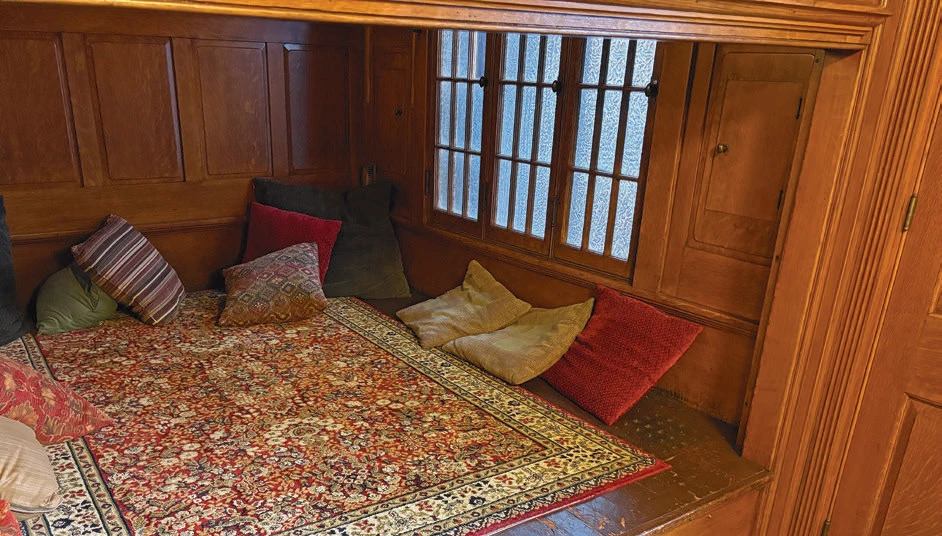
Wood-paneled platform bed alcove with patterned rug and decorative pillows.
PHOTOGRAPH BY NELL PORTER BROWN/HARVARD MAGAZINE

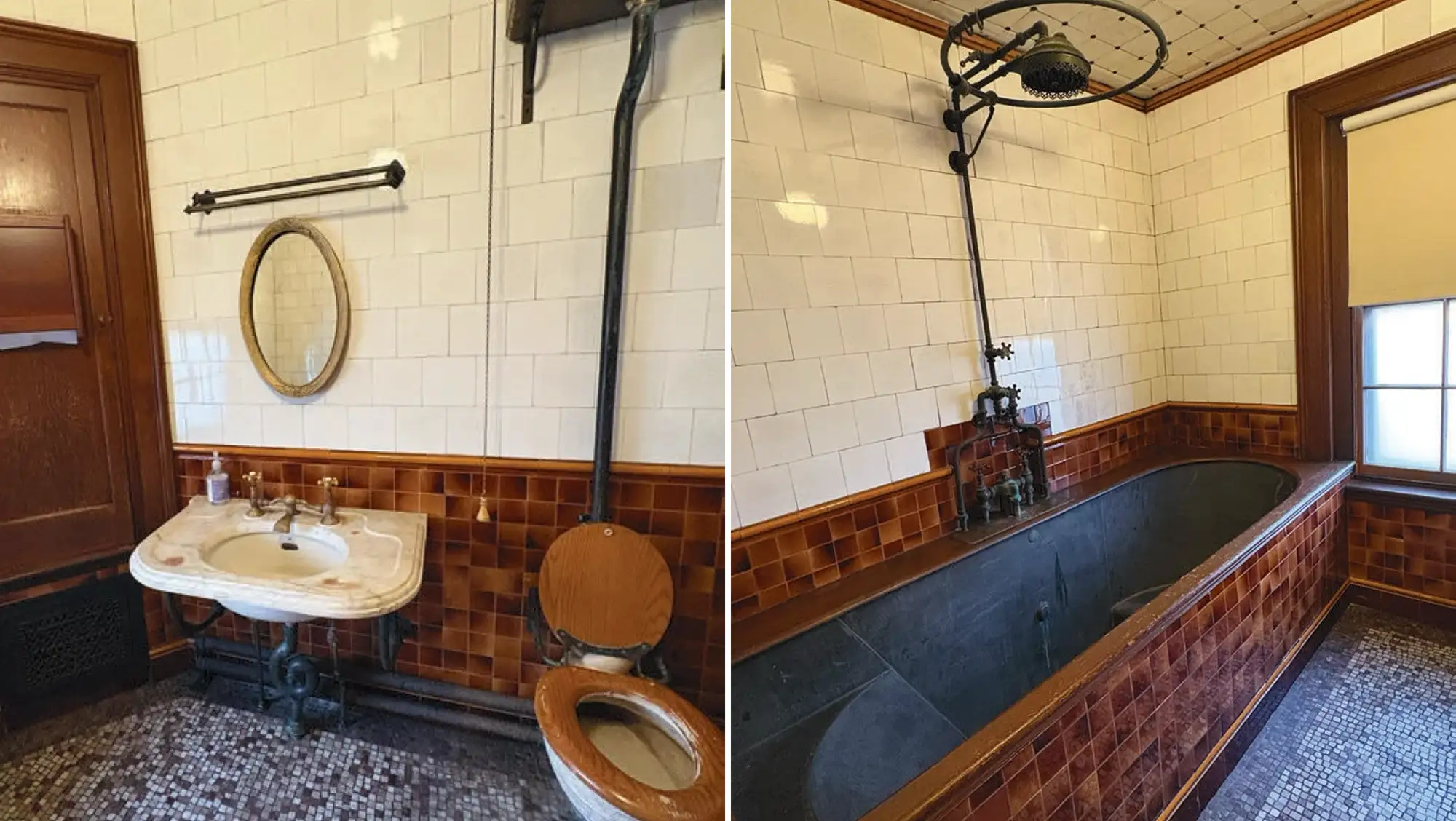
Her office was once the domain of Henry Clarke Warren, A.B. 1879, a pioneering Sanskrit and Pāli scholar and polyglot. Disabled by a spinal injury as a child, Warren was virtually immobile and often in pain, but nevertheless traveled, studied at Johns Hopkins University, and led a rich life as an independent academic. As an adult he lived in Cambridge from 1891 to 1899, buying what had been the home of Harvard Latin professor Charles Beck (who hailed from Germany). Warren remodeled the second floor, installing aquariums, skylights, and a sun porch, along with a zinc tub and seat in the Victorian-styled bathroom (still used today). It was here, too, that Warren completed Buddhism in Translations, an octavo in 540 pages with some 130 Pāli scriptures converted to English prose and verse—part of the monographic serial the Harvard Oriental Series, founded by his former teacher and longtime friend, the influential Harvard Sanskrit scholar Charles Rockwell Lanman.

Warren’s bathroom with zinc-lined tub, marble sink, mosaic tile floor, and overhead-tank toilet.
Views of Warren’s bathroom, which features a zinc-lined tub, a marble sink, a floor composed of brown tesserae, and an overhead-tank toilet whose bowl was once embellished with gold leaf. | Photographs by Nell Porter Brown/Harvard Magazine

With scant time and strength, Warren was devoted “not to the learned quisquiliae on which many scholars fritter their days away, but rather to one or two works of individuality and independent significance,” noted Lanman in his 1899 obituary for Warren, who bequeathed his home and land to Harvard. Students still study languages in the house—among them Old Irish, Middle Welsh, Scottish-Gaelic, French, and German. “So I think about what these walls have heard,” Violette says, and “wonder what languages the ghosts are speaking.”

Read more articles by Nell Porter-Brown
Related topics

You might also like

A Forgotten Harvard Anthem

Published the year the Titanic sank, “Harvard’s Best” is a quizzical ode to the University.

Yesterday’s News

A co-ed experiment that changed dorm life forever

Highlights from Harvard’s Past

The rise of Cambridge cyclists, a lettuce boycott, and Julia Child’s cookbooks

Most popular

Harvard’s Epstein Probe Widened

The University investigates ties to donors, following revelations in newly released files.

The True Cost of Grade Inflation at Harvard

How an abundance of A’s created “the most stressed-out world of all.”

Five Questions with Nancy Gibbs and Thomas E. Patterson

The Washington Post laid off more than a third of its journalists. Does this signal a new era for newsrooms?

Explore More From Current Issue

Four Labrador puppies—two black and two yellow—sitting in green grass.

What Do Puppies Know?

Canine capabilities emerge early and continue into adulthood.

A black primate hanging lazily on a branch in a lush green forest.

What Bonobos Teach Us about Female Power and Cooperation

A Harvard scientist expands our understanding of our closest living relatives.