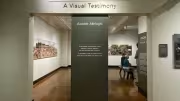
“Almost blingy, in a way,” is how Penny Coombe, the Kelekian curatorial fellow in ancient art at the Harvard Art Museums, describes the objects in Celtic Art Across the Ages. The exhibition, on view from March 6 to August 2, is the first of its kind in the United States and traces more than 2,500 years of art associated with Celtic cultures from the first millennium BCE to the present. “It’s not very academic to say,” Coombe jokes, “but there are just so many cool things to look at.”
Yet despite their sparkle, these “blingy” objects weren’t made to sit quietly behind glass.
Speaking at the exhibition’s opening lecture on March 5, Coombe reminded the audience that most of the pieces on display were part of everyday life. “Most of these are functional objects,” she said. “They would have been attached to a horse’s gear, they would have been mounted on a chariot, held if it was a vessel, and worn.”
Bringing together nearly 300 objects from collections across Europe and North America, the exhibition asks a deceptively simple question: who were the Celts? The answer, the exhibition suggests, is complex.
Curated by Susanne Ebbinghaus with Penny Coombe, Laure Marest, and Matthew M. L. Rogan, Celtic Art Across the Ages is into four thematic sections: Archaeology, Art, Encounters, and Reception. Rather than presenting a single unified culture, the exhibition traces how Celtic societies evolved, interacted with neighboring civilizations, and were later reimagined in art and literature (especially in the Romantic tradition).
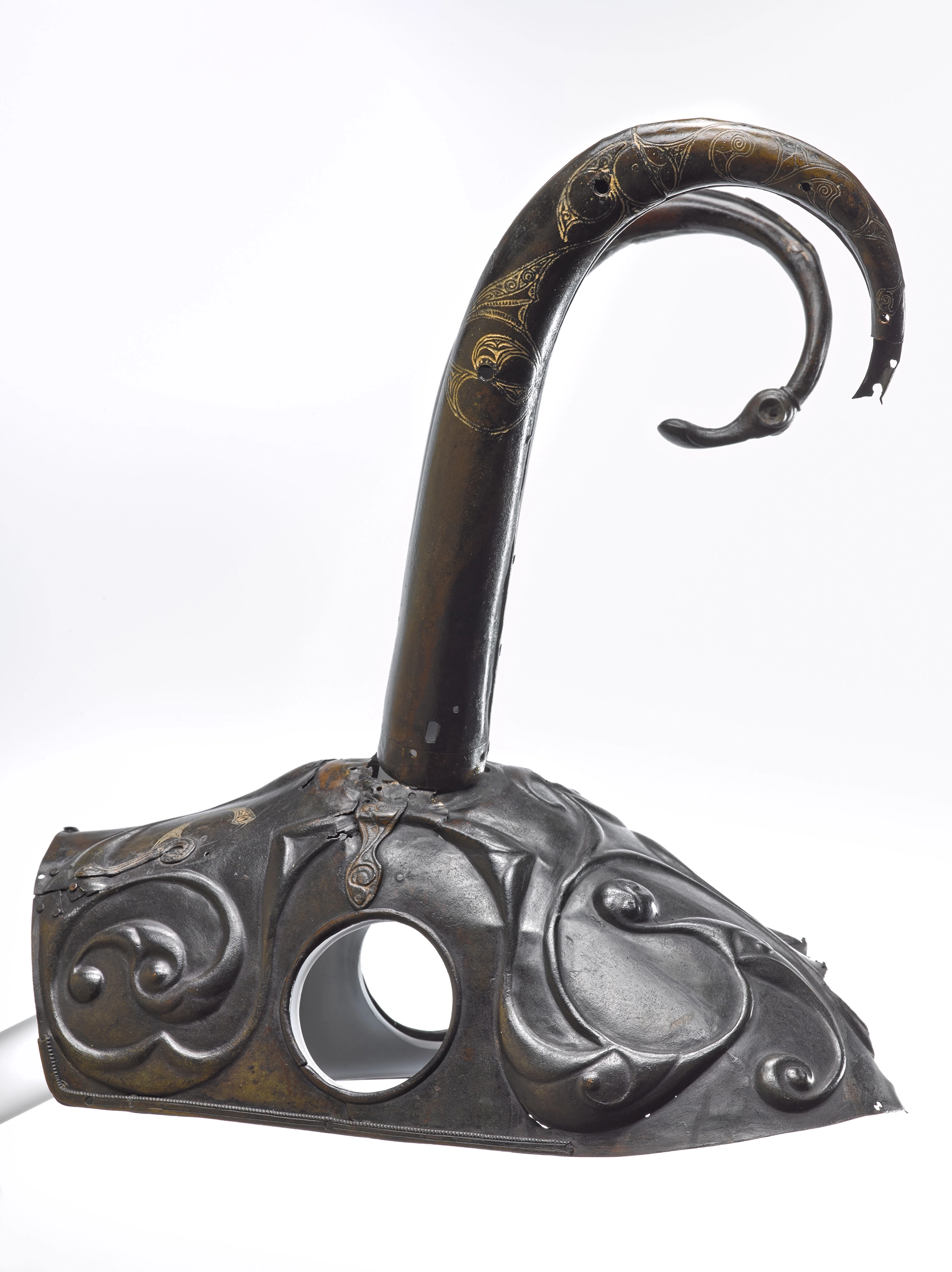
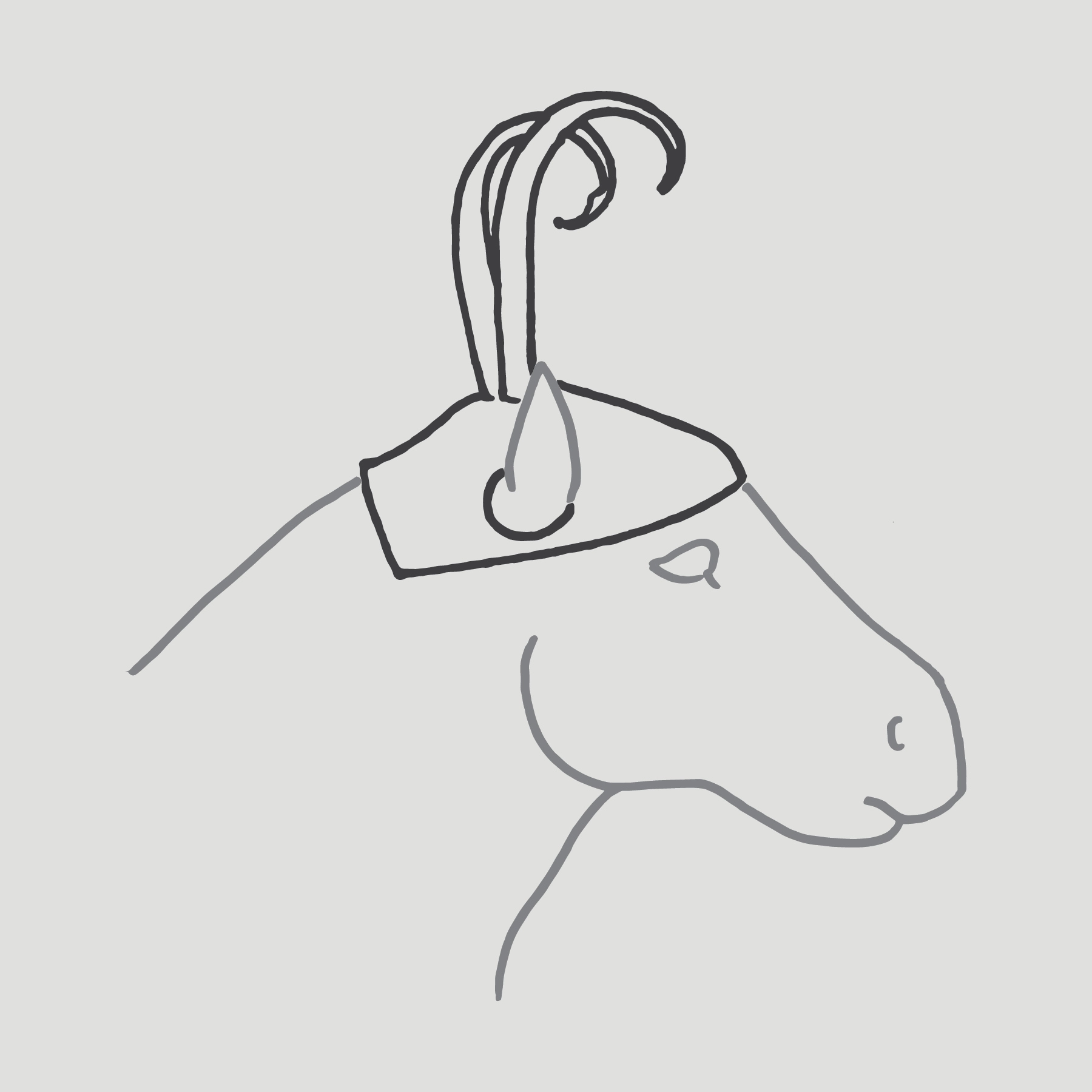
One object near the beginning of the exhibition captures Coombe’s statement about early Celtic art as functional. A bronze pony cap from third-century BCE Scotland would once have been fitted over a horse’s head during ceremonial display. Carefully shaped openings allowed space for the pony’s ears, transforming the animal itself into a moving ornament.
In Iron Age Celtic societies, finely crafted objects like daggers, jewelry, banqueting vessels, and horse equipment often served both practical and symbolic purposes. Materials traveled long distances: amber from the Baltic, jet from Britain, and colored glass from the Mediterranean appear in jewelry across the region, suggesting a network of trade and cultural exchange.
Another part of the exhibit contains archaeological fragments from the ancient settlement of Entremont in southern France. Limestone carvings depicting severed heads hint at the rituals and beliefs of Celtic societies themselves. Their precise meaning remains debated: they may represent war trophies or the veneration of ancestors. Either interpretation reflects the powerful reputation for violence that ancient writers often associated with Celtic peoples.
As the exhibition moves forward in time, it also explores how Celtic cultures were seen by others—especially by the Greeks and Romans, whose written accounts shape much of what we know about the Celts today. The word “Celtic” first appeared in classical antiquity, when Greek and Roman writers used it to describe diverse peoples across Europe.
Centuries later, linguists revived the term to describe a family of related languages (including Welsh, Irish, Scottish Gaelic, Breton, and Cornish) now recognized as part of the Indo-European language group. From there, the label expanded again, becoming a shorthand for a broader constellation of artistic traditions and cultural identities.
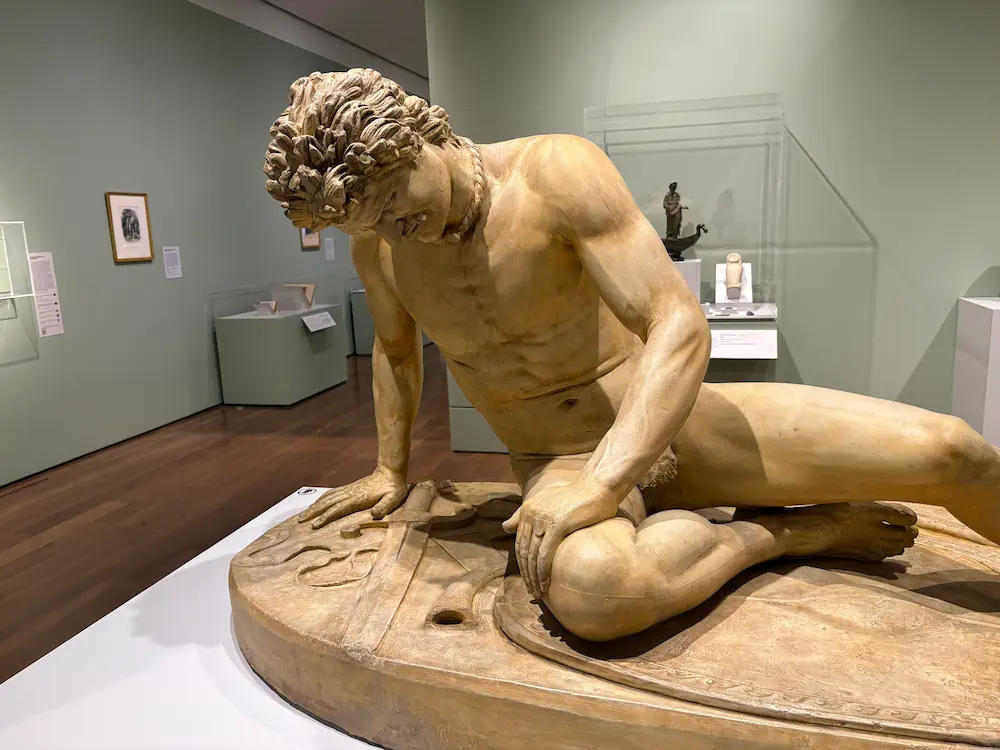
By the nineteenth century, the Celts had become figures of legend. Artists and antiquarians reimagined them as heroic warriors, poets, and mystics, and artists of the time embraced this romantic vision. A nineteenth-century plaster cast of the famous sculpture The Dying Gaul, on loan from the Slater Memorial Museum, offers one powerful example. The sculpture depicts a wounded warrior collapsing in pain, his body rendered in the idealized style of classical Greek art. As the gallery text explains, the work presents the “victor’s view of a noble but defeated ‘barbarian.’” The sculpture is less a portrait of a specific Celtic individual than a reflection of how classical civilizations imagined their enemies, both heroic and defeated.
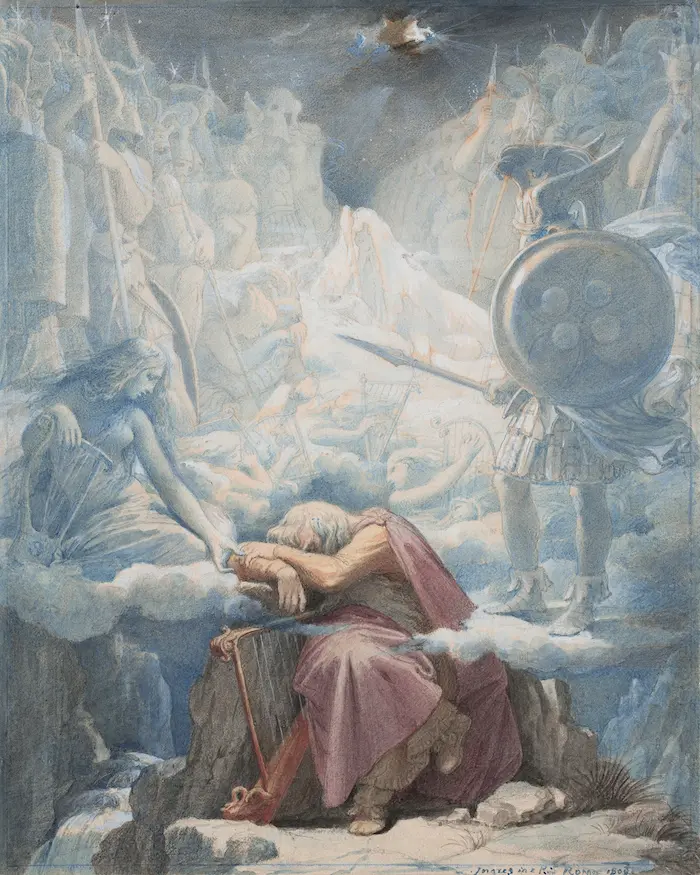
Another example: The Dream of Ossian (c. 1832-34) by Jean-Auguste-Dominque Ingres is a watercolor imagining of the famous Celtic bard Ossian, as Ossian dreams of Celtic heroes in myth. The larger version of this watercolor was painted in 1813 to decorate Emperor Napoleon Bonaparte’s bedroom inside the Palazzo del Quirinale in Rome, then occupied by French forces.
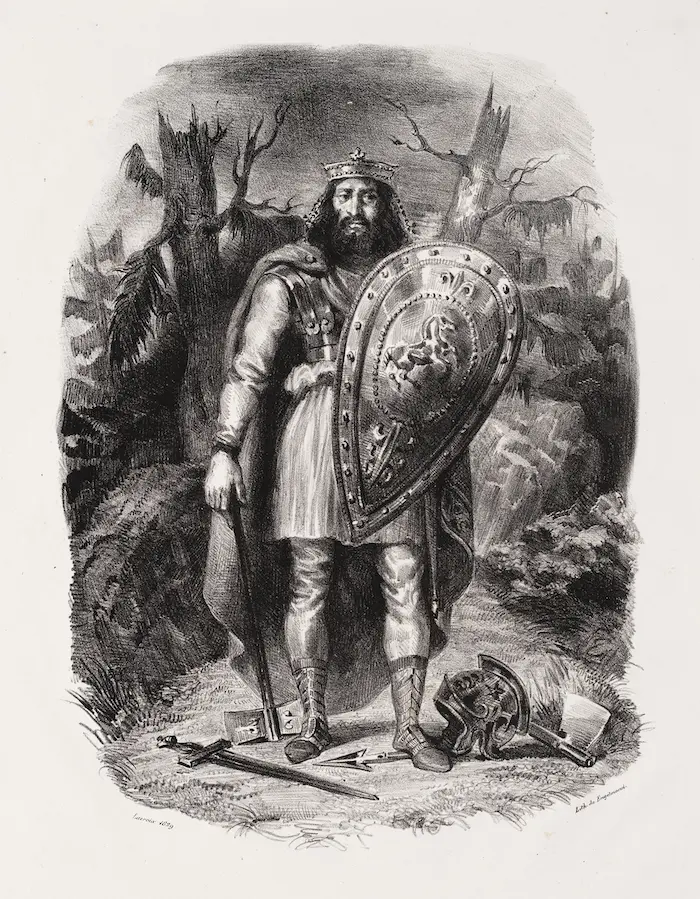
In Ferdinand Victor Eugène Delacroix’s lithograph Vercingetorix (c. 1829), a similarly mythic Celtic warrior is depicted against a stark, barren background of dying trees; he holds a double-sided battleaxe, wears a crown, and holds a massive engraved shield bearing a bucking pony. Delacroix’s work reflects the fearsome and fearless depiction of the Celts throughout this period, in which legendary Celtic kings, queens, and fighters became proxies for fables of good versus evil.
Across the galleries of Celtic Art Across the Ages, themes of imagination, heroic archetypes, and the continual reinvention of “Celticness” appear alongside recurring motifs (spirals, knots, and interwoven patterns) that surface on objects made in different regions and centuries. These designs link artifacts from Iron Age Europe to later revivals in modern art and design. More than 2,000 years after the first Celtic ornaments were forged, the patterns still resonate.